Quick Answer
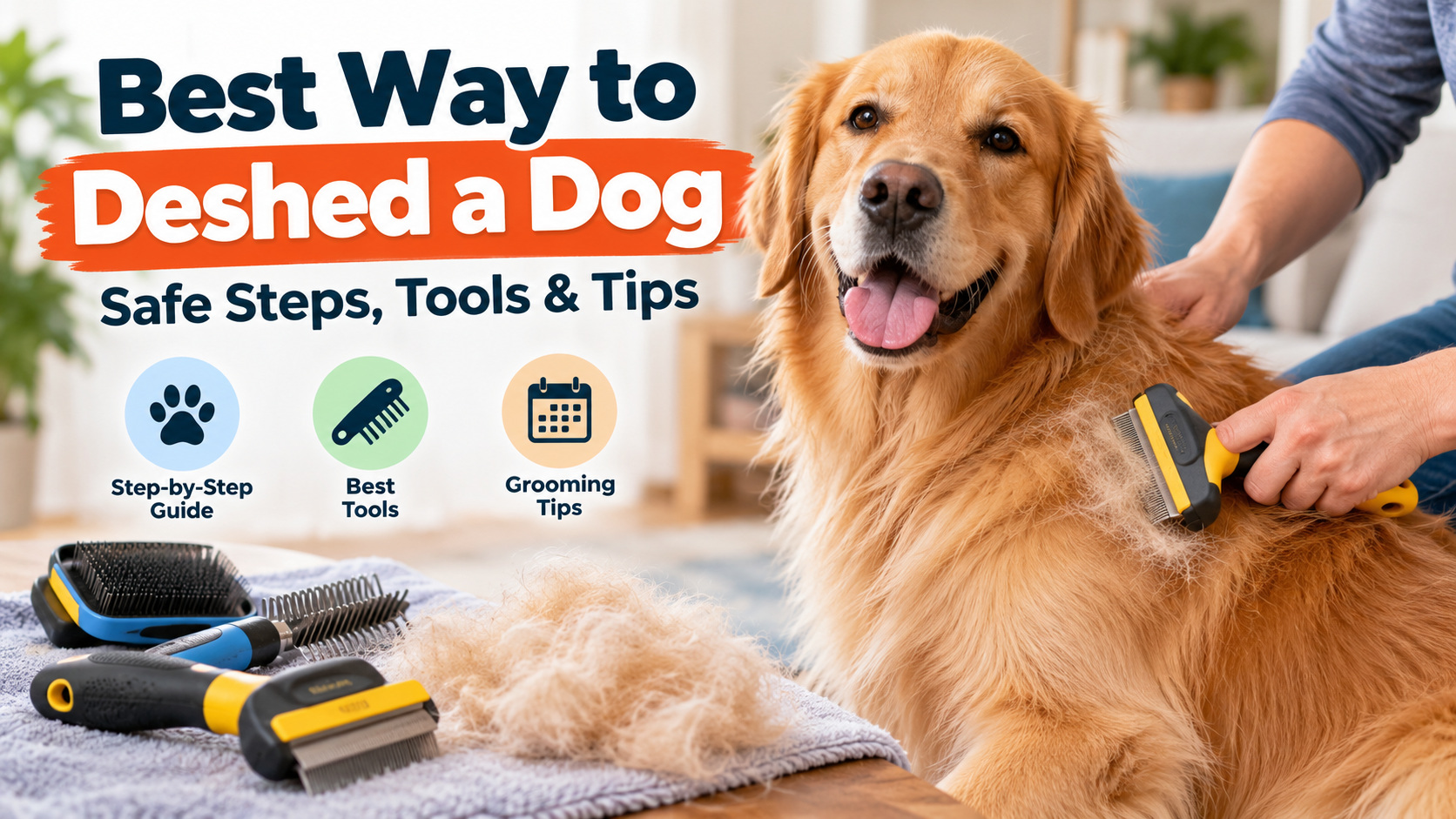
The best way to deshed a dog is to use a coat-appropriate brush, remove loose fur in small sections, and maintain a consistent grooming schedule. Work gently in the direction of hair growth and avoid scraping the skin. For basic brushing technique, follow this step-by-step dog brushing guide.
How to deshed your dog safely
- Inspect the skin: Check for redness, wounds, painful tangles, and parasites.
- Choose the right tool: Match your brush, grooming glove, or undercoat rake to the coat.
- Loosen tangles: Separate small knots carefully before using a deshedding tool.
- Brush in sections: Use light strokes along the shoulders, back, sides, and hindquarters.
- Remove loose undercoat: Use a suitable rake or comb without repeatedly dragging across the skin.
- Finish and reward: Check the coat, collect loose fur, and reward calm behavior.
Loose dog hair on furniture, clothing, and carpets can feel endless. I’ve found that the most useful place to start is understanding your dog’s coat rather than buying the strongest shedding tool.
Different coats need different grooming methods. In this guide, I’ll explain how to remove loose fur safely, choose suitable tools, and build a routine that works.
What Does It Mean to Deshed a Dog?
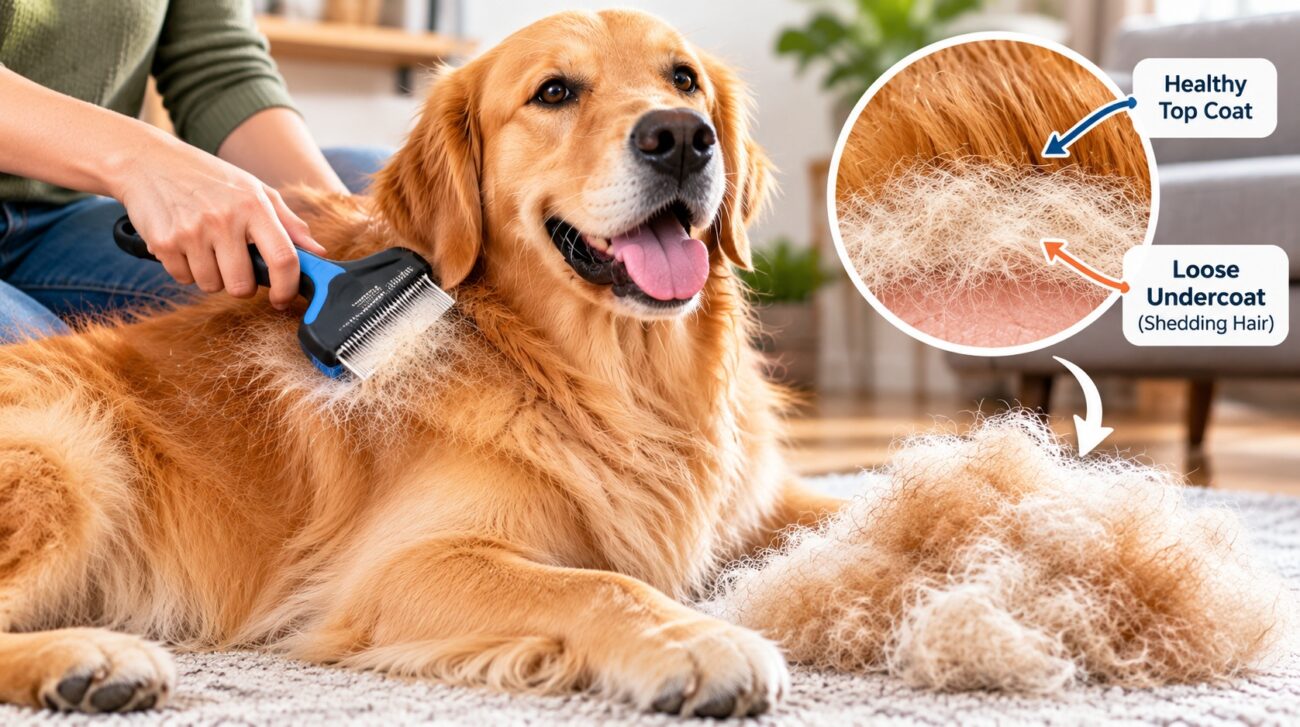
Dog deshedding means removing loose, dead, or naturally shedding hair from a dog’s coat before it falls around your home. It usually involves brushing, combing, and sometimes bathing.
Deshedding doesn’t stop the natural hair-growth cycle. Instead, it helps manage loose fur while keeping the coat cleaner and easier to maintain.
Deshedding vs. Regular Brushing
Regular brushing removes loose surface hair, dirt, and some tangles. Deshedding focuses more specifically on collecting fur that is ready to fall out, including loose undercoat.
The methods often overlap. A suitable slicker brush or comb can accomplish both jobs.
- Regular brushing: Maintains coat condition and prevents minor tangles.
- Deshedding: Targets loose hair, especially during heavy shedding.
- Dematting: Separates tangled hair and requires extra care to prevent pain.
- Clipping: Shortens the coat but doesn’t replace routine deshedding.
Double-coated dogs particularly benefit from careful undercoat maintenance. Their softer lower coat can release large amounts of hair during seasonal changes.
What Is the Best Way to Deshed a Dog at Home?
The safest approach is to inspect the coat, select suitable grooming equipment, and remove loose hair gradually. Focus on comfort rather than collecting the largest possible pile of fur.
These seven steps offer a practical home grooming routine.
Step 1: Prepare a Comfortable Grooming Area
Choose a quiet area with good lighting and a stable, nonslip surface. Keep the brush, comb, towel, and treats within reach.
A calm environment matters. Nervous dogs may struggle with grooming even when the tool itself is comfortable.
- Use a nonslip mat on smooth flooring.
- Keep grooming tools clean and within reach.
- Choose an area where loose hair is easy to collect.
- Give your dog time to sniff unfamiliar tools.
- Offer praise and rewards throughout the session.
Step 2: Check Your Dog’s Skin and Coat
Before brushing, part the fur and inspect the skin. Look for irritated areas, lumps, parasites, severe tangles, or unusual hair loss.
Don’t drag a grooming tool across sore skin. Ask your veterinarian about unexplained irritation or sudden coat changes.
Step 3: Choose the Best Deshedding Tool
The best tool depends on coat density, length, and texture. A grooming glove may suit a Boxer, while a Husky usually needs tools that reach its thick undercoat.
I recommend starting with a gentle brush before considering specialized shedding tools.
- Grooming glove: Suitable for many short, smooth coats.
- Slicker brush: Useful for longer, dense, or tangle-prone coats.
- Undercoat rake: Helps remove loose hair from suitable double coats.
- Steel grooming comb: Checks for remaining tangles and loose undercoat.
- Deshedding edge tool: Can remove loose fur but requires careful pressure and correct coat selection.
Step 4: Remove Small Tangles Before Deshedding
Work through minor knots gently with your fingers or a suitable comb. Hold the hair near the base to reduce pulling against the skin.
Never force a rake through a tight mat. Severe matting should be handled by an experienced groomer or veterinarian.
Step 5: Brush in Small Sections
Begin around the shoulders or back, where many dogs tolerate handling comfortably. Follow the natural direction of hair growth with short, light strokes.
Separate dense fur into manageable sections. This makes it easier to reach loose hair beneath the visible outer coat.
- Start at the neck and shoulders.
- Continue across the back and sides.
- Brush the hindquarters carefully.
- Use extra caution around the chest and belly.
- Approach legs and tail only when your dog is comfortable.
A useful technique is to check each section before moving on. If the brush catches repeatedly or your dog shows discomfort, reduce pressure or stop.
Step 6: Remove Loose Undercoat Gently
For double-coated dogs, use an appropriate undercoat rake or comb after the initial brushing. Work through the coat without applying pressure directly against the skin.
Do not repeatedly scrape the same patch just to collect more hair. Excessive grooming can irritate the skin or damage healthy coat.
For more coat-specific techniques, read my guide on how to brush a double-coated dog.
Step 7: Check the Results and Reward Your Dog
Finish with a gentle brush or comb to collect remaining loose fur. The coat should feel comfortable, without new redness or irritation.
Offer a treat or praise afterward. Positive experiences make future deshedding sessions easier.
Which Deshedding Tool Is Best for Your Dog’s Coat?
There isn’t one ideal deshedding tool for every breed. Hair texture and undercoat density determine which equipment is most appropriate.
For example, a Labrador’s short, dense coat needs different attention from a Poodle’s continually growing curls.
| Coat Type | Breed Example | Recommended Tool | Main Concern |
|---|---|---|---|
| Short, smooth | Boxer | Grooming glove or soft bristle brush | Avoid excessive friction |
| Short, dense double coat | Labrador Retriever | Suitable undercoat rake or shedding brush | Avoid repeated scraping |
| Long double coat | Golden Retriever | Slicker brush and steel comb | Check hidden tangles |
| Heavy undercoat | Siberian Husky | Undercoat rake and suitable comb | Protect guard hairs and skin |
| Curly, continuously growing | Poodle | Slicker brush and metal comb | Prevent matting rather than aggressive deshedding |
For additional veterinary guidance, see VCA Animal Hospitals’ dog grooming and coat care recommendations.
How Often Should You Deshed a Dog?
Most shedding dogs benefit from regular brushing, but intensive undercoat removal is not necessary every day. Frequency depends on breed, coat condition, and seasonal shedding.
A short-coated dog may need relatively little maintenance. Heavy-shedding double coats often require more frequent attention.
A Practical Deshedding Schedule
- Short, smooth coats: Start with weekly brushing and adjust as necessary.
- Short, dense double coats: Brush weekly or several times weekly during heavier shedding.
- Long double coats: Brush several times weekly and increase gentle grooming during seasonal coat changes.
- Heavy seasonal shedders: Consider brief daily brushing while loose undercoat is releasing.
- Curly, mat-prone coats: Check and brush frequently, often daily, to prevent knots.
These are starting points, not rigid rules. Watch your dog’s skin, coat condition, and comfort to determine the right frequency.
My detailed guide on how often you should brush your dog explains how to adjust your schedule.
Should You Bathe Your Dog Before or After Deshedding?
For most dogs, remove loose fur and tangles before bathing. Then wash, rinse, and dry the coat thoroughly before any further gentle brushing.
Bathing can help release additional loose hair, but it should never replace safe brushing or proper drying.
Before the Bath
- Inspect the coat for mats and irritation.
- Brush away loose surface fur.
- Gently separate manageable tangles.
- Get professional help for tight or extensive matting.
During the Bath
Use lukewarm water and dog-appropriate shampoo. Massage the coat gently without twisting long hair into knots.
Rinse thoroughly. Shampoo residue can cause discomfort, especially when the coat is dense.
After the Bath
Dry the coat carefully, including the undercoat. A pet-safe dryer may help with thick fur when used correctly and tolerated by the dog.
Once the coat is dry, gently brush any remaining loose hair. For bathing advice, consult the American Kennel Club’s double-coat grooming guidance.
What Are the Most Common Dog Deshedding Mistakes?
The biggest mistake is treating all shedding as a problem that needs aggressive removal. Healthy dogs naturally lose hair, and grooming should support that process.
More brushing pressure doesn’t necessarily produce better results.
- Using the wrong tool: A sharp or unsuitable shedding edge may irritate skin or damage the coat.
- Brushing too hard: Heavy pressure can cause discomfort and redness.
- Overusing deshedding tools: Repeated passes can remove or damage hair unnecessarily.
- Ignoring mats: Pulling through knots can hurt your dog.
- Shaving double coats: Routine shaving can interfere with their protective coat structure.
- Ignoring skin changes: Bald patches and inflammation may indicate medical concerns.
- Forcing long sessions: An anxious dog may become increasingly resistant to grooming.
I prefer several short, comfortable sessions over one exhausting grooming session. The goal is steady maintenance without making the dog afraid of brushing.
Can You Deshed a Double-Coated Dog Without Shaving?
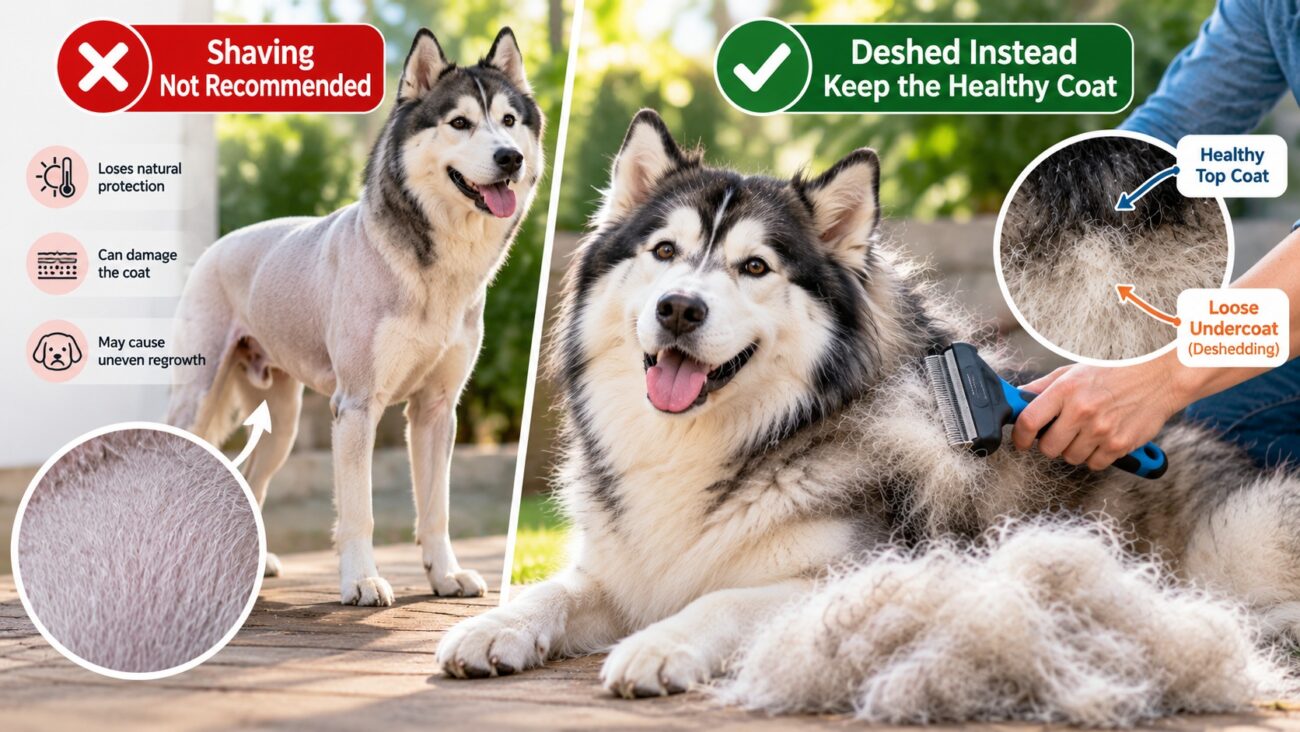
Yes. Regular brushing, appropriate undercoat tools, and occasional bathing can manage shedding without shaving the protective coat.
Double-coated breeds have a coarser outer layer and a softer insulating undercoat. Both layers serve important functions.
Shaving doesn’t permanently stop shedding. It can also increase the risk of coat damage and uneven regrowth.
Better Alternatives to Shaving
- Use a coat-appropriate undercoat rake.
- Separate thick fur into small grooming sections.
- Follow with a suitable slicker brush or comb.
- Increase gentle grooming during seasonal shedding.
- Arrange professional grooming for impacted or badly tangled coats.
According to the AKC’s double-coated dog grooming guidance, regular coat maintenance helps preserve the coat’s protective functions.
How Can You Reduce Dog Shedding Around the House?
You cannot eliminate normal shedding, but consistent grooming can reduce the amount of loose fur left around your home. Cleaning and proper coat care work best together.
The most effective routine is usually simple enough to maintain throughout the year.
Daily and Weekly Habits That Help
- Brush consistently: Collect loose hair before it falls onto furniture.
- Wash bedding: Remove accumulated fur from sleeping areas.
- Vacuum frequently: Clean rugs, upholstery, and favorite resting spots.
- Maintain balanced nutrition: Feed a complete diet appropriate for your dog’s needs.
- Check skin health: Address itching, redness, and unusual hair loss promptly.
- Adjust seasonally: Increase gentle grooming when shedding becomes heavier.
In 2026, the fundamentals remain the same: suitable tools, regular maintenance, and attention to skin health. No product can permanently stop a healthy dog’s natural shedding cycle.
When Should You Stop Deshedding and See a Veterinarian?
Stop grooming if your dog develops pain, significant redness, skin damage, or unusual distress. Sudden or patchy hair loss is different from ordinary shedding.
Skin and coat changes sometimes indicate allergies, parasites, infections, or other health conditions.
Warning Signs to Watch For
- Sudden or unexplained bald patches
- Intense scratching, licking, or biting
- Red, inflamed, crusty, or bleeding skin
- Persistent unpleasant skin odor
- Hair loss accompanied by other symptoms
- Severe mats that pull tightly against the skin
If these signs appear, arrange veterinary advice instead of increasing brushing. Read the AKC guide to abnormal hair loss in dogs for more context.
Dog Deshedding Tools I Would Consider
You don’t need an entire grooming kit to start. I would choose one primary brush matched to the coat and add a second tool only when necessary.
These established products suit different grooming situations. The selections reflect their intended uses, not hands-on product testing.
🏆 Best for Heavy Shedding
FURminator Undercoat deShedding Tool for Dogs
★★★★☆ 4/5 — Editorial suitability
Available in versions for different dog sizes and coat lengths, this tool targets loose undercoat hair. I would consider it for a suitable shedding coat, using light pressure and following the manufacturer’s directions.
✨ Best for Routine Brushing
Hertzko Self-Cleaning Slicker Brush
★★★★☆ 4/5 — Editorial suitability
This slicker-style brush has fine bristles and a self-cleaning mechanism for easier hair removal. I would consider it for regular brushing on compatible coats, especially when loose fur and small tangles are common.
🐕 Best for Thick Undercoats
Safari Undercoat Rake for Dogs
★★★★☆ 4/5 — Editorial suitability
Designed to help remove loose undercoat from suitable dense coats, this rake can complement regular brushing. I would consider it for thick-coated dogs when the teeth can move comfortably through unmatted fur.
Affiliate disclosure: As an Amazon Associate, I earn from qualifying purchases. These are editorial suggestions, and prices and availability may change.
Frequently Asked Questions About Dog Deshedding
Can I deshed my dog every day?
Gentle daily brushing may be appropriate during heavy shedding, especially for some double-coated breeds. However, daily use of aggressive undercoat tools can irritate the skin or damage healthy hair. Match grooming frequency to coat condition, tool type, and your dog’s comfort.
Is deshedding painful for dogs?
Proper deshedding should not be painful. A suitable tool and gentle technique can remove loose hair comfortably. Pulling tight tangles, pressing sharp edges against the skin, or repeatedly brushing sensitive areas may cause pain. Stop if your dog shows distress.
Does bathing help remove loose dog fur?
Yes, bathing can loosen and wash away some naturally shedding hair. Brush out loose fur and tangles first, use dog-appropriate shampoo, rinse thoroughly, and dry the coat properly. Bathing alone will not replace regular brushing, especially for dense double coats.
What is the best way to deshed a Husky?
Use a suitable undercoat rake, slicker brush, or comb to remove loose undercoat in small sections. Work gently without scraping the skin or damaging the guard hairs. Increase brushing during seasonal coat shedding, and avoid shaving a healthy double coat for routine hair control.
How long does it take to deshed a dog?
The time varies with your dog’s size, coat density, cooperation, and shedding level. Short-coated dogs may need brief sessions, while thick double coats can take considerably longer. Break grooming into shorter sessions when needed, and prioritize comfort over removing every loose hair at once.
Final Thoughts: What Is the Best Way to Deshed a Dog?
The best way to deshed a dog is to combine gentle, coat-specific brushing with a consistent grooming routine. Remove loose hair without damaging the skin or forcing tools through tangles.
Start with the simplest suitable brush, monitor your dog’s comfort, and adjust grooming frequency as shedding changes. A healthy coat matters more than a completely hair-free home.
For a broader grooming routine, explore my dog brushing and combing guide and build a schedule your dog can enjoy.