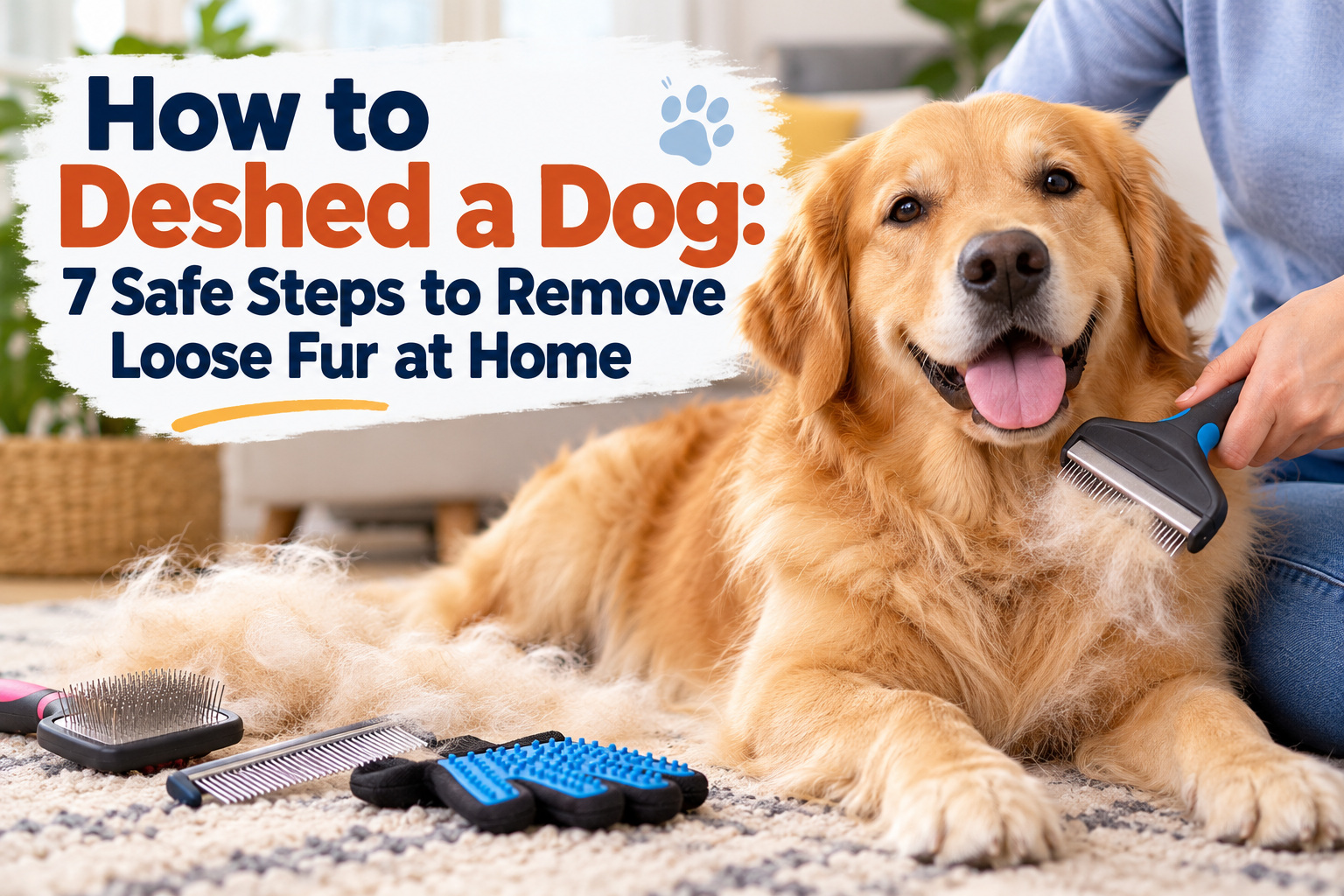
Quick Answer
To deshed a dog, choose a grooming tool suited to its coat, remove loose fur with gentle strokes, and work through small sections. Brush before bathing, use dog-safe shampoo when a bath is needed, and thoroughly dry the coat. Follow a regular dog brushing routine to manage future shedding without damaging healthy hair.
How to Deshed a Dog in 7 Steps
- Inspect the coat: Check for mats, sores, irritation, and sensitive areas.
- Choose your tools: Match the brush or rake to your dog’s coat.
- Start brushing: Gently remove loose surface hair.
- Work through the undercoat: Use short, controlled strokes on double-coated dogs.
- Bathe when needed: Wash with dog-specific shampoo and rinse thoroughly.
- Dry completely: Use towels or a suitable dryer at a safe temperature.
- Finish and check: Remove remaining loose fur and inspect the skin.
Important Safety Tip
- Never force a deshedding tool: Stop if the skin becomes red or your dog shows discomfort.
Loose dog hair on your couch, clothes, and floor can seem endless. Learning how to deshed a dog properly helps manage that loose fur without hurting your dog’s skin.
I recommend starting with coat type rather than buying the strongest-looking deshedding tool. This guide explains the complete process, common mistakes, and how to build a comfortable grooming routine.
What Does It Mean to Deshed a Dog?
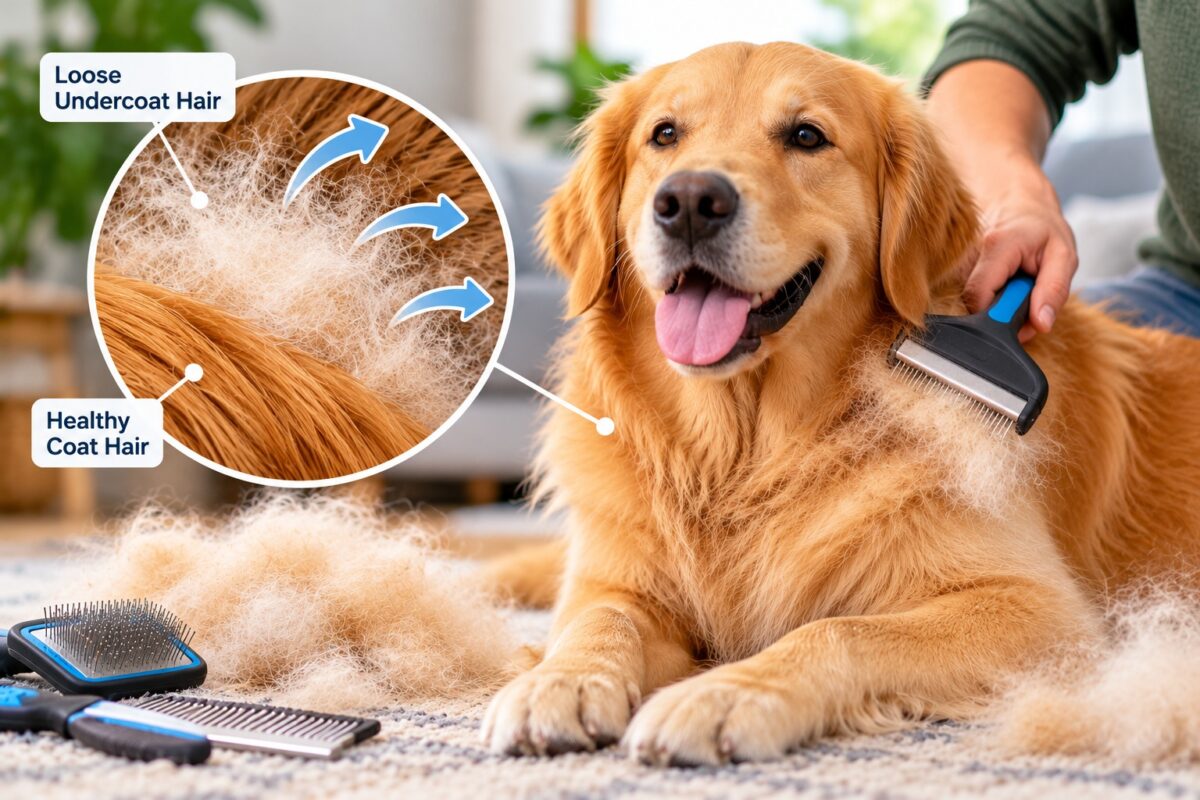
Deshedding is the process of removing loose, dead, or naturally shedding hair from a dog’s coat using suitable grooming tools. It is especially useful for dogs with thick undercoats.
Unlike shaving, deshedding aims to preserve healthy coat layers while collecting fur that is ready to come out.
- Removes loose fur: Captures shedding hair before much of it reaches household surfaces.
- Reduces trapped hair: Clears loose undercoat from beneath the outer coat.
- Helps prevent tangles: Regular grooming keeps loose hair from becoming compacted.
- Supports skin checks: Makes redness, bumps, parasites, and unusual hair loss easier to notice.
- Improves coat maintenance: Helps keep the coat manageable between grooming appointments.
The ASPCA’s dog grooming guidance explains that regular brushing helps manage normal shedding. However, healthy shedding cannot be eliminated completely.
Why Do Some Dogs Shed So Much?
Dogs shed because their hair naturally grows, ages, and falls out. Coat structure, breed, season, health, and living conditions all influence the amount.
Some dogs release loose hair throughout the year. Others experience heavier seasonal shedding, often called blowing coat.
Single Coats vs. Double Coats
A single-coated dog has one main coat layer, while a double-coated dog has protective outer hairs above a softer undercoat. That extra layer often makes seasonal shedding more noticeable.
- Short single coats: Boxers and Greyhounds generally benefit from gentle surface brushing.
- Short double coats: Labrador Retrievers can release substantial loose undercoat.
- Medium double coats: German Shepherds and Border Collies often require regular undercoat maintenance.
- Long double coats: Golden Retrievers and Samoyeds may need careful section-by-section grooming.
- Curly coats: Poodles often retain loose hair within curls, making tangle prevention more important than traditional deshedding.
According to the American Kennel Club’s shedding guidance, many double-coated dogs shed more heavily during seasonal coat changes.
What Tools Do You Need to Deshed a Dog?
The right tool depends on coat length, density, and skin sensitivity. A short-coated Beagle does not need the same equipment as a heavily shedding Husky.
I prefer using the gentlest tool that removes loose fur effectively. More aggressive grooming is not automatically better.
| Grooming Tool | Best For | Main Caution |
|---|---|---|
| Rubber grooming mitt | Short, smooth coats | Limited reach into dense undercoats |
| Slicker brush | Medium, long, or thick coats | Wire pins can irritate skin under pressure |
| Undercoat rake | Double coats with loose undercoat | Incorrect tooth length can pull or snag |
| Deshedding tool | Compatible shedding coats | Excessive passes may damage healthy hair |
| Metal grooming comb | Checking longer coats for tangles | Never force through tight mats |
A grooming rake typically reaches deeper into thick coats than a rubber mitt. A slicker brush can help separate hair, but it should never scrape the skin.
The AKC guide to dog brushes explains how different brush designs suit different coat types.
How Do You Deshed a Dog Step by Step?
Start with a comfortable grooming area, appropriate tools, and an inspection of your dog’s coat. Then work gradually instead of trying to remove every loose hair at once.
Step 1: Prepare a Comfortable Grooming Area
Choose a quiet, well-lit space with a stable, nonslip surface. Keep your grooming tools and a few rewards within reach.
- Use a nonslip mat or comfortable floor surface.
- Keep fresh water available.
- Let your dog inspect unfamiliar tools.
- Begin when your dog is relaxed.
- Allow breaks whenever needed.
A calm start makes the entire process easier. For nervous dogs, a few gentle strokes may be enough for the first session.
Step 2: Examine the Skin and Coat
Run your fingers gently through the coat before using any deshedding tool. Look for anything that might make brushing painful or unsafe.
- Redness, swelling, or irritated skin
- Open wounds, scabs, or hot spots
- Tight mats or compacted hair
- Fleas, ticks, or unusual debris
- Bald patches or excessive thinning
Do not groom directly over inflamed or injured skin. If you discover unusual hair loss or persistent irritation, consult your veterinarian.
Step 3: Remove Loose Surface Hair
Begin with a suitable brush and use gentle strokes in the direction the hair grows. Start around the shoulders or upper back.
Work across the body systematically. Avoid jumping between areas and repeatedly brushing the same patch.
- Begin at the shoulders and upper back.
- Continue along the sides.
- Move toward the hindquarters.
- Gently groom the chest and legs.
- Finish the tail if your dog tolerates it.
Keep the pressure light. The brush should glide through the fur without scratching or dragging against the skin.
Step 4: Gently Remove Loose Undercoat
For double-coated dogs, part the outer coat to expose small sections of undercoat. Use an appropriately sized rake or compatible deshedding tool to collect loose hair.
This is often where the largest amount of shedding fur comes out. That does not mean you should keep brushing until no hair remains.
- Work in sections: Part a small amount of hair before each pass.
- Follow hair growth: Avoid dragging tools backward through resistance.
- Use gentle pressure: Let the tool’s design do the work.
- Clear collected fur: Remove hair from the tool frequently.
- Watch the skin: Stop if you notice redness or discomfort.
For more detailed double-coat technique, read my guide to brushing a double-coated dog.
Step 5: Bathe Your Dog When Needed
A bath can help loosen dirt and hair that remains trapped in the coat. However, bathing is not essential for every deshedding session.
Use lukewarm water and a shampoo specifically formulated for dogs. Avoid products that irritate your dog’s skin.
- Brush out manageable tangles before wetting the coat.
- Wet the coat thoroughly without spraying the face directly.
- Apply dog-safe shampoo according to its label.
- Massage gently with your fingers.
- Rinse until shampoo residue is removed.
- Use conditioner only when appropriate for the coat and product instructions.
A shedding-control shampoo may help loosen hair during washing, but it will not stop the natural shedding cycle.
Step 6: Dry the Coat Completely
Use absorbent towels to remove excess moisture. For thick coats, make sure the undercoat dries rather than leaving moisture trapped beneath the surface.
A suitable pet dryer can help move loose hair out of dense coats. Introduce the noise gradually and avoid hot airflow.
- Keep airflow at a comfortable temperature.
- Avoid directing strong air into the eyes or ears.
- Keep the dryer moving instead of heating one spot.
- Stop if your dog becomes frightened.
- Check beneath the outer coat for remaining dampness.
High-velocity drying requires care around delicate skin, ears, and anxious dogs. Ask a professional groomer for help if you are unfamiliar with the equipment.
Step 7: Finish With Gentle Brushing
Once the coat is dry, use a gentle finishing brush to collect remaining loose hair. A comb can help check longer coats for hidden tangles.
I would stop when the coat feels comfortable and manageable, not when the brush comes out completely empty. Reward your dog and clean your tools afterward.
How Often Should You Deshed a Dog?
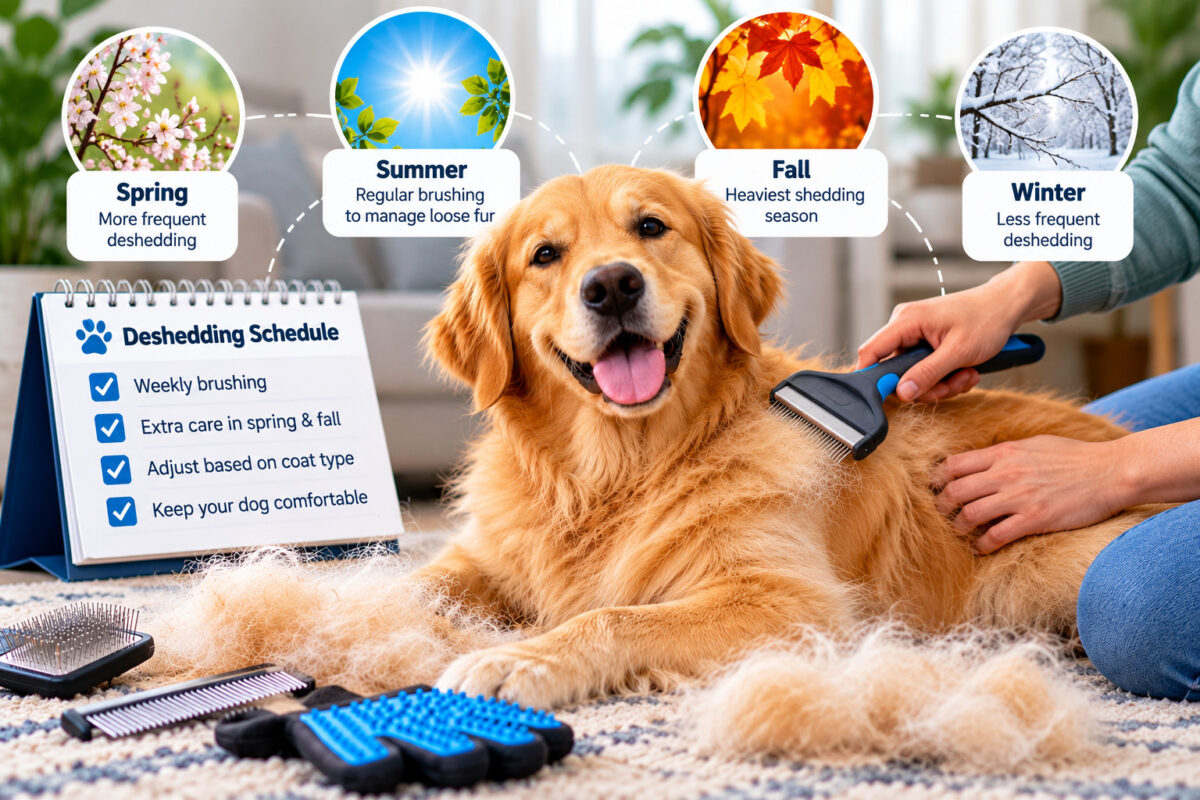
Most dogs benefit from regular brushing, but intensive deshedding should depend on coat type and shedding level. A short daily maintenance session may be gentler than an occasional aggressive session.
As of 2026, there is no universal deshedding schedule suitable for every breed. These are practical starting points rather than fixed rules.
| Coat Type | Suggested Routine | Main Focus |
|---|---|---|
| Short, smooth | About once weekly | Gentle surface brushing |
| Short, dense double coat | Weekly; more during heavy shedding | Loose undercoat |
| Medium double coat | Several times weekly as needed | Undercoat buildup and tangles |
| Long double coat | Frequent brushing; often daily during coat blow | Loose fur and mat prevention |
| Curly coat | Frequent brushing and combing | Tangle prevention rather than undercoat removal |
Daily use of an aggressive deshedding blade is not appropriate for every dog. Follow the manufacturer’s directions and adjust based on skin and coat condition.
For a broader maintenance schedule, see how often you should brush your dog.
Should You Deshed a Dog Before or After a Bath?
For most dogs, begin with gentle brushing before bathing and finish after the coat is completely dry. This combination helps remove loose hair without forcing tools through wet tangles.
- Before bathing: Remove loose fur, dirt, and manageable tangles.
- During bathing: Loosen remaining hair through gentle washing.
- After drying: Collect additional loose fur and check the coat.
Do not aggressively rake wet hair or use excessive force while the skin is softened by bathing. If the coat contains tight mats, seek grooming advice before washing.
Can You Deshed a Dog Without Bathing?
Yes. Regular brushing and suitable undercoat tools can remove substantial loose fur without water or shampoo.
Dry grooming is useful between baths, especially for dogs that dislike washing or do not need frequent bathing.
- Inspect the dry coat.
- Remove surface hair with a gentle brush.
- Use a suitable rake only where needed.
- Check longer hair with a comb.
- Collect fur and finish with a calm reward.
A slightly damp grooming mitt may help collect loose surface hair on short-coated dogs. Avoid soaking the coat or trying to detangle dense mats with moisture alone.
What Are the Most Common Dog Deshedding Mistakes?
The biggest deshedding mistake is confusing more hair removal with better grooming. Excessive pressure and repeated passes can irritate skin or damage healthy coat hairs.
- Using the wrong tool: A heavy undercoat rake is unsuitable for some fine or short coats.
- Pressing too hard: Metal teeth and blades can irritate the skin.
- Overbrushing: Repeated strokes over one area can cause discomfort.
- Ignoring mats: Tight knots need careful treatment rather than forced deshedding.
- Using human shampoo: Products not formulated for dogs may irritate their skin.
- Skipping drying: Dense, damp undercoats can remain uncomfortable.
- Forcing an anxious dog: Stressful sessions can create long-term grooming aversion.
One mistake deserves special attention: shaving a double-coated dog simply to reduce shedding. Shaving removes protective hair and can interfere with normal coat function.
The AKC’s advice on shaving double-coated dogs explains why regular brushing is generally preferable to shaving for shedding control.
How Do You Deshed a Dog That Hates Being Brushed?
Start with short, positive grooming sessions instead of attempting a complete deshedding treatment immediately. Reward calm behavior and increase brushing gradually.
- Place the brush nearby and allow your dog to inspect it.
- Reward relaxed behavior.
- Touch an easy area with the brush briefly.
- Make one gentle stroke.
- Reward your dog again.
- Stop before frustration builds.
- Gradually increase grooming as your dog becomes comfortable.
For example, a dog that tolerates only two gentle strokes can still make progress across several short sessions. Finishing calmly matters more than collecting a large pile of fur.
Sudden resistance in a normally cooperative dog can also indicate pain. Consider veterinary assessment when grooming sensitivity appears unexpectedly.
When Is Dog Shedding a Health Concern?
Normal shedding typically involves loose hair without inflamed skin or bald patches. Sudden or unusual hair loss may indicate a medical problem rather than a grooming issue.
Contact your veterinarian if you notice any of these warning signs:
- New bald patches or uneven coat thinning
- Persistent itching, scratching, or licking
- Red, inflamed, or painful skin
- Open sores, scabs, or unusual bumps
- Hair that breaks or pulls out unusually easily
- Major changes in shedding accompanied by other health symptoms
Allergies, parasites, infections, and hormonal conditions can affect coat health. A grooming tool cannot treat these underlying problems.
Which Deshedding Tools Would I Consider?
For home deshedding, I would choose tools based on coat compatibility, ease of control, and gentle handling rather than aggressive hair removal claims. These three established product options serve different grooming needs.
Affiliate disclosure: As an Amazon Associate, this website may earn from qualifying purchases made through the links below, at no additional cost to you.
🏆 Best for Compatible Shedding Coats
FURminator Undercoat deShedding Tool
★★★★☆
Designed to remove loose undercoat hair from compatible coats, with different versions for coat length and dog size. I would consider it for controlled, occasional deshedding rather than repeated aggressive brushing.
🐕 Best for Thick Undercoats
Safari Undercoat Rake
★★★★☆
A metal-tooth grooming rake intended to help remove loose undercoat in suitable thick-coated dogs. I would prioritize matching the tooth length to the coat and keeping each pass gentle.
✨ Best for General Brushing
Hertzko Self-Cleaning Slicker Brush
★★★★☆
A slicker-style grooming brush with a hair-release mechanism for easier cleaning. I would consider it for routine loose-hair removal on suitable medium or longer coats, using a light touch.
The star ratings above are editorial suitability estimates, not verified customer ratings or hands-on test scores. Always check the exact product version and manufacturer instructions before purchasing.
Frequently Asked Questions About Deshedding a Dog
Can You Deshed a Dog Too Much?
Yes. Excessive deshedding can irritate the skin and damage healthy hair, especially when using sharp or aggressive tools. Limit repeated passes over the same area, follow the tool’s instructions, and stop when your dog becomes uncomfortable. Gentle maintenance brushing is usually safer than frequent intensive deshedding.
How Long Does It Take to Deshed a Dog?
A short home session may take around 10–20 minutes, while large dogs with dense coats can require longer sessions or several breaks. These are practical estimates, not fixed treatment times. Coat thickness, tangles, dog cooperation, and grooming equipment all affect the duration.
Is It Better to Deshed a Dog Wet or Dry?
Routine home deshedding generally begins on a dry coat, where loose hair and tangles are easier to inspect. Bathing may loosen additional fur, but finish brushing only after appropriate drying. Never force a rake or blade through wet, tangled hair.
What Is the Best Way to Deshed a Double-Coated Dog?
Start by inspecting the coat and removing loose surface hair. Work through small sections with a suitable slicker brush or undercoat rake, using light pressure. Increase gentle grooming during seasonal shedding, but avoid shaving the coat or repeatedly dragging tools across the skin.
Does Deshedding Stop a Dog From Shedding?
No. Deshedding removes hair that is already loose or naturally ready to fall out, but it cannot stop the hair growth cycle. Regular brushing may reduce visible hair around your home. Sudden hair loss, bald patches, or inflamed skin need veterinary attention rather than stronger grooming tools.
Final Takeaway: How to Deshed a Dog Safely
Learning how to deshed a dog comes down to choosing the right tool, working gently, and respecting your dog’s coat type. The goal is to manage loose hair while preserving healthy skin and fur.
Start with short sessions, brush in small sections, and use bathing only when appropriate. A consistent routine often works better than trying to remove every loose hair in one session.
Most importantly, pay attention to your dog’s comfort. Effective deshedding should make grooming easier, not painful or stressful.