Quick Answer
To deshed a dog, choose a grooming tool suited to the coat, remove tangles, and gently brush out loose fur in small sections. Work with the direction of hair growth and avoid scraping the skin. Most dogs benefit from regular brushing, but deep deshedding frequency depends on coat type and shedding level. Follow this step-by-step dog brushing guide for additional handling techniques.
How to Deshed Your Dog in 6 Steps
- Inspect the coat: Check for tangles, mats, irritated skin, and sensitive areas.
- Choose the tool: Match the brush, rake, or grooming mitt to your dog’s coat.
- Remove tangles: Gently separate manageable knots before using an undercoat tool.
- Brush in sections: Use light strokes from the shoulders toward the tail.
- Check sensitive areas: Work carefully around the belly, legs, and tail.
- Finish and reward: Check for remaining loose hair and reward calm behavior.
Important Safety Tip
- Stop when uncomfortable: Redness, flinching, pain, or repeated pulling away means the session needs to end.
If your dog leaves fur on the couch, carpet, and clothes, you’re probably looking for a better way to manage shedding. I’ve found that understanding the coat matters more than buying the strongest deshedding brush.
This dog deshedding guide explains which tools work for different coats, how to use them safely, and when shedding needs veterinary attention. You’ll also learn how to build a routine without overbrushing.
What Is Dog Deshedding?
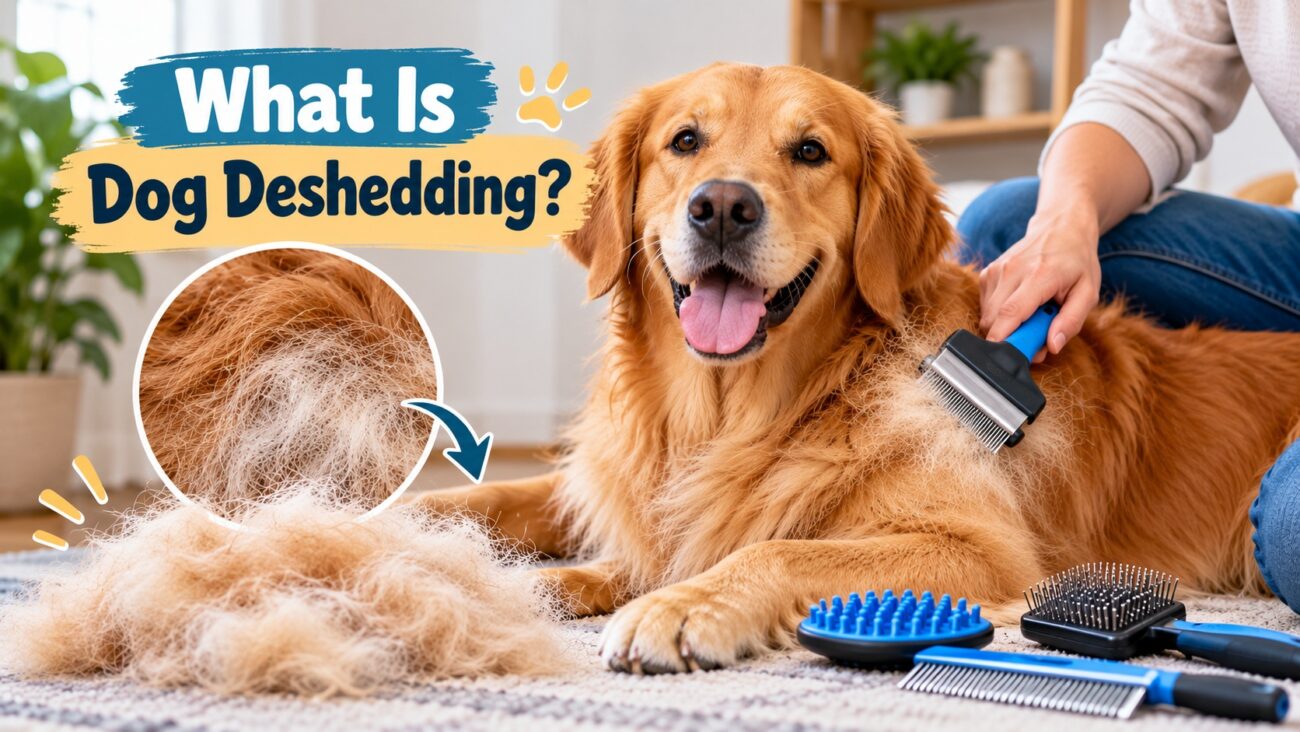
Dog deshedding is the process of removing loose, dead hair from a dog’s coat before much of it falls around the home. It focuses particularly on loose undercoat hair in breeds with dense double coats.
Unlike haircuts, deshedding does not aim to shorten healthy fur. The goal is to lift hair that is already releasing naturally.
- Regular brushing: Removes surface hair, dirt, small tangles, and debris.
- Deshedding: Targets loose coat, especially hair trapped beneath the outer layer.
- Dematting: Addresses tangled or compacted hair using appropriate grooming techniques.
- Clipping: Shortens hair and serves a different grooming purpose.
These methods overlap, but they aren’t interchangeable. A dog with a smooth coat needs different care from a Husky releasing its winter undercoat.
Why Do Dogs Shed Their Fur?
Shedding is a normal part of the hair growth cycle. Old or damaged hairs release as new hair grows and coat conditions change.
Breed, genetics, hormones, coat structure, daylight, and indoor living conditions all influence shedding. Some dogs shed steadily throughout the year, while others experience noticeable seasonal increases.
- Double-coated breeds: Often release substantial undercoat during seasonal changes.
- Short-coated breeds: May shed continuously despite having less visible fur.
- Curly-coated breeds: Often retain loose hairs within curls rather than dropping them immediately.
- Long-coated breeds: Can accumulate loose hair and tangles around friction areas.
The American Kennel Club’s shedding guidance explains how coat characteristics and seasonal changes affect shedding patterns.
How Do You Deshed a Dog Step by Step?
Start with a dry, manageable coat and a tool matched to your dog’s hair type. Keep each movement gentle and focus on removing loose hair rather than forcing the tool deeper.
I prefer to divide grooming into small sections. That makes it easier to see which areas need attention and which are already finished.
Step 1: Prepare a Comfortable Grooming Area
Choose a quiet place with secure footing and enough room for your dog to move comfortably. A nonslip mat can help prevent slipping on smooth floors.
Gather everything before starting:
- Coat-appropriate grooming brush or undercoat tool
- Metal comb for suitable long or dense coats
- Small treats for positive reinforcement
- Towel or washable mat to collect loose fur
- Bag or container for discarded hair
Let your dog inspect the grooming equipment. Reward relaxed behavior before making the first stroke.
Step 2: Inspect the Coat and Skin
Run your hands gently over your dog’s body. Look for knots, burrs, irritated skin, parasites, and areas that seem painful.
Pay attention to locations where hair commonly becomes tangled:
- Behind the ears
- Under the collar
- Inside the front legs
- Behind the rear legs
- Around the tail
Don’t drag a deshedding edge through mats. If tangles are severe or close to the skin, ask a professional groomer to assess them.
Step 3: Choose the Correct Deshedding Tool
Your dog’s coat determines which grooming tool works best. An undercoat rake may help a thick double coat, while a rubber curry suits many smooth-coated dogs.
Consider these differences before choosing:
- Rubber grooming brush: Helps collect loose surface hair from smooth coats.
- Slicker brush: Removes loose hair and manageable tangles from many medium or long coats.
- Undercoat rake: Reaches loose hair within suitable dense double coats.
- Deshedding edge tool: Removes released undercoat when correctly matched and used gently.
- Metal comb: Helps detect remaining tangles in longer coats.
The AKC guide to dog brushes also recommends selecting tools according to coat structure and grooming needs.
Step 4: Brush in the Direction of Hair Growth
Begin around the shoulders or upper back, where many dogs tolerate grooming well. Move the brush gently in the direction the hair grows.
Avoid digging into the skin. With bladed deshedding tools, repeated passes over the same patch can cause irritation.
- Separate the coat into manageable sections.
- Hold the tool at the recommended angle.
- Use light, controlled strokes.
- Remove trapped hair from the tool frequently.
- Move to another area when little loose hair remains.
For dense coats, parting the fur helps expose loose hair below the surface. I find this more controlled than making long, repeated strokes across the entire back.
Step 5: Groom Sensitive Areas Carefully
The belly, armpits, lower legs, and tail can be more sensitive than the back. Use a gentler brush or comb where appropriate.
Never pull on tight hair around delicate skin. Avoid using an aggressive deshedding edge around the face, ears, genitals, and injured areas.
- Chest: Work slowly, following the direction of growth.
- Legs: Support the limb naturally without forcing uncomfortable positions.
- Tail: Hold the hair gently and avoid pulling.
- Belly: Choose a soft tool and use minimal pressure.
Some dogs dislike certain areas being handled. Short sessions with rewards usually work better than forcing them to remain still.
Step 6: Finish With a Coat and Skin Check
After deshedding, check the coat for remaining tangles and loose hair. A suitable finishing brush or comb can help smooth the coat.
Look closely for redness or discomfort. End the session with praise, a treat, or a favorite activity.
You don’t need to remove every loose hair in one session. Gentle, consistent grooming is more useful than exhausting your dog.
Which Deshedding Tool Is Best for Your Dog’s Coat?

The right tool depends on coat length, density, and texture. There is no universal deshedding brush that works safely for every dog.
| Coat Type | Example Breeds | Recommended Tool | Main Consideration |
|---|---|---|---|
| Short, smooth | Boxer, Beagle | Rubber curry or bristle brush | Protect sensitive skin |
| Short, dense double coat | Labrador Retriever | Coat-appropriate deshedding tool | Avoid repeated scraping |
| Long double coat | Golden Retriever, Husky | Undercoat rake and slicker | Work through sections |
| Long, silky | Yorkshire Terrier | Pin brush and metal comb | Prevent tangles |
| Curly | Poodle, Bichon Frise | Suitable slicker and comb | Check for hidden mats |
For most dogs, tool selection starts with understanding whether the coat has a dense undercoat. Hair length alone doesn’t provide the complete answer.
How Often Should You Deshed Your Dog?
Deshedding frequency depends on your dog’s coat and the tool being used. Routine brushing can happen more frequently than deeper undercoat removal.
As of 2026, coat-specific grooming remains the practical approach rather than following one schedule for every breed.
- Short, smooth coats: Start with gentle brushing around once weekly and adjust as needed.
- Short, dense coats: Brush once or twice weekly, increasing during heavier shedding.
- Long double coats: Brush several times weekly during shedding periods when necessary.
- Long, silky coats: Check frequently and brush often enough to prevent tangles.
- Curly coats: Frequent brushing and combing may be needed to prevent hidden mats.
Specialized deshedding edges often require less frequent use than ordinary brushes. Follow the manufacturer and your groomer’s instructions rather than using them aggressively every day.
For a more detailed schedule, read how often you should brush your dog.
Should You Deshed More Often During Shedding Season?
Yes, additional gentle grooming can help when your dog releases more loose undercoat. However, that doesn’t mean using a sharp-edged deshedding tool every day.
Seasonal shedding often becomes noticeable in spring and fall, particularly among double-coated breeds. Indoor living conditions can make the pattern less predictable.
- Increase gentle brushing when loose hair accumulates.
- Use a suitable rake only when needed.
- Keep specialized deshedding sessions limited.
- Monitor the skin after each session.
- Return to normal maintenance when shedding decreases.
Should You Bathe Your Dog Before or After Deshedding?
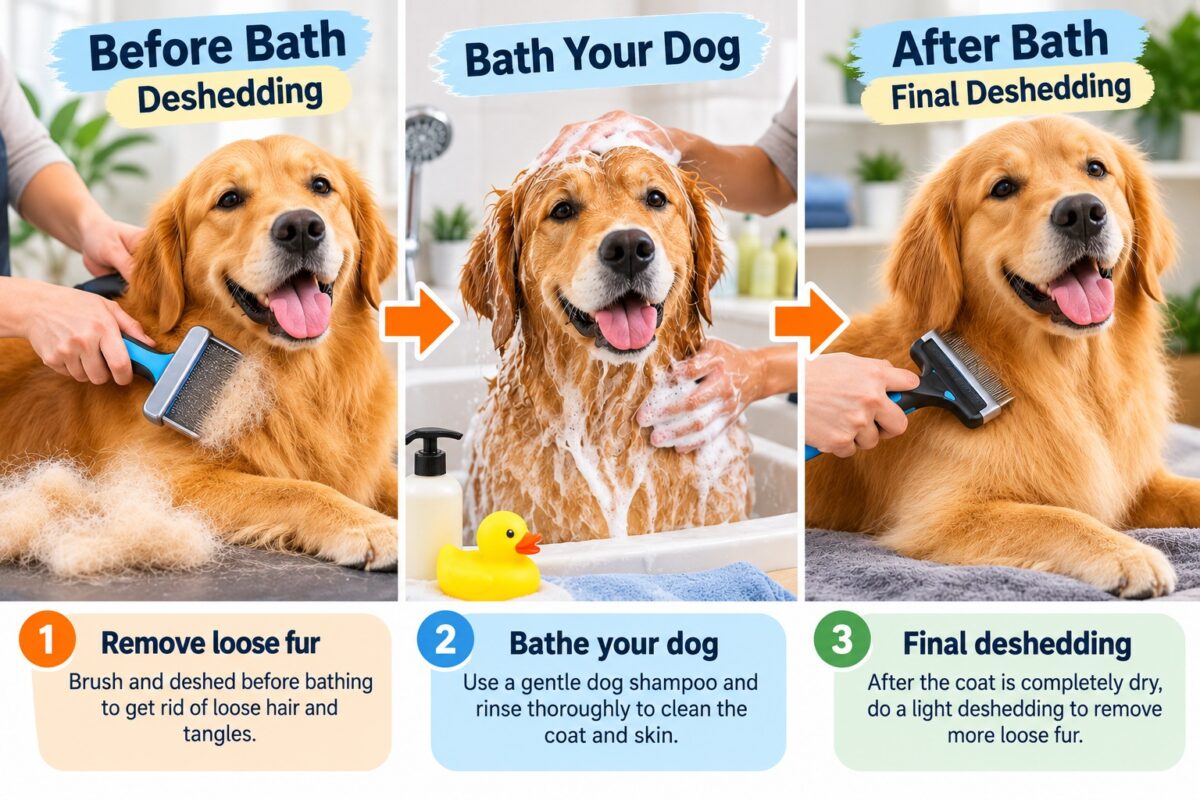
For many dogs, brushing before bathing removes loose fur and manageable tangles. A second gentle brushing after the coat is fully dry can remove hair loosened during washing.
Bathing isn’t necessary before every deshedding session. Too-frequent washing can dry or irritate some dogs’ skin.
A Practical Bathing and Deshedding Routine
- Inspect the skin and remove manageable tangles.
- Brush out loose surface hair before bathing.
- Wash with an appropriate dog shampoo when needed.
- Rinse thoroughly to remove shampoo residue.
- Dry the coat completely using suitable drying methods.
- Finish with gentle brushing and limited deshedding if appropriate.
Dense undercoats need particular attention during drying. Trapped moisture can contribute to skin discomfort when the coat remains damp.
Use safe drying temperatures and keep the dryer moving. Dogs with medical or mobility concerns may need an adapted grooming routine.
What Are the Most Common Dog Deshedding Mistakes?
The biggest deshedding mistakes involve choosing the wrong tool or using too much pressure. Removing a large pile of fur doesn’t automatically mean the grooming session was successful.
- Using the wrong brush: A tool designed for double coats may not suit fine or curly hair.
- Pressing too hard: Metal edges and wire pins can irritate skin when handled aggressively.
- Brushing over mats: Pulling through tight knots can cause pain or skin injury.
- Overworking one area: Repeated strokes may damage hair or irritate the skin.
- Ignoring body language: Flinching, turning away, or attempting to escape can signal discomfort.
- Expecting zero shedding: Healthy dogs naturally release old hair.
- Shaving double coats unnecessarily: Removing the outer coat may interfere with its protective function and normal regrowth.
I would rather finish with some loose fur remaining than cause discomfort by brushing too aggressively. A consistent routine gives you more opportunities to manage shedding safely.
Can Deshedding Reduce Dog Hair Around the House?
Yes. Regular deshedding can collect loose hair before it lands on furniture, flooring, and clothing.
However, grooming doesn’t stop the natural shedding cycle. The ASPCA’s dog grooming guidance explains that regular brushing helps manage loose hair without eliminating normal shedding.
Simple Ways to Control Loose Dog Hair at Home
- Brush consistently: Remove loose fur before it spreads around the home.
- Vacuum regularly: Focus on carpets, corners, and places your dog sleeps.
- Wash bedding: Clean removable pet-bed covers and blankets as needed.
- Use washable covers: Protect favorite sleeping areas from accumulating fur.
- Maintain good nutrition: Feed a complete, balanced diet suitable for your dog’s needs.
- Monitor skin health: Address itching, irritation, or unusual hair loss promptly.
For many households, short outdoor grooming sessions can also make cleanup easier. Choose a secure, comfortable location and collect the removed hair.
When Is Dog Shedding a Sign of a Health Problem?
Normal shedding generally leaves an otherwise healthy-looking coat and skin. Bald patches, sudden thinning, persistent itching, or inflammation deserve veterinary attention.
Grooming tools cannot treat infections, hormonal disorders, allergies, or parasites. Increasing deshedding when the coat looks unhealthy may make discomfort worse.
Signs That Need Veterinary Attention
- Sudden or unexplained hair loss
- Bald patches or uneven thinning
- Persistent scratching or excessive licking
- Red, swollen, or inflamed skin
- Scabs, open sores, or unpleasant skin odor
- Hair that breaks or pulls out unusually easily
- Visible parasites or signs of infestation
Potential causes include allergies, infections, parasites, and hormonal conditions. A veterinarian can evaluate the symptoms and recommend appropriate treatment.
Don’t try to solve medical hair loss by brushing harder. Stop grooming painful areas until the underlying problem is assessed.
Dog Deshedding Tools I Would Consider
If you’re choosing grooming equipment, I would start with coat compatibility and comfort rather than marketing claims. These three tools address different grooming needs.
Affiliate disclosure: Some product links below are Amazon affiliate links. I may earn a commission from qualifying purchases at no additional cost to you.
🏆 Best for Heavy Undercoat Shedding
FURminator Undercoat deShedding Tool for Dogs
★★★★☆ 4/5
This tool uses a stainless-steel deshedding edge and a hair-release button. Size and coat-length options help match different dogs. I would consider it for appropriate shedding coats, but not for everyday aggressive brushing or severely tangled fur.
✨ Best for Routine Brushing
Hertzko Self-Cleaning Slicker Brush
★★★★☆ 4/5
The fine wire pins help remove loose hair and manageable tangles. Its retractable-pin cleaning mechanism simplifies removing collected fur. I would consider it for regular coat maintenance, using light pressure to avoid scratching sensitive skin.
🐾 Best for Gentle Short-Coat Grooming
KONG ZoomGroom Dog Brush
★★★★☆ 4/5
This flexible rubber grooming brush uses soft projections to collect loose surface hair. I would choose this style for many smooth-coated dogs or those sensitive to metal tools. It is not intended to penetrate a thick undercoat.
The star scores above are editorial suitability assessments, not live customer ratings or claims of hands-on product testing. Always confirm the selected version matches your dog’s coat before purchasing.
Frequently Asked Questions About Dog Deshedding
Does deshedding hurt dogs?
Deshedding should not hurt when the correct tool is used gently on a suitable coat. Excessive pressure, repeated scraping, and pulling through mats can cause discomfort or injury. Stop if your dog flinches, develops redness, or shows signs of pain.
Can I deshed my dog every day?
Gentle daily brushing may suit some dogs, especially those with long or mat-prone coats. However, specialized deshedding edges generally should not be used aggressively every day. Follow product instructions and adapt frequency to your dog’s coat and skin condition.
Is deshedding better than regular brushing?
Neither method is universally better. Regular brushing removes surface hair, dirt, and tangles, while deshedding targets loose coat, especially undercoat hair. Many double-coated dogs benefit from both methods. Smooth-coated and curly-coated dogs may need different grooming approaches.
Should I deshed my dog before or after a bath?
Start with gentle brushing before bathing to remove loose hair and manageable tangles. After shampooing, rinsing, and drying completely, a finishing brush can collect additional loose fur. Use a specialized deshedding tool only when suitable for the coat.
Why is my dog still shedding after deshedding?
Deshedding removes hair that has already loosened, but it doesn’t stop the natural hair growth cycle. New hairs continue to release over time. Maintain a sensible brushing routine, and contact your veterinarian if shedding becomes unusually heavy or includes bald patches.
Final Takeaway: Keep Dog Deshedding Gentle and Consistent
Effective dog deshedding starts with understanding your dog’s coat. Choose the correct grooming tool, brush gently, work in sections, and avoid forcing loose hair out.
A healthy coat doesn’t need aggressive grooming. Start with short sessions, monitor your dog’s comfort, and adjust the routine as shedding changes.
If you want a broader foundation, explore this dog brushing and combing guide to improve your everyday grooming technique.