
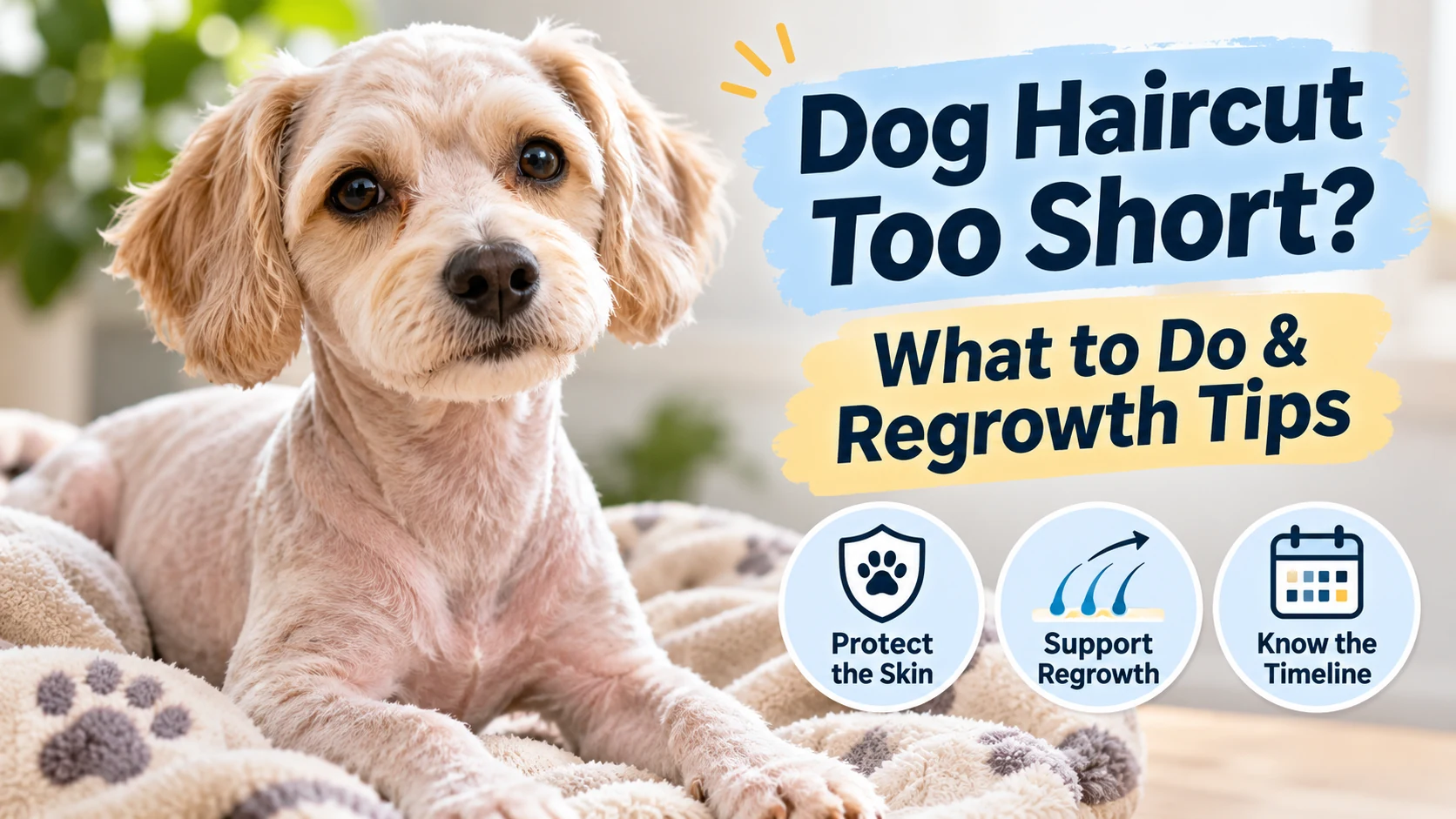
Quick Answer
If your dog’s haircut is too short, stop trimming, inspect the skin for irritation, and protect exposed areas from strong sunlight and cold weather. Most healthy coats gradually grow back, although the timing depends on breed, coat type, and individual hair growth. If you notice painful redness, sores, swelling, or persistent scratching, contact your veterinarian.
A dog haircut too short can be frustrating, especially when your dog’s fluffy coat suddenly looks shaved or uneven. The appearance may be surprising, but the more important question is whether the haircut has affected your dog’s skin or comfort.
A dog with healthy skin and a shorter-than-expected haircut usually needs gentle care and time. A dog with irritated or damaged skin may need veterinary attention. Understanding that difference helps you choose the right next step without making the situation worse.
What Should You Do Immediately If Your Dog’s Haircut Is Too Short?
Start by checking your dog’s skin and behavior. Resist the urge to correct the haircut immediately, because additional clipping can remove even more protective hair or irritate sensitive areas.
- Stop trimming. Put away the clippers and scissors, even if the haircut looks uneven.
- Inspect the skin. Look for redness, scratches, bumps, swelling, or areas that appear unusually sensitive.
- Observe your dog. Notice excessive licking, scratching, rubbing, or discomfort when touched.
- Limit sun exposure. Keep your dog in shaded areas, especially when large areas of skin are exposed.
- Maintain a comfortable temperature. Provide appropriate warmth when the weather is cold.
- Allow recovery time. Avoid unnecessary grooming until the skin is comfortable and the coat begins growing.
If your dog behaves normally and the skin looks healthy, you can usually focus on protection and monitoring. If the skin appears injured or your dog seems painful, contact a veterinarian rather than attempting another grooming treatment.
How Can You Tell If a Dog’s Haircut Is Too Short?
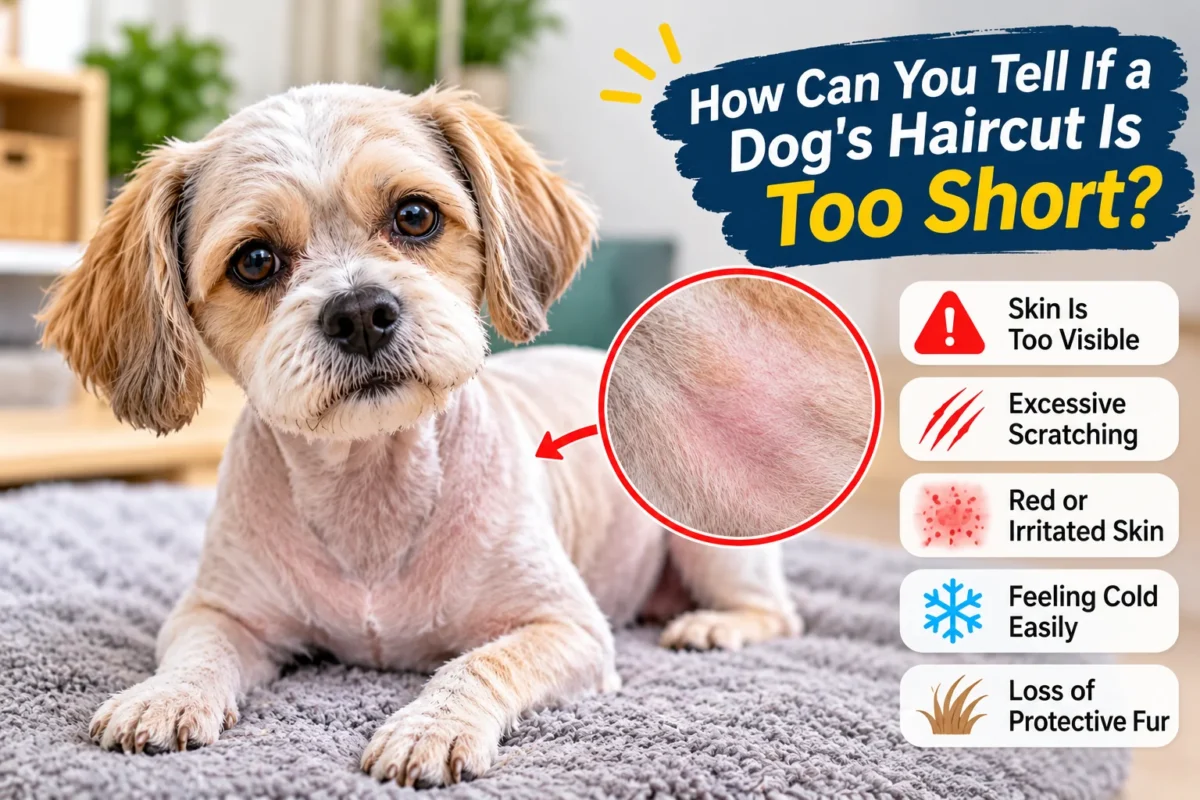
A haircut becomes concerning when it leaves the skin inadequately protected or causes irritation. The shortest acceptable length varies with coat type and grooming circumstances, so appearance alone does not tell the whole story.
Possible signs include:
- Large areas of skin are visible where the coat previously provided coverage.
- Your dog scratches or rubs freshly clipped areas repeatedly.
- The skin appears red, scraped, or inflamed.
- Your dog seems unusually sensitive to cool temperatures.
- The haircut has removed much of a double-coated dog’s protective fur.
Very short hair is not automatically an injury. Some dogs naturally have short coats, and certain areas may need close clipping for veterinary treatment. What matters is the dog’s normal coat, skin condition, and comfort.
VCA Animal Hospitals advises leaving approximately one inch of hair when shortening a coat for general grooming to help protect against sun damage. This is a preventive guideline, not a reason to panic if your dog has already been clipped shorter.
How Do You Protect Your Dog After a Haircut That Is Too Short?
The main goal is to protect exposed skin while the fur grows back. Gentle handling, suitable temperatures, and avoiding unnecessary products are more useful than trying to stimulate rapid hair growth.
1. Protect Exposed Skin From Sunlight
A dog’s coat provides some natural protection from ultraviolet radiation. Removing that coverage may increase the risk of sunburn, particularly in dogs with lightly pigmented skin.
Choose shaded walking routes and avoid prolonged exposure during strong sunlight. Ask your veterinarian about a dog-safe sunscreen if exposed skin needs additional protection. Do not assume human sunscreen is suitable, especially when your dog could lick it.
2. Keep Your Dog Comfortable in Cold Weather
A very short haircut can reduce insulation, especially in dogs accustomed to longer fur. During chilly weather, provide a warm resting area away from drafts.
A lightweight, properly fitted dog sweater may help during outdoor walks. Remove clothing if it causes rubbing, traps moisture, restricts movement, or makes your dog too warm.
3. Avoid Irritating the Skin
Freshly clipped skin can be more sensitive to friction and grooming products. Avoid vigorous brushing, heavily fragranced products, and unnecessary bathing.
Do not apply human lotions, essential oils, or medicated creams without veterinary guidance. Some ingredients can irritate dogs or be harmful when licked.
4. Watch for Changes Over the Next Few Days
Check the skin periodically for new redness, bumps, scabs, or excessive licking. Taking a clear photograph shortly after grooming can help you notice changes later.
If your dog remains comfortable and the skin stays healthy, further intervention is generally unnecessary.
What If Your Dog Has Red or Irritated Skin After Grooming?
Redness after a close haircut may indicate clipper irritation, friction, an allergic reaction, or another skin problem. The appearance alone cannot confirm the cause.
Clipper irritation can occur when blades are too hot, trimming is excessively close, or sensitive skin experiences repeated friction.
For mild irritation, stop grooming and prevent further rubbing. Keep the area clean and dry, and avoid applying unfamiliar treatments.
Warning
Contact your veterinarian promptly if your dog has painful skin, spreading redness, bleeding, open sores, discharge, significant swelling, or persistent licking and scratching. These signs may indicate an injury or skin condition that needs treatment.
If the skin looks healthy but your dog is behaving unusually, consider other possible causes of discomfort rather than assuming the haircut itself explains everything.
Veterinary guidance on dog grooming and skin care from the ASPCA explains why monitoring skin condition is part of responsible coat maintenance.
How Long Does Dog Hair Take to Grow Back After Being Cut Too Short?
Dog hair usually regrows gradually, but there is no reliable timeline for every dog. Breed, coat type, natural hair cycles, age, and overall health can influence how quickly the original appearance returns.
Some dogs show noticeable new growth within weeks. Restoring the previous coat length may take several months, particularly when the hair was clipped extremely close.
Veterinary dermatology references describe regrowth over approximately three to four months in many healthy dogs, while some double-coated dogs can take considerably longer. These are broad expectations rather than guaranteed deadlines.
The important distinction is between visible new growth and complete coat restoration. Hair can begin returning well before the coat regains its original thickness, length, and texture.
For persistent regrowth problems, seek veterinary assessment rather than relying on a fixed deadline. A useful reference is the University of Minnesota’s discussion of canine post-clipping alopecia.
Does Hair Grow Back Differently Depending on Your Dog’s Coat Type?
Yes. Coat structure and hair-growth cycles affect how a dog looks during regrowth and how long restoration may take.
| Coat Type | What to Expect | Main Care Priority |
|---|---|---|
| Curly or continuously growing coat | Gradual growth; original styling length takes time | Gentle brushing as length returns |
| Long, silky coat | Length returns progressively; tangles may develop | Prevent knots without irritating skin |
| Double coat | Undercoat and guard hairs may return at different rates | Protect exposed skin and avoid further shaving |
| Naturally short coat | Changes may be less visually dramatic | Check for irritation and sun exposure |
These differences explain why two dogs receiving equally short haircuts may recover their previous appearance at different speeds.
Why Are Double-Coated Dogs Different?
Double-coated breeds have an outer layer of guard hairs and a softer insulating undercoat. Both layers contribute to protecting the skin and regulating exposure to environmental conditions.
After close shaving, the two layers may regrow unevenly. Some dogs experience delayed hair growth, and certain coats may temporarily appear patchy or unusually textured.
The American Kennel Club explains the importance of preserving these layers in its guide to grooming double-coated dogs.
Can You Make Your Dog’s Hair Grow Back Faster?
There is no proven home remedy that guarantees faster hair regrowth after an ordinary haircut. The most useful approach is to support normal skin and coat health rather than pursue rapid-growth claims.
Provide a complete, balanced diet suitable for your dog’s life stage. Once the skin is comfortable and the coat has sufficient length, resume gentle brushing with tools appropriate for the coat.
Avoid supplements marketed for rapid fur growth unless a veterinarian identifies a specific nutritional or medical need. Excessive supplementation may be unnecessary or harmful.
Likewise, frequent shampooing, aggressive brushing, or repeated clipping will not reliably accelerate healthy hair growth.
Practical Tip
Take a photograph of your dog’s coat every two to four weeks under similar lighting. This creates a useful record of regrowth without repeatedly handling or measuring sensitive skin.
Should You Try to Fix a Haircut That Looks Too Short or Uneven?
Usually, waiting is safer than immediately trimming more hair. An uneven appearance is a cosmetic issue unless it involves irritation, matting, or another condition affecting comfort.
Trying to blend short sections with clippers can gradually shorten surrounding hair until even more skin is exposed.
If the haircut is uneven but the skin is healthy, allow some regrowth before considering a professional correction. A groomer may be able to improve the shape without significantly shortening the remaining coat.
Never attempt close corrective cutting around skin folds, ears, or sensitive body areas when your dog is uncomfortable or moving unpredictably.
When Should You See a Veterinarian About a Too-Short Haircut?
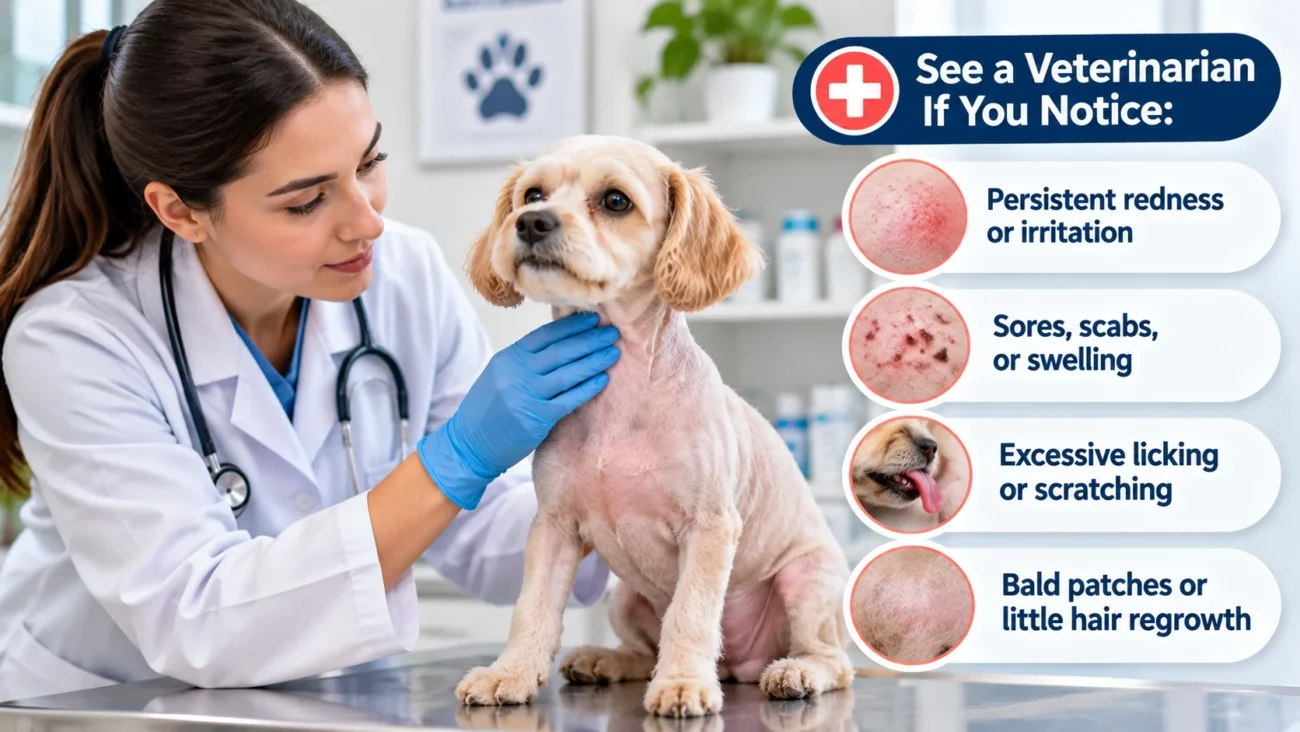
Veterinary attention is appropriate when the problem extends beyond appearance. Seek advice if irritation is persistent, worsening, or accompanied by signs of skin damage.
Also arrange an examination if the coat develops unexplained bald patches, changes in skin pigmentation, abnormal scaling, or little regrowth over an unexpectedly long period.
Delayed regrowth can sometimes involve normal hair cycling, especially in certain double-coated breeds. However, skin disease and underlying medical conditions can also affect hair growth, so appearance alone is not enough to identify the cause.
Your veterinarian can determine whether monitoring is sufficient or whether skin examination and further testing are appropriate.
How Can You Prevent Your Dog’s Next Haircut From Being Too Short?
Clear grooming instructions are the most effective way to reduce misunderstandings about haircut length.
- Bring reference photographs. Show the groomer the appearance you want, preferably using your own dog’s previous haircut.
- Discuss actual coat length. Explain how much hair you want left rather than relying only on style names.
- Ask about clipper guards. Confirm the planned length and whether the selected method suits your dog’s coat.
- Discuss matting beforehand. Severe mats can limit safe styling options and sometimes require close clipping.
- Identify sensitive areas. Mention previous clipper irritation or skin concerns.
- Confirm breed-specific care. Double-coated dogs may require brushing and deshedding rather than extensive clipping.
If your dog previously experienced irritation, tell the groomer before the appointment. That history may affect the equipment and technique they choose.
Remember that a safe grooming plan should prioritize the dog’s skin and comfort over achieving a particular appearance.
Frequently Asked Questions
Will my dog’s fur grow back after being shaved too short?
In many healthy dogs, fur gradually grows back after shaving. However, some coat types experience slower or uneven regrowth, and persistent bald patches warrant veterinary evaluation.
Can a too-short haircut make my dog feel cold?
Yes. Removing a significant amount of fur can reduce insulation. Provide comfortable indoor temperatures and appropriate protective clothing in cold conditions without allowing overheating.
Why is my dog licking its skin after a haircut?
Licking may indicate irritation, friction, or another source of discomfort. Repeated licking, redness, pain, or damaged skin should prompt veterinary advice.
Is it normal for a dog’s skin to look pink after shaving?
Some dogs naturally have pink skin, which becomes more visible after trimming. New redness, tenderness, swelling, or itching is different and should not automatically be considered normal.
Should I brush my dog immediately after a very short haircut?
Avoid unnecessary brushing over newly exposed or sensitive skin. Resume gentle, coat-appropriate brushing when the skin is comfortable and there is enough hair to brush safely.
Can a groomer fix an excessively short dog haircut?
A groomer cannot restore removed hair immediately. They may improve uneven edges later, but allowing regrowth is usually the safest choice when the remaining coat is already extremely short.
Final Thoughts
A dog haircut that is too short is usually best managed with patience, gentle care, and protection from the elements. Focus on how your dog feels rather than how quickly the original hairstyle returns.
Monitor exposed skin, avoid unnecessary trimming, and allow normal coat growth. If your dog develops painful irritation or persistent hair-growth problems, seek veterinary advice. For future appointments, discussing coat length and grooming expectations beforehand can help prevent the same problem.


