
Quick Answer
To trim puppy hair safely, first help your puppy relax, brush out loose tangles, and check whether their coat actually needs cutting. For a cooperative puppy, begin with a tiny, low-risk tidy-up using suitable dog-grooming tools. Leave hair close to the eyes, ears, paw pads, skin folds, and genitals to an experienced groomer, especially during a first haircut. Never force a frightened puppy to stay still.
A puppy’s first haircut is not a race to create a polished style. The priority is keeping the coat comfortable while teaching your puppy that brushes, handling, and grooming sounds are safe. A brief, successful introduction can be more useful than finishing an entire haircut.
Some puppies develop long coats that need regular clipping. Others have short or double coats that usually benefit more from brushing than cutting. That difference matters before you pick up scissors or switch on clippers.
When Should You Trim a Puppy’s Hair?
Trim only when the coat needs it and your puppy can tolerate the process calmly. There is no single haircut age that applies to every puppy. Coat growth, breed or mix, skin health, grooming experience, and vaccination requirements for a salon all affect the timing.
Poodles and some long-haired breeds may require routine coat shaping. Short-coated puppies generally do not need a haircut. A puppy with a thick double coat should not be shaved merely because the weather is warm; brushing and appropriate coat maintenance are usually better starting points.
Begin gentle grooming preparation early: touch the paws briefly, lift an ear without pulling, show a brush, and reward calm responses. A first professional appointment may focus on familiarization, bathing, brushing, and a small tidy rather than a complete haircut. Ask your veterinarian about exposure risks before taking a partly vaccinated puppy into a shared salon. The salon may also have its own vaccine policy.
What Do You Need Before Trimming Puppy Hair?
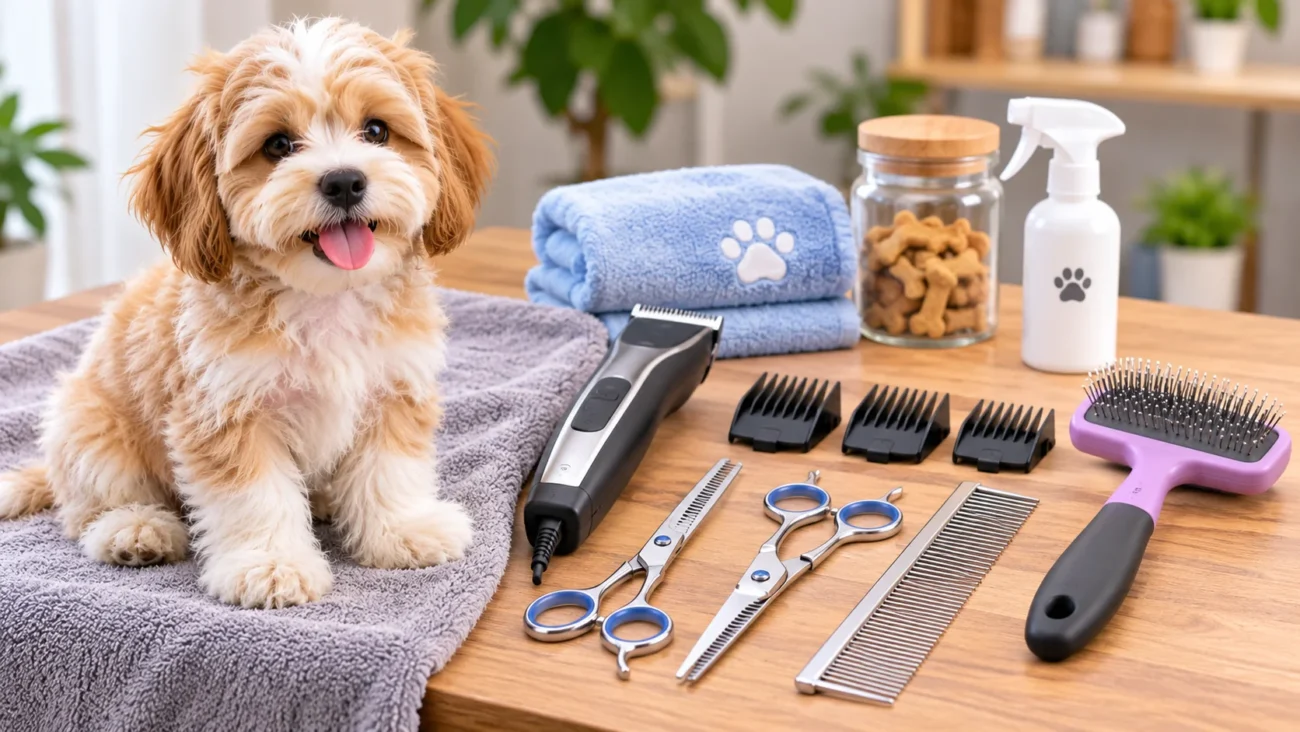
Prepare a quiet, well-lit space with a non-slip surface at a safe height. Keeping equipment within reach prevents you from leaving a puppy unattended. If you use a raised grooming surface, maintain close supervision and prevent falls; a secure floor-level setup is often easier for beginners.
- Coat-appropriate brush and metal comb: to find knots and check whether hair is fully detangled.
- Dog-specific grooming clippers with a suitable guard: only if you have learned safe handling and your puppy tolerates them.
- Small, rounded-tip grooming scissors: for limited, clearly visible touch-ups away from sensitive anatomy; rounded tips are not cut-proof.
- High-value treats and a familiar mat: to reward calm behavior and make breaks easy.
- Towel and cleaning supplies: to keep the area dry and remove loose hair.
Avoid household scissors, human hair clippers that pull the coat, and any blade whose cutting length or handling you do not understand. A comb that cannot pass through the coat easily signals that clipping may snag or tug. Do not pull tight tangles away from the skin and cut beneath them; puppy skin can be caught in a mat.
How Do You Trim Puppy Hair at Home Step by Step?
For a first home session, treat this as a short maintenance trim, not a full-body haircut. If you have never used pet clippers, ask a qualified groomer to demonstrate the technique on your puppy’s particular coat before you attempt cutting.
- Choose a calm moment. Wait until your puppy has had a chance to settle, but is not exhausted, irritable, or overstimulated. Keep the room quiet and remove distractions.
- Introduce the tools without cutting. Let the puppy inspect the switched-off clippers or brush. Reward calm investigation. Make short grooming noises from a distance, then stop and reward before moving the sound closer over later sessions.
- Brush and inspect the coat. Work gently in small sections. Look for irritated skin, fleas, debris, mats, or tender areas. Stop if the comb snags repeatedly or your puppy reacts to pain.
- Start on a low-risk body area. If your puppy is comfortable and you know how to use the tools, make a very small adjustment to an accessible, flat section of coat, away from the face, limbs, belly, and skin folds. Keep the coat length conservative.
- Keep the skin and tool position controlled. Never press a cutting edge into the skin, dig under knots, or pass clippers over loose folds. Check the blade’s temperature frequently, since hot blades can burn.
- Pause after a few seconds. Offer a treat, release handling pressure, and allow the puppy to move naturally. A successful session may end after one tiny trim.
- Inspect rather than chasing perfection. Gently brush away loose hair and look for uneven spots in good light. Do not keep cutting to correct every difference if your puppy is tiring.
Even if the coat looks unfinished, stopping while your puppy is still relaxed helps protect future grooming sessions. A professional can complete the shaping later.
Warning
Never use scissors or clippers close to a moving puppy’s eyes, ear margins, genitals, or skin folds. Stop immediately if the puppy struggles, yelps, snaps, freezes, or repeatedly tries to escape. Seek veterinary care for cuts, bleeding that does not stop, or painful skin changes.
Which Parts of a Puppy Can You Safely Trim Yourself?
The safest starting point is a small amount of hair on an easily visible, stable section of the body, and only after proper tool familiarization. The closer hair is to thin skin, moving joints, or sensitive openings, the more skill the job requires.
| Area | Safer first approach |
|---|---|
| Back and upper body | Consider a tiny tidy-up only with learned technique and a calm puppy. |
| Around the eyes and muzzle | Ask a professional; sudden head movement can cause injury. |
| Ear edges | Leave to a professional; ear skin is easy to catch. |
| Between paw pads | Professional trimming is preferable for beginners. |
| Armpits, groin, sanitary area | Avoid DIY cutting around skin folds and delicate tissue. |
If hair blocks your puppy’s sight or traps waste near the rear, the need may be urgent enough to book a groomer, not urgent enough to attempt risky cutting with a wriggling puppy.
Does the Right Trimming Method Depend on Coat Type?
Yes. Coat structure determines whether cutting is appropriate and what maintenance matters most. Avoid assuming that every fluffy puppy needs the same short haircut.
Curly or continuously growing coats
Many Poodles and similar mixes develop coats that tangle readily and need regular brushing, combing, and professional shaping. A comb should pass all the way through the coat, not just skim the surface. The puppy’s eventual adult coat may behave differently from its soft early coat.
Long, silky coats
Breeds with long hair may need tidy-ups to prevent strands from obscuring vision or collecting dirt. Daily or frequent gentle detangling often matters more than removing a large amount of hair. Sensitive face and foot work is best demonstrated or handled by a groomer.
Short coats and double coats
Short-haired puppies usually need bathing and brushing rather than haircuts. For double-coated puppies, brushing removes loose undercoat without automatically sacrificing the insulating outer coat. Do not routinely shave a double coat for summer comfort; discuss any medical or severe-matting exception with a veterinarian or experienced groomer.
How Can You Keep a Puppy Calm During a Haircut?
Build comfort in stages rather than relying on restraint. A puppy that can walk away briefly, take treats, and return voluntarily is showing better readiness than one being held immobile through fear.
- Practice a few gentle brush strokes, then stop before restlessness begins.
- Pair each tool sound or light touch with a small reward.
- Introduce paws, chin, and ears separately across different sessions.
- Offer breaks whenever the puppy turns away, stiffens, or stops accepting rewards.
- Keep another person nearby only if they can calmly reward and support the puppy without forceful restraint.
If the puppy refuses food, pants when not hot, struggles, or shows a tense posture, lower the difficulty or end the session. Growling is communication, not misbehavior to punish. The VCA guidance on puppy socialization and desensitization explains why gradual, low-intensity exposure is preferable to overwhelming a young dog.
What Mistakes Should You Avoid When Trimming Puppy Hair?
The biggest mistake is treating grooming as a job that must be finished regardless of the puppy’s comfort. Several other errors can create pain or make later grooming harder:
- Cutting tight mats: skin can be hidden inside a knot and accidentally sliced.
- Trying to make a puppy stay still by force: sudden resistance increases cutting risk and fear.
- Using bare, unfamiliar clipper blades: inappropriate blade choice can cut too close or cause injury.
- Trimming wet or tangled fur without appropriate technique: tools may pull, snag, or produce unpredictable results.
- Assuming short hair keeps every puppy cooler: coat function varies, especially with double coats.
- Ignoring early distress signals: freezing, whale eye, repeated lip licking, or avoidance may appear before a puppy struggles.
Check the coat and skin before every session. New redness, sores, a strong odor, bald patches, or obvious pain are reasons to postpone cutting and ask your veterinarian for guidance.
When Is a Professional Puppy Groomer the Better Choice?
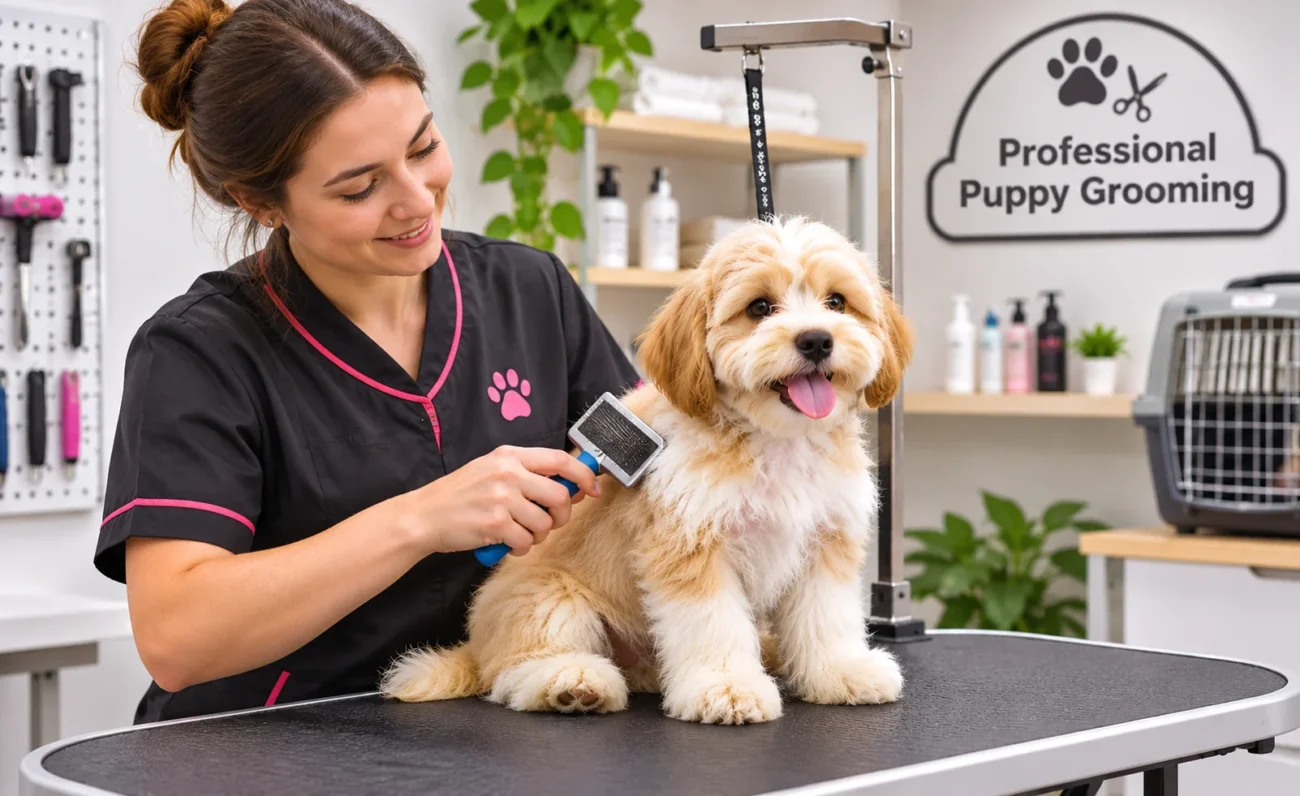
Book a professional when your puppy needs a complete haircut, has significant matting, struggles with handling, or requires work around the eyes, ears, feet, or sanitary area. Experienced groomers can choose suitable tools and adjust the visit to the puppy’s tolerance.
When you contact a salon, tell them your puppy’s age, coat type, vaccination status, previous grooming experiences, and any fears or health concerns. Ask whether they offer short introductory visits rather than insisting on a full haircut at the first appointment.
The PetMD puppy grooming guide provides a broader overview of grooming needs beyond hair trimming, including brushing and routine hygiene. If your puppy has painful mats or injured skin, a veterinarian may need to evaluate the situation before grooming proceeds.
How Do You Maintain Puppy Hair Between Trims?
A simple routine keeps most coats manageable and reduces the need for rushed cutting. Match the frequency to how quickly your puppy’s hair tangles, how much debris it collects, and whether brushing remains comfortable.
- Check high-friction areas behind the ears, near the collar, and under the legs for tangles.
- Brush gently using tools suited to the coat, then use a comb to confirm the hair is free of knots.
- Inspect paws, eyes, and the rear for trapped dirt without cutting close to the skin.
- Keep grooming practice brief and positive, even on days when no haircut is needed.
- Arrange the next professional appointment before mats become tight or uncomfortable.
Good maintenance does not require a perfect-looking haircut. It means keeping the puppy clean, comfortable, and increasingly willing to cooperate with handling.
Frequently Asked Questions
Can I trim my puppy’s hair with scissors?
Only for limited, low-risk touch-ups when you understand the technique and your puppy is calm. Household scissors and cutting near moving facial features are unsafe. For a first haircut, a groomer is usually the better choice.
Should I cut my puppy’s hair before the first grooming appointment?
Not necessarily. Practicing brushing, paw handling, and tool sounds is often more useful than doing a haircut. A groomer can assess the coat and introduce trimming gradually.
What if my puppy has matted hair?
Do not slide scissors under a tight mat. Mats can hold skin close to the cutting edge and may be painful to remove. Seek a groomer or veterinarian, depending on the severity and condition of the skin.
How often should puppy hair be trimmed?
There is no universal interval. Coats that keep growing may require regular appointments, while short coats often need no haircut at all. Your groomer can suggest a schedule based on coat growth and tangling.
Final Thoughts
To trim puppy hair safely, begin with coat assessment, gentle handling, and very small goals. Avoid risky areas, stop at the first signs of distress, and let an experienced groomer handle complicated cutting. The best first trim is one that protects your puppy’s skin and builds confidence for the next visit.


