Quick Answer
To trim dog feet safely, brush and inspect the paws, then carefully shorten excess fur around the toes and foot edges. Paw-pad hair can be trimmed level with the pads using a suitable small trimmer, but beginners should first learn the technique from a groomer or veterinarian. Never dig between the toes, cut tight mats with scissors, or force a struggling dog to continue.
Long fur around a dog’s feet can collect dirt, form tangles, and cover the paw pads. Keeping that hair tidy can make routine cleaning easier while maintaining a neat, comfortable paw shape.
However, trimming dog feet requires more care than cutting hair along the back or legs. The delicate skin between the toes, sensitive paw pads, and natural movement of the feet create several areas where careless trimming can cause injuries.
The safest approach is to remove only the hair that needs attention and leave difficult areas to a trained professional.
What Does Trimming a Dog’s Feet Involve?
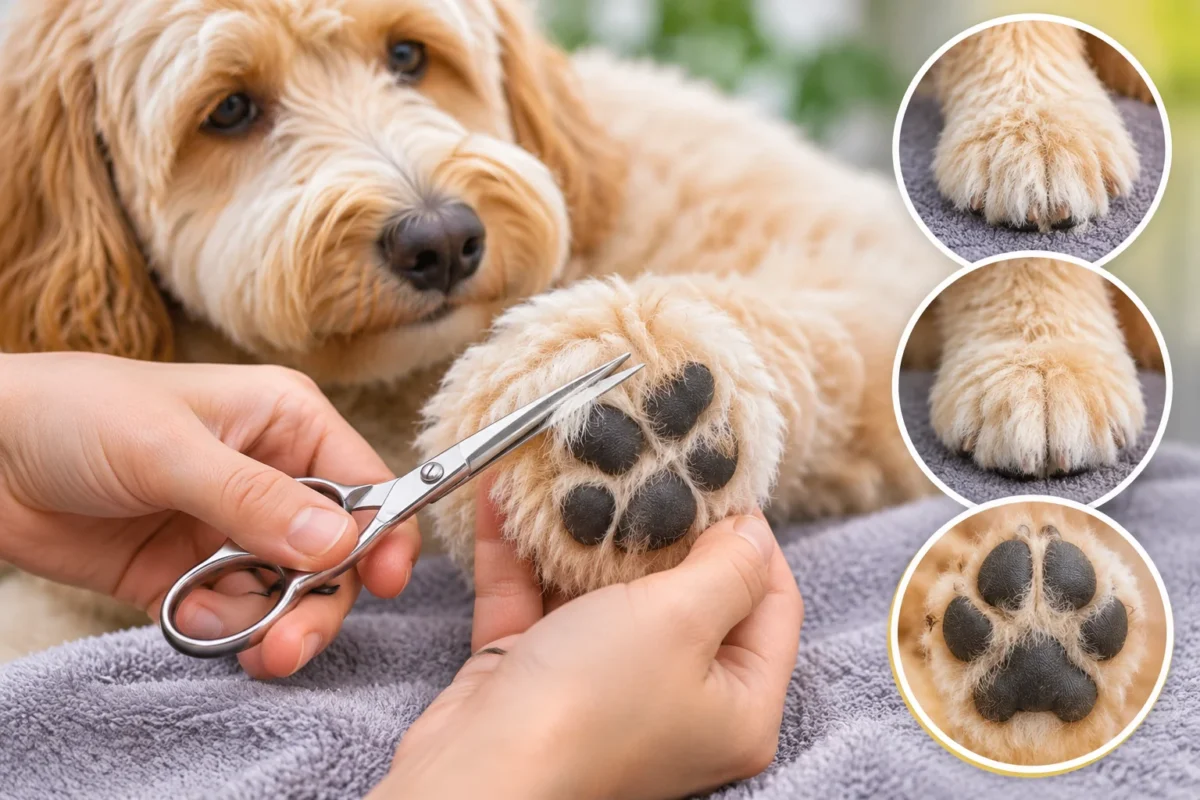
Trimming a dog’s feet means shortening excess hair around the paws, toes, and sometimes the spaces between the paw pads. The goal is to maintain a tidy foot without damaging the skin or removing more hair than necessary.
There are three areas to consider:
- Top of the foot: Longer hair around the toes may need light shaping to maintain a natural outline.
- Foot edges: Hair extending beyond the shape of the paw can be shortened to prevent an untidy, overgrown appearance.
- Underside of the paw: Fur projecting beyond the paw pads may need careful trimming, particularly in long-haired dogs.
Not every dog needs all three areas trimmed. Short-haired dogs may need little or no foot-hair maintenance, while dogs with continuously growing coats often require closer attention.
Foot-hair trimming is also different from nail trimming. Both involve paw care, but each requires separate tools and techniques.
Why Should You Trim Excess Hair Around Dog Feet?
Excess paw hair can become a practical grooming problem when it grows long enough to trap debris, conceal the pads, or develop tangles.
The main reasons for maintaining foot hair include:
- Reducing matting: Long fur around the toes can tangle, particularly when frequently exposed to moisture and dirt.
- Making paws easier to clean: Shorter, manageable hair allows debris to be spotted and removed more easily.
- Keeping the pads visible: Removing fur that extends over the walking surface may improve contact between the pads and the ground.
- Improving inspection: Tidier paws make it easier to notice visible cuts, irritated skin, or trapped objects.
- Maintaining foot shape: Light trimming can preserve a natural, rounded appearance.
Long paw hair is not automatically unhealthy. Some dogs have naturally feathered feet that require only occasional brushing and limited trimming.
If your dog slips on smooth floors, check other possible causes as well. Long nails, slippery flooring, and mobility problems may contribute to poor traction.
What Tools Do You Need to Trim Dog Feet Safely?
Use equipment suited to small, sensitive grooming areas. Large body clippers and ordinary household scissors are usually poor choices for detailed work around paws.
| Tool | Purpose |
|---|---|
| Small paw trimmer | Carefully shortening hair near the paw pads after proper instruction |
| Blunt-tip grooming scissors | Light external shaping when the dog is calm and the cutting area is clearly visible |
| Small grooming comb | Separating loose hair and identifying tangles |
| Soft brush | Removing loose dirt and smoothing fur |
| Non-slip mat | Providing stable footing during grooming |
| Small treats | Rewarding calm handling and cooperation |
A small trimmer is useful for paw-pad maintenance, but the blade must remain away from delicate webbing. If you have never trimmed paw pads, ask a professional to demonstrate the correct hand position and tool movement before attempting it.
How Do You Prepare Your Dog for Foot Trimming?
Prepare your dog by building comfort with paw handling, examining the feet, and arranging a safe grooming space. Preparation reduces the likelihood of sudden movements near sharp tools.
Check the paws before grooming
Look at the upper and lower surfaces of each foot. Check for cuts, swelling, redness, broken nails, embedded debris, or painful-looking areas.
Do not groom over injured or inflamed skin. If your dog reacts painfully to gentle handling or has persistent paw irritation, arrange veterinary assessment before continuing.
Make handling familiar
Start by gently touching a paw and rewarding your dog. Gradually progress to holding it briefly and inspecting the toes.
Introduce grooming tools without immediately switching them on or using them. Let the dog become comfortable with their presence, sound, and movement over several short sessions.
The VCA Animal Hospitals handling guide explains how gradual paw handling and positive reinforcement help prepare pets for grooming procedures.
Prepare the grooming area
Choose a quiet, well-lit place with a non-slip surface. Keep your tools nearby so you do not need to leave your dog unattended on an elevated table.
For home grooming, working at floor level is often a practical choice, especially with larger or unsettled dogs.
How to Trim Dog Feet Step by Step
Begin with the easiest visible hair around the paw. Work gradually, checking your dog’s comfort after each stage. Only attempt detailed paw-pad trimming if you have received suitable instruction.
Step 1: Brush and separate the paw hair
Brush the upper foot gently, then use a comb to identify loose hair that extends beyond the natural shape of the paw.
Remove ordinary surface debris before trimming. If the comb catches on a tight mat, do not pull forcefully or attempt to cut into it.
Step 2: Support the paw comfortably
Hold the foot in a natural position without twisting the leg backward or forcing the joints into an uncomfortable angle.
Support the paw gently rather than gripping tightly. If your dog repeatedly pulls away, stop and return to handling exercises.
Step 3: Trim excess hair around the outside
Comb the outer fur away from the foot and identify strands extending beyond its natural outline.
When the cutting area is clearly visible and the dog remains still, carefully shorten the excess external hair using an appropriate grooming tool.
Make small adjustments rather than cutting large amounts at once. The objective is a neat outline, not an extremely short haircut.
Step 4: Assess the hair covering the paw pads
Look underneath the paw to determine whether fur extends beyond the walking surface of the pads.
If trimming is necessary and a professional has taught you the method, use a suitable small trimmer to shorten projecting hair to approximately pad level. Keep the cutting head flat and avoid pushing it into the gaps between pads.
Do not use scissors to dig into the pad spaces. The webbing and folds of skin can be difficult to distinguish from surrounding hair.
Safety Warning
Never insert scissors or a trimmer tip deep between the toes. Do not cut through tight mats against the skin. Stop immediately if your dog struggles, the blade becomes hot, or the skin appears irritated.
Step 5: Tidy the upper toes
Return the foot to a comfortable position and lightly comb the hair over the toes.
Trim only clearly visible excess fur around the outer outline. Avoid pointing scissors toward the skin or trying to create deep separations between individual toes.
Dogs with naturally feathered feet may look better with some hair left in place.
Step 6: Inspect and reward
Check the paw for redness, scratches, uneven tufts, and leftover debris. Make sure no fur is pulling tightly against the skin.
Reward your dog and finish the session while the experience remains positive. Completing one comfortable paw is better than rushing through four stressful ones.
Should You Trim Hair Between a Dog’s Paw Pads?
Hair extending over the pads may need trimming, especially if it collects debris or becomes tangled. However, the hair deep between the pads should not be aggressively removed during routine home grooming.
The American Kennel Club’s home grooming guidance recommends keeping excess pad hair approximately level with the pads and learning safe trimming procedures from a qualified professional.
There is an important difference between shortening protruding hair and shaving deeply into the toe spaces. The first may be manageable with appropriate instruction; the second increases the opportunity for accidental skin injury.
If you cannot clearly identify the pads and surrounding skin, leave that area untouched until a groomer can help.
How Should You Handle Matted Hair on Dog Feet?
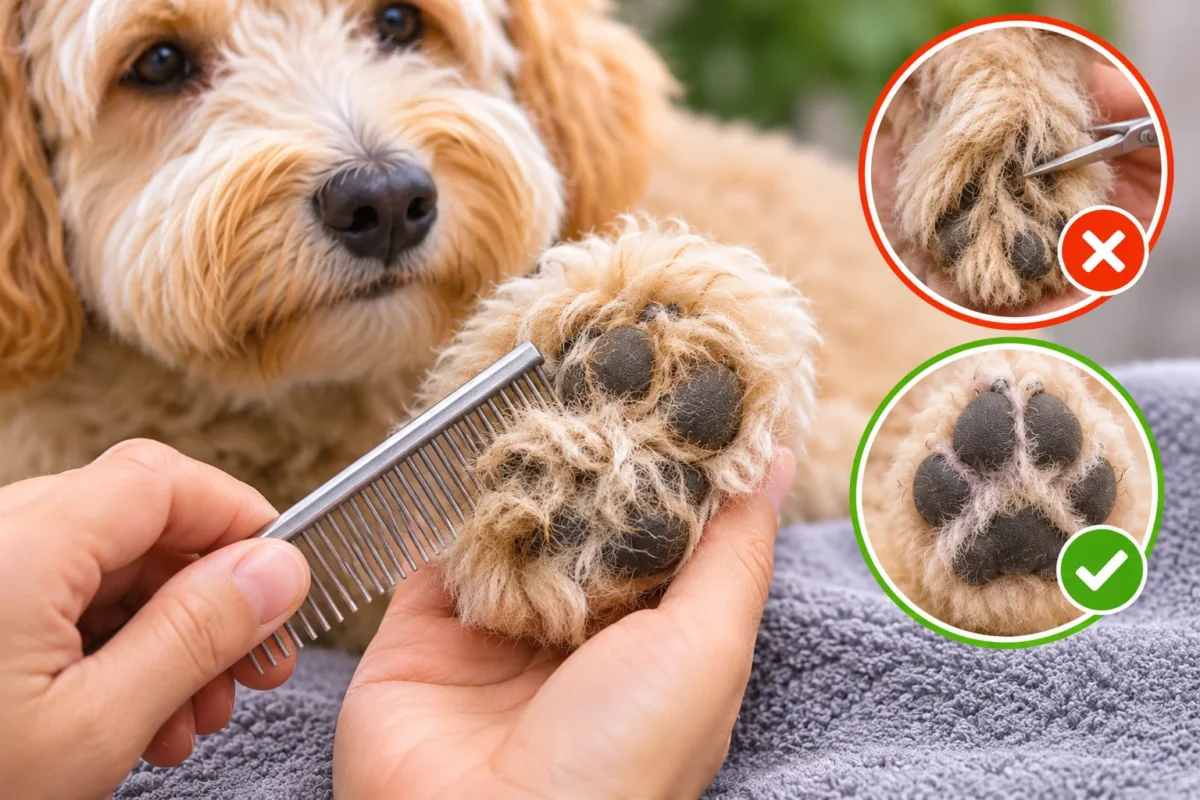
Tightly matted hair around paw pads should be removed by an experienced groomer or veterinary professional, not cut out with household scissors.
Mats can pull at sensitive skin and conceal folds, irritated areas, or small injuries. Cutting blindly underneath a mat may injure tissue that cannot be seen.
For loose, superficial tangles, gentle brushing may be sufficient if it does not cause discomfort. Stop if the hair resists or the dog shows signs of pain.
Hard mats between pads require particularly careful handling. If there is swelling, discharge, marked sensitivity, or limping, seek veterinary advice rather than booking an ordinary cosmetic trim.
What Common Dog Foot Trimming Mistakes Should You Avoid?
Most preventable trimming problems involve using inappropriate tools, removing too much hair, or continuing when the dog is uncomfortable.
- Cutting between toes blindly: You may accidentally catch delicate skin hidden beneath the fur.
- Using pointed household scissors: These are poorly suited to unpredictable movements around sensitive paws.
- Trimming over irritated skin: Existing redness or injuries may worsen with additional friction.
- Pressing clippers into the pads: Excess pressure and incorrect blade angles increase injury risk.
- Ignoring blade temperature: Warm blades may cause discomfort or skin irritation.
- Trying to finish every foot: A stressed or struggling dog is more likely to move suddenly.
- Removing all visible paw fur: Over-trimming is unnecessary when light shaping would achieve the goal.
- Cutting tightly matted hair: Mats frequently hide skin and require professional removal.
Preventing these mistakes matters more than producing perfectly symmetrical feet.
What If Your Dog Hates Having Their Feet Trimmed?
Stop using cutting tools and work on comfortable paw handling before trying again. Resistance is a reason to change the process, not apply stronger restraint.
Begin with brief touches while rewarding calm behavior. Progress gradually to holding a paw, showing a tool, and introducing its sound at a comfortable distance.
Some dogs tolerate only one or two short interactions during the early stages. That is enough for a useful training session.
Watch for repeated paw withdrawal, tense posture, freezing, growling, or attempts to escape. These behaviors indicate that continuing may be unsafe.
If your dog reacts strongly despite gradual training, a qualified groomer or veterinarian can recommend an appropriate handling plan.
How Often Should You Trim Your Dog’s Feet?
Trim foot hair when it becomes long enough to interfere with cleaning, collect debris, form tangles, or extend noticeably over the pads. There is no universal schedule for every dog.
The timing depends on coat growth, grooming style, activity, and how quickly fur becomes untidy.
Dogs with continuously growing coats may require more frequent attention than naturally short-haired dogs. Some dogs need regular brushing without any meaningful foot trimming.
Inspect the paws during normal brushing sessions. This helps you decide whether trimming is actually necessary instead of cutting hair simply because a calendar date has arrived.
Practical Tip
Use routine paw inspections to check hair length, nails, skin condition, and trapped debris together. Not every inspection needs to become a trimming session.
When Should a Professional Trim Your Dog’s Feet?
Choose professional grooming when the work involves tight mats, difficult pad spaces, a dog that cannot tolerate handling, or a trimming technique you have not learned safely.
A veterinarian is more appropriate when the problem may involve an injury or medical condition rather than ordinary hair growth.
Seek veterinary assessment for persistent limping, marked redness, swelling, discharge, bleeding that does not stop, or obvious pain when a paw is touched.
For a healthy dog with simple overgrown external foot hair, a professional groomer can demonstrate how much to remove and which areas are safe to maintain at home.
Frequently Asked Questions About Trimming Dog Feet
Can I trim my dog’s feet with regular scissors?
Ordinary household scissors are not recommended for paw grooming. Suitable blunt-tip grooming scissors may be used for visible outer fur after proper instruction, but scissors should not be inserted between paw pads or used to remove tight mats.
Should paw pad hair be cut completely short?
No. Excess hair can be shortened approximately level with the paw pads, but deeply shaving the spaces between pads is unnecessary for routine home maintenance and may increase injury risk.
Do short-haired dogs need their feet trimmed?
Many short-haired dogs require little or no foot-hair trimming. Regular inspection, cleaning, and appropriate nail care are often more useful than cutting naturally short fur.
Can trimming paw hair help a dog stop slipping?
Removing fur that covers the pads may improve contact with the floor, but slipping can also involve long nails, flooring conditions, or mobility problems. Persistent slipping deserves closer assessment rather than repeated hair trimming alone.
What if I accidentally cut my dog’s paw?
Stop grooming immediately and apply gentle pressure with clean gauze or a clean cloth. Seek veterinary care for deep wounds, ongoing bleeding, significant pain, or injuries involving the pad itself.
Is trimming dog feet the same as trimming dog nails?
No. Foot trimming usually refers to shortening hair around the paws, while nail trimming involves cutting or grinding the claws without damaging the sensitive quick. Nail care requires separate tools and technique.
Final Thoughts
Learning how to trim dog feet safely starts with understanding which hair needs attention and which areas are too delicate for inexperienced grooming.
Focus on comfortable handling, light external shaping, and regular paw inspection. Have a professional demonstrate paw-pad trimming, and leave tight mats or painful areas to qualified help.
A healthy, comfortable paw matters more than a perfectly shaped haircut.