
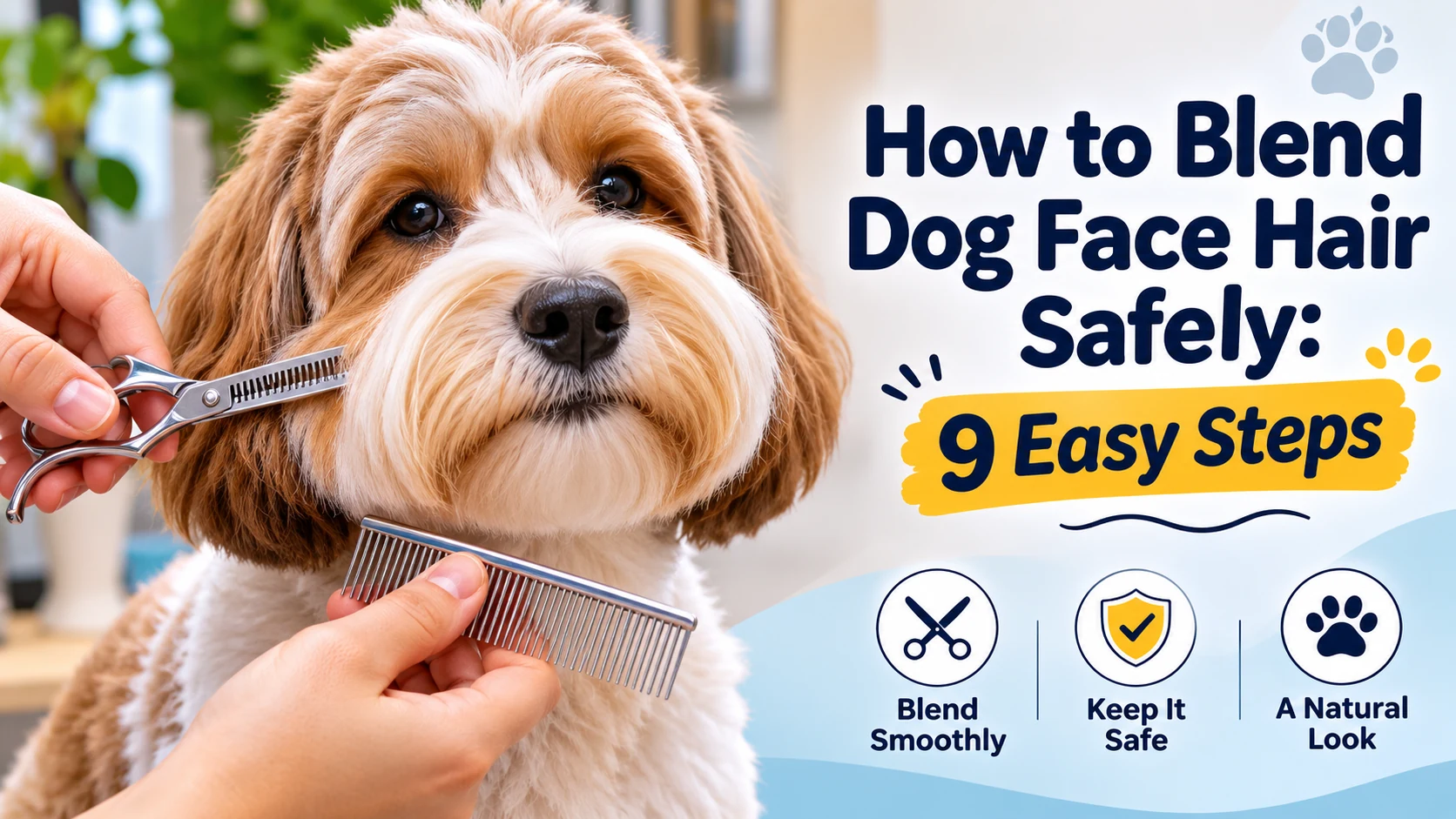
Quick Answer
To blend dog face hair, start with clean, dry, detangled fur and a calm dog. Comb the facial hair outward, identify uneven transitions, and gradually soften accessible outer edges with appropriate dog-grooming blending shears if you have been taught safe scissor handling. Work around the cheeks, outer muzzle, chin, and head without cutting close to the eyes, lips, or ears. Stop whenever your dog moves or visibility is poor.
Blending dog facial hair means making different coat lengths flow together naturally. Instead of leaving obvious cutting lines between the cheeks, muzzle, chin, and head, the groomer creates a softer transition.
A successful blend does not require the entire face to be the same length. In fact, keeping a little extra fullness around the muzzle can produce a more natural, rounded appearance.
The challenge is knowing where to remove excess hair and where to leave it alone. Because the face contains sensitive areas, beginners should prioritize gentle combing and visual assessment and leave difficult scissor work to a trained groomer.
What Does It Mean to Blend Dog Face Hair?
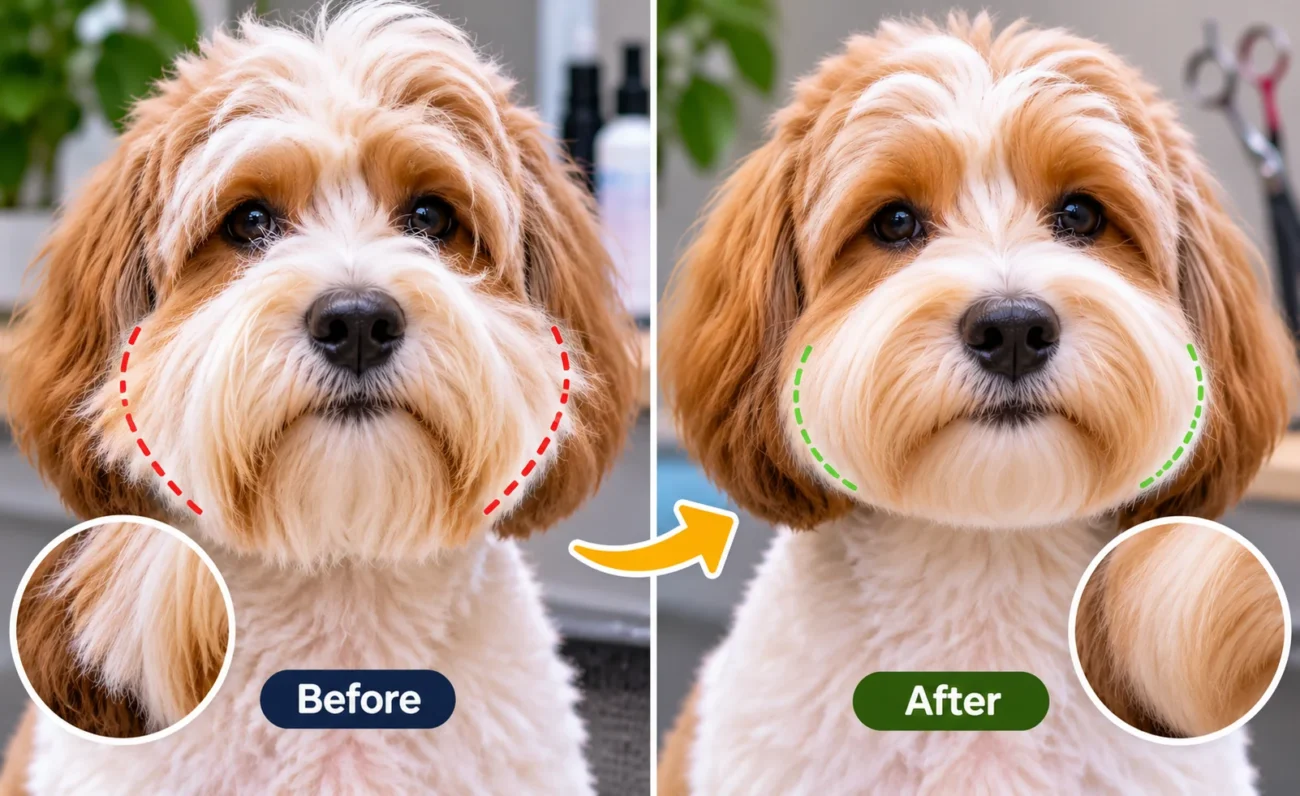
Blending dog face hair is a grooming technique that softens the visible boundary between two different hair lengths. It helps the facial coat appear balanced without leaving sharp steps, blunt edges, or uneven patches.
For example, a dog might have a shorter neck coat and fuller cheeks. A groomer can soften the transition where those lengths meet while preserving the rounded facial shape.
Facial blending commonly involves four areas:
- Cheeks: Softening the transition between the side of the face and the ears or neck.
- Muzzle: Connecting fuller muzzle hair to shorter surrounding facial hair.
- Chin and beard: Creating a natural transition beneath the mouth and toward the throat.
- Top of the head: Reducing a visible boundary between the forehead, crown, and ears.
Blending differs from simply cutting facial hair shorter. The goal is to preserve an intentional shape while removing only the uneven portions that interrupt it.
What Tools Help Blend Dog Facial Hair?
A suitable grooming comb is the most useful starting tool. It separates the coat, exposes uneven lengths, and helps you evaluate the shape before any trimming.
Professional groomers may also use several types of shears, depending on coat texture and the intended finish.
| Tool | Main Purpose | Important Limitation |
|---|---|---|
| Metal grooming comb | Separates and lifts facial hair | Do not pull through tight tangles |
| Blending shears | Softens visible length transitions | Requires trained, controlled handling |
| Thinning shears | Reduces selected coat bulk | Repeated cutting may create thin patches |
| Curved grooming scissors | Shapes rounded outer facial contours | Not appropriate near moving, sensitive areas |
Blending shears and thinning shears are not always interchangeable. Their tooth patterns, cutting action, and the amount of hair they remove can differ.
Professional groomers choose tools according to the desired finish. Owners without scissor training should not experiment with sharp shears around a dog’s eyes or mouth.
How Do You Prepare a Dog’s Face for Blending?
Prepare the coat and check your dog’s comfort before attempting any facial blending. Hair that is tangled, damp, or flattened can make uneven lengths harder to judge.
Begin with these preparations:
- Choose a quiet, well-lit grooming area.
- Use a stable, non-slip surface suitable for your dog’s size.
- Allow your dog to become comfortable with gentle facial handling.
- Clean away ordinary dirt and debris using dog-safe grooming methods.
- Let the coat dry fully before assessing the final shape.
- Comb gently in the direction the hair naturally grows.
- Check for mats, irritated skin, or tender areas.
Do not pull through tightly tangled facial hair or attempt to cut close to the skin to remove a mat. Facial mats can conceal skin folds and make injuries more likely.
If the dog resists face handling, gradually introduce the comb over several short sessions rather than trying to complete the haircut immediately.
How to Blend Dog Face Hair in 9 Steps
The process below explains the order used to assess and refine a natural-looking facial blend. Scissor work should be performed only by someone trained to handle grooming shears safely around dogs.
Step 1: Examine the Natural Facial Shape
Look at the dog’s face from the front and both sides before making changes. Identify the shape of the cheeks, muzzle, chin, forehead, and ears.
Notice where the coat already forms a smooth transition and where an abrupt change in length appears.
A full muzzle with shorter cheeks may be intentional. Avoid removing hair simply because one area looks longer than another.
Step 2: Comb the Facial Hair Outward
Gently comb the coat outward from the cheeks and away from the center of the muzzle. This reveals individual longer hairs and areas of excess bulk.
Do not drag the comb across the eyes or pull hair from sensitive skin.
After combing, allow the coat to fall naturally. Some apparent unevenness disappears when the hair settles into its normal direction.
Step 3: Identify the Harshest Transition
Find the most obvious boundary between shorter and longer hair. Common locations include the cheeks beneath the ears and the junction between the muzzle and lower jaw.
Focus on one transition at a time. Attempting to reshape the whole face simultaneously makes it harder to judge how much hair should remain.
For beginners, identifying these boundaries is a useful exercise even when a professional groomer will perform the cutting.
Step 4: Soften the Outer Cheek Lines
The cheek coat often creates the most visible mismatch between the rounded face and shorter neck or ear-base hair.
During professional blending, the groomer combs out the accessible outer cheek coat and removes small amounts of protruding hair with appropriate blending shears.
The aim is a gentle transition, not a flat cheek. Do not place scissors against the cheek skin or work blindly beneath an ear flap.
Recomb the area frequently so the actual shape remains visible.
Step 5: Connect the Muzzle to the Cheeks
The muzzle may need to remain fuller than the surrounding facial coat, especially in rounded or teddy-bear-style trims.
A groomer evaluates the outside transition between the muzzle and cheek rather than automatically reducing all the muzzle hair to the same length.
Never use pointed scissor tips around the nostrils, lips, mouth corners, or eyes. Those areas can move unexpectedly when the dog sniffs, licks, or turns its head.
If loose hair around the muzzle cannot be managed with a comb alone, ask a professional to demonstrate a safe method appropriate for your dog’s face.
Step 6: Balance the Chin and Beard
Examine how the hair beneath the jaw meets the cheeks and throat. A chin that looks disproportionately long can interrupt an otherwise rounded facial outline.
Professional finishing may involve reducing excess bulk at the transition while preserving the intended beard length.
For home grooming, gently comb the beard and remove food debris. Avoid cutting under the jaw while the dog is lifting, lowering, or twisting its head.
Step 7: Check the Forehead and Ear Transitions
Comb the forehead and crown into their natural positions. Look for abrupt changes where the top of the head joins the cheeks or ear furnishings.
Some coats benefit from a rounded head shape, while others should retain a flatter or more breed-specific profile.
The ear edges and eye area are especially vulnerable. Leave cutting near them to a qualified groomer rather than trying to remove an obvious line at any cost.
Step 8: Recomb and Compare Both Sides
Put down any cutting tools, allow the dog to stand or sit naturally, and compare the face from several angles.
Look for balance rather than perfect mathematical symmetry. Coat growth direction, facial anatomy, and ear position can make two sides appear slightly different.
If one side looks marginally fuller, do not automatically keep shortening it. Repeated correction is a common reason a small uneven area becomes a noticeable gap.
Step 9: Remove Loose Hair and Finish Calmly
Use a gentle brush or soft cloth to remove loose trimmed hair from accessible parts of the face. Keep fragments away from the eyes and nostrils.
Check for irritation, redness, or accidental skin contact. End the session with praise and an appropriate reward.
A comfortable dog with a slightly imperfect blend is a better outcome than an anxious dog subjected to unnecessary extra trimming.
Safety Warning
Never continue cutting while your dog is jerking, struggling, snapping, or turning toward the scissors. Do not cut through facial mats or attempt close trimming where the skin and tool tips cannot be clearly seen. Seek professional grooming help for these situations.
How Does Blending Change With Different Coat Types?
The same facial shape will not behave identically on every dog. Coat texture influences how easily trimming lines become visible.
- Curly coats: Hair can expand when combed and curl back into place afterward. Evaluate the settled shape before deciding whether more blending is necessary.
- Straight, silky coats: Cutting lines may be especially noticeable because the hair falls smoothly. A professional may use a lighter finishing approach.
- Wavy coats: Natural waves can disguise some transitions but also create uneven-looking sections when the coat changes direction.
- Short, smooth coats: These generally do not need facial scissor blending.
- Double coats: Avoid unnecessary cutting or shaving. Grooming should respect the particular breed’s coat structure and maintenance requirements.
The desired style also matters. A rounded pet trim, a longer natural beard, and a breed-specific face should not all be blended into the same silhouette.
What Common Dog Face Blending Mistakes Should You Avoid?
The most common problems come from removing too much hair, working without a clear shape in mind, or continuing after the dog becomes uncomfortable.
- Overusing thinning shears: Too many passes can remove excessive bulk and leave thin or patchy sections.
- Cutting before combing: Flattened or tangled hair can hide the actual length differences.
- Trying to make every length identical: A natural face often needs variation between the muzzle, cheeks, and head.
- Chasing perfect symmetry: Repeated corrections can make both sides progressively shorter.
- Working too close to sensitive areas: Sharp tools near the eyes, lips, and ear edges create unnecessary injury risks.
- Ignoring the dog’s behavior: Restlessness, head turning, and attempts to escape mean the session should stop.
Another mistake is assuming every uneven area requires cutting. Sometimes gentle combing, appropriate washing, or allowing a previous haircut to grow out is the better solution.
How Can You Fix an Uneven Dog Face Haircut?
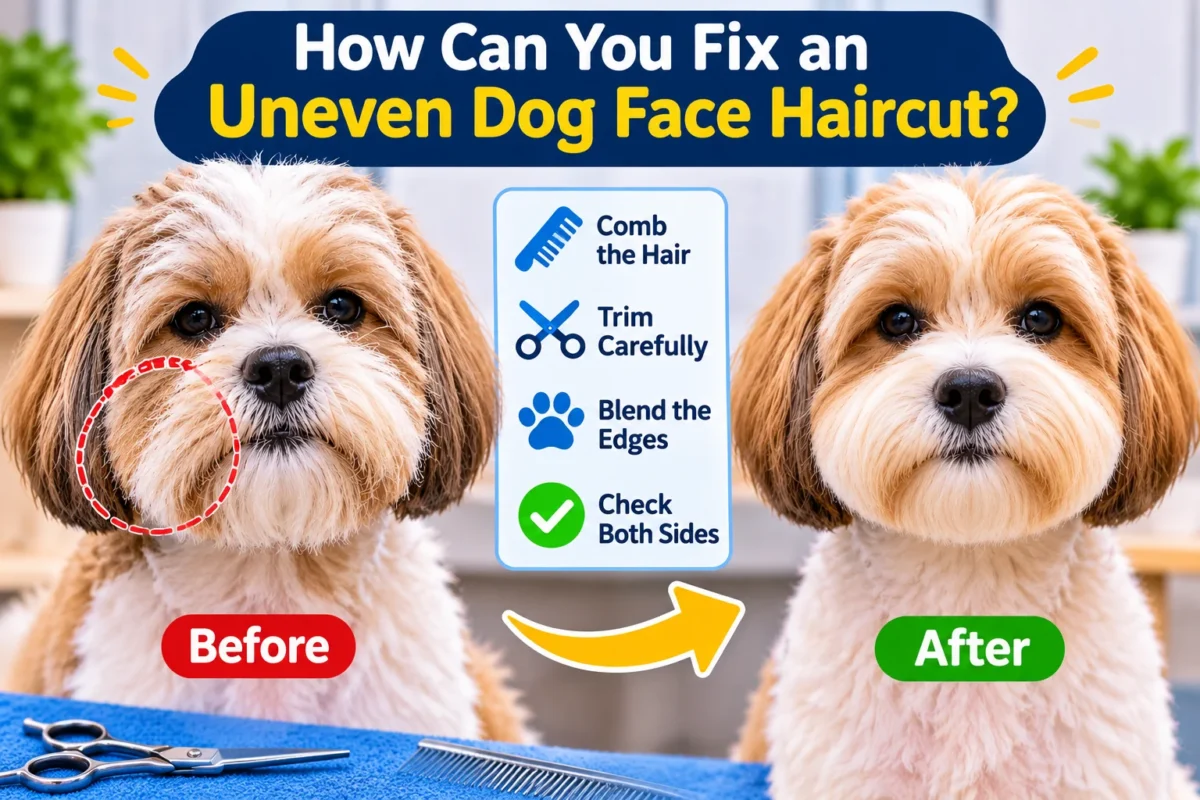
If a facial haircut looks uneven, first determine whether the problem is caused by coat direction, isolated longer hairs, or an area that has already been cut too short.
If the coat is merely lying unevenly, gentle combing may improve the appearance. If a few longer sections remain, a trained groomer can assess whether limited blending is appropriate.
However, if the haircut contains a noticeable hollow, an excessively short cheek, or an exposed patch, more trimming may make the problem worse.
In that situation, allow the coat to grow and ask a professional groomer how to maintain a balanced appearance during regrowth.
Never attempt to correct a facial injury with additional grooming. Redness, bleeding, swelling, squinting, or persistent eye discomfort requires appropriate veterinary attention.
When Should You Leave Facial Blending to a Professional?
Professional grooming is the safer choice when the dog cannot remain comfortable and still, the coat is tightly matted, or the intended style requires precision around the eyes, lips, or ears.
It is also appropriate for dogs with sensitive skin, facial folds, previous grooming injuries, or a strong fear of grooming tools.
The American Kennel Club’s home grooming guidance advises owners not to attempt clipping or shaving without proper training and emphasizes professional assistance for sensitive grooming tasks.
For eye care, the AKC’s guidance on cleaning a dog’s eyes also discusses safe cleaning and keeping obstructive facial hair controlled.
If the goal is a specific facial style, bring the groomer a clear reference photograph and explain which areas you want to keep full.
Frequently Asked Questions
Can you blend dog face hair without thinning shears?
Yes. Gentle combing can improve the appearance of an uneven coat without cutting. Trained groomers may also use other appropriate tools, but sharp facial scissor work should not be attempted without proper instruction.
Should dog face hair be blended wet or dry?
A clean, dry, detangled coat generally makes it easier to assess the finished facial shape. Wet hair may lie differently from the coat’s normal appearance after drying.
Can blending shears leave holes in dog fur?
Yes. Removing too much hair from one section can create thin patches or visible gaps. Repeated passes over the same area increase this risk.
Does every dog need facial hair blending?
No. Many short-haired dogs do not need facial trimming. Blending is mainly relevant to dogs with longer facial furnishings or grooming styles involving different hair lengths.
How often should dog face hair be blended?
There is no universal schedule. The need depends on coat growth, facial style, hygiene, and the dog’s comfort. Regular gentle combing can help owners identify when professional trimming may be useful.
What should you do if your dog moves during facial blending?
Stop cutting immediately and move the tools away. Give the dog time to settle. If safe, calm handling cannot be maintained, arrange a professional grooming appointment instead of restraining the dog to complete the trim.
Final Thoughts
Blending dog face hair is about creating smooth transitions while preserving the dog’s natural facial shape. Careful preparation, gentle combing, and attention to coat texture are the foundation of a balanced result.
For owners without professional scissor training, the safest approach is to maintain the coat between grooming appointments and leave detailed facial cutting to an experienced groomer. A natural-looking finish should never come at the expense of the dog’s comfort or safety.


