
Quick Answer
Yes, you should dry dog hair before a haircut. Clean, completely dry, thoroughly brushed fur helps clippers move smoothly and produces a more even trim. Start with absorbent towels, use gentle airflow when appropriate, and check the coat down to the skin before cutting. The American Kennel Club’s dog-drying guidance also emphasizes drying your dog thoroughly after bathing.
Six Quick Steps
- Remove excess water: Gently squeeze moisture from the coat using absorbent towels.
- Prepare the dryer: Choose gentle airflow and cool or low heat.
- Work in sections: Dry the body, legs, chest, belly, and tail systematically.
- Check the undercoat: Part the hair and feel near the roots for dampness.
- Brush carefully: Remove loose hair and manageable tangles without pulling.
- Test before trimming: Confirm the coat is dry, comfortable, and free of troublesome mats.
Drying your dog’s coat may seem like a small detail, but it can make a major difference during a haircut. Damp hair can clump together, hide tangles, and make clipper work harder.
In this guide, I’ll explain how to dry dog hair before a haircut without rushing or overheating your pet. You’ll also learn which tools help and when professional grooming is safer.
Why Should You Dry Dog Hair Before a Haircut?
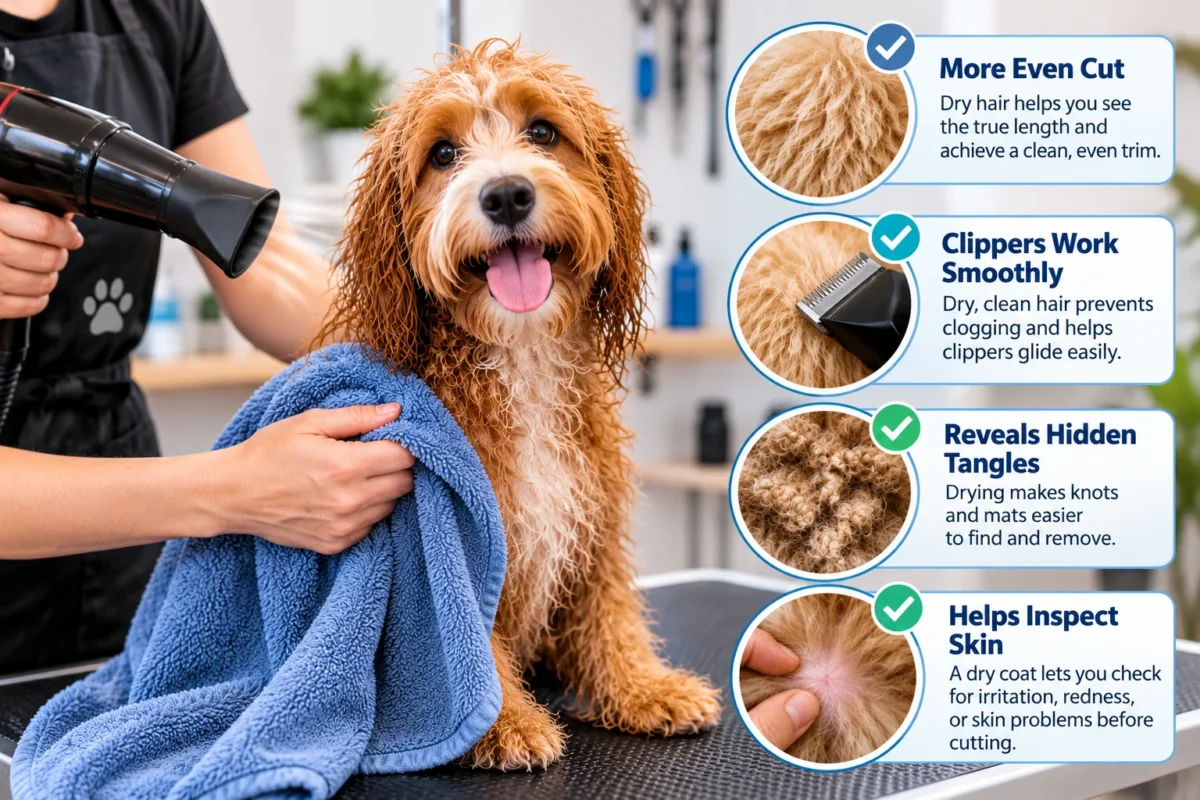
You should dry dog hair before a haircut because moisture makes clean, consistent clipping more difficult. A dry, brushed coat lets you see the hair’s natural direction and assess its length.
Drying also creates an opportunity to check your dog’s skin before cutting. You may notice redness, irritation, knots, or sensitive areas that require extra care.
1. Dry Hair Gives a More Even Cut
Wet hair often sticks together in small sections. This makes it harder to judge the final length while trimming.
Once the coat dries, the hair may settle differently. Cutting it when fully dry makes the finished appearance easier to predict.
2. Dry Coats Help Clippers Work Smoothly
Electric grooming clippers generally work best on clean, dry, detangled coats. Moisture, dirt, and tangled hair can interfere with the blade’s movement.
Professional grooming guidance from Petco’s grooming education team recommends drying and brushing thoroughly before clipping.
3. Drying Helps Reveal Hidden Tangles
Thick coats can conceal knots near the skin. Parting and drying the hair section by section makes these areas easier to identify.
Never force a brush through a painful mat. Tight mats and skin-level tangles need professional assessment.
4. Drying Helps You Inspect the Skin
While drying, you can examine your dog’s skin for irritation, lumps, sores, or other unusual changes. Stop grooming if you discover a painful or suspicious area.
The ASPCA’s dog grooming tips also emphasize thorough drying, especially around skin folds.
What Does It Mean to Dry Dog Hair Before a Haircut?
Drying dog hair before a haircut means removing moisture throughout the coat, including near the roots, before trimming. The coat should feel dry rather than cool and damp when you part the hair.
This preparation may involve towel drying, controlled airflow, and brushing. The best technique depends on your dog’s coat type and tolerance for handling.
For example, a short-haired dog may dry well with towels in a warm room. A thick-coated or curly-haired dog may require careful section-by-section drying with suitable equipment.
How Do You Dry Dog Hair Before a Haircut? 8 Safe Steps
The safest routine removes moisture gradually without concentrating heat on your dog’s skin. Follow these eight steps while monitoring your dog’s comfort.
Step 1: Prepare Your Grooming Area
Choose a warm, quiet room with good ventilation and a nonslip surface. Keep everything within reach before bringing your dog into the area.
- Two or more clean, absorbent towels
- A pet-safe grooming dryer, if appropriate
- A brush suited to your dog’s coat
- A stainless-steel grooming comb
- Small treats for positive reinforcement
- A nonslip mat
Keep electrical plugs and cords away from water. Never leave your dog unattended on an elevated grooming surface.
Step 2: Remove Excess Water With Towels
Begin immediately after bathing by gently squeezing water from the fur. Press an absorbent towel against the coat rather than rubbing vigorously.
Aggressive rubbing can create extra tangles, particularly in curly and long-haired breeds. Replace saturated towels when they stop absorbing moisture.
- Back and sides: Press the towel along the body.
- Chest and belly: Blot gently without applying unnecessary pressure.
- Legs: Squeeze moisture carefully from the longer hair.
- Tail: Support the tail while blotting the coat.
- Face: Use a soft towel around sensitive areas.
Step 3: Introduce the Dryer Gradually
If your dog tolerates drying equipment, begin with gentle airflow and minimal heat. Let your dog hear the dryer from a comfortable distance before moving closer.
Keep airflow moving and avoid directing strong air into the eyes, ears, nose, or sensitive areas. Stop if your dog becomes frightened or uncomfortable.
Choose a dryer designed for pet grooming when possible. Never use an unattended heated drying enclosure.
Step 4: Dry the Body in Small Sections
Start on an area your dog comfortably accepts, such as the back or shoulder. Move systematically across the body rather than repeatedly switching between random areas.
Part longer hair gently to check whether moisture remains near the roots. Continue until the section feels fully dry.
- Start with the back and shoulders.
- Continue along the sides and chest.
- Dry the legs and tail carefully.
- Check the belly and other sensitive areas with gentle airflow.
- Finish with a coat-wide moisture inspection.
Step 5: Check the Legs, Belly, and Skin Folds
These areas often need additional attention. Long leg hair and skin folds can retain moisture after the body appears dry.
Use a towel around sensitive areas and keep the dryer at a comfortable distance. Avoid direct high-pressure airflow against thin or irritated skin.
For dogs with facial folds, dry between the folds gently. Persistent redness, odor, or soreness deserves veterinary attention.
Step 6: Brush the Coat Once It Is Suitable for Brushing
Use a coat-appropriate brush to separate hair and remove loose fur. Gentle brushing during controlled drying can help straighten certain long or curly coats.
However, brushing should never cause pain or pull forcefully against the skin. Use extra caution around thin-skinned areas.
- Curly coats: Use gentle sectioned brushing to separate manageable hair.
- Long coats: Work gradually from the ends toward the roots.
- Short coats: Choose a soft brush appropriate for the hair length.
- Dense coats: Part the fur to inspect moisture and hidden tangles.
Step 7: Confirm the Coat Is Completely Dry
A dry-looking surface does not always mean the roots are dry. This is especially important with Poodles, Doodles, and other dense-coated dogs.
Part the hair in several locations and feel near the skin. If you find cool, damp patches, continue gentle drying.
Check behind the ears, under the collar area, the chest, and the legs. These locations can hide moisture and knots.
Step 8: Perform a Final Pre-Haircut Check
Run a grooming comb gently through the coat where appropriate. It should move without catching on hidden knots or pulling the skin.
Inspect the skin and confirm your dog feels relaxed. Only begin the haircut when the coat is ready and the clipping procedure suits your dog’s coat type.
- The hair feels dry down to the roots.
- No painful mats remain.
- The skin appears comfortable and uninjured.
- Your dog accepts gentle handling.
- The clipper blades are clean, sharp, and cool.
Should You Towel Dry or Blow Dry Dog Hair Before Cutting?
Both methods can work, but they serve different coat types and grooming needs. Towel drying is gentle, while controlled airflow can help remove trapped moisture from dense coats.
The right choice depends on coat density, your dog’s behavior, and your ability to control airflow safely.
| Feature | Towel Drying | Controlled Dryer |
|---|---|---|
| Best use | Initial moisture removal | Finishing dense coats |
| Equipment | Absorbent towels | Suitable dryer and safe power supply |
| Noise | Minimal | Varies by dryer |
| Main limitation | May leave roots damp | Noise, heat, or airflow may cause distress |
| Ideal approach | Begin drying gently | Finish when needed and tolerated |
For most home grooming routines, I recommend beginning with towels rather than applying powerful airflow immediately. This gives your dog a gentler introduction to the drying process.
How Long Does Dog Hair Take to Dry Before a Haircut?
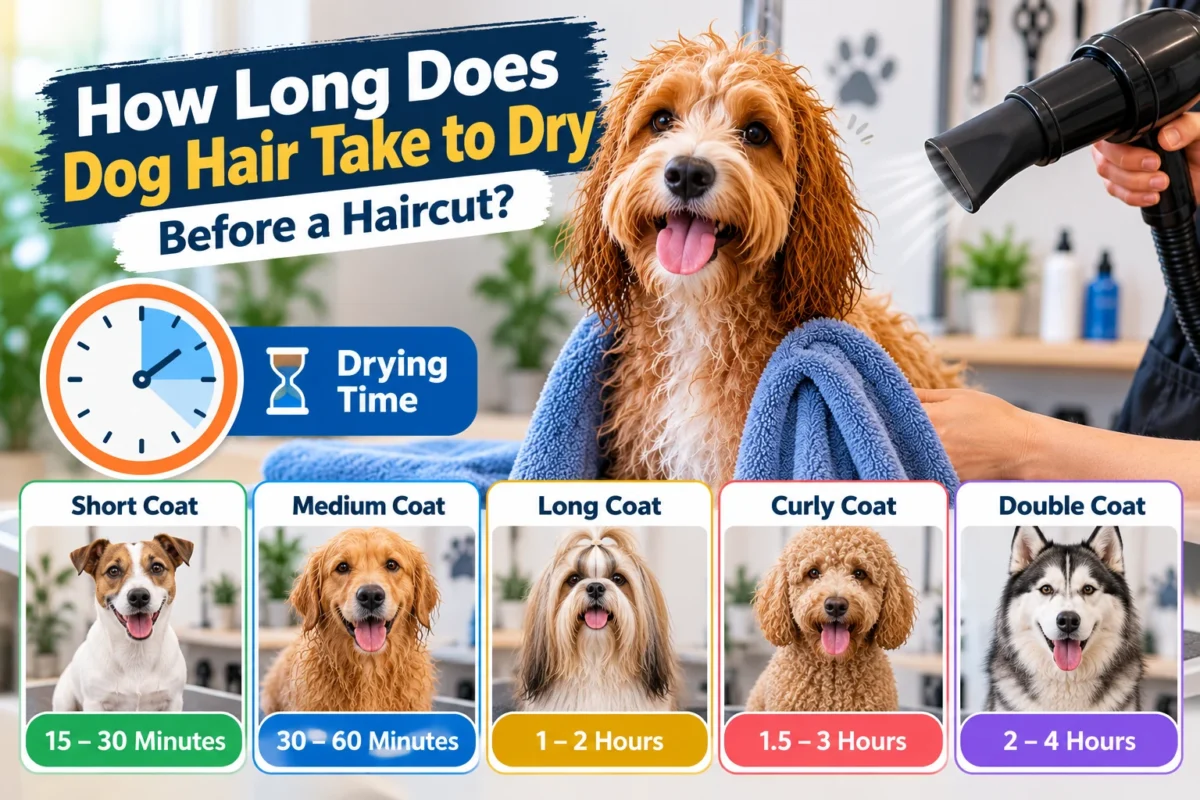
Drying time varies widely with coat type, size, thickness, room conditions, and the equipment used. There is no universal drying time that guarantees readiness.
A short coat may dry relatively quickly, while a long, dense, or curly coat can take substantially longer. A dog’s comfort and the dryness at the roots matter more than the clock.
What Affects Drying Time?
- Coat length: Longer hair may hold more water.
- Coat density: Thick undercoats can trap moisture near the skin.
- Dog size: Larger dogs have more surface area to dry.
- Drying method: Towels and controlled airflow remove moisture differently.
- Room conditions: Humidity and temperature influence natural drying.
- Dog tolerance: Frequent breaks may extend the process.
A practical readiness test is to part several areas of the coat and check the roots. Do not rely on a preset time alone.
Can You Cut Dog Hair While It Is Still Damp?
For routine at-home electric clipping, a clean and completely dry coat is the safer standard. Damp fur can make clipping less predictable and cause hair to collect around the blades.
Some trained professionals use specialized techniques for particular coat conditions. Those methods should not replace ordinary pre-grooming preparation at home.
If your dog’s fur is still damp, continue drying before using electric clippers. Avoid rushing simply to finish the haircut.
Do Different Dog Coat Types Need Different Drying Methods?
Yes. Coat structure affects how moisture moves through the fur and how easily hair tangles during drying.
Curly and Wavy Coats
Poodles and many Doodle-type dogs have coats that can trap moisture and form tangles. Gentle sectioned drying and appropriate brushing help prepare the hair for an even haircut.
Work carefully around dense curls and check the roots. Never force a comb through a tight mat.
Long and Silky Coats
Long-haired breeds can develop knots when wet hair is rubbed aggressively. Blot the coat with towels and separate manageable sections gently.
Use controlled airflow to avoid creating additional tangles. Support longer hair while brushing.
Double-Coated Dogs
Double-coated breeds may hold water within their undercoat even after the surface feels dry. Part the fur carefully to confirm dryness near the skin.
Most healthy double-coated dogs should not receive routine close shaving. Consult a qualified groomer before making major coat-length changes.
Short-Haired Dogs
Short-haired dogs usually require less complicated drying. Absorbent towels may be sufficient when the entire coat becomes dry.
Many short-haired breeds do not need routine body haircuts. Brushing and basic coat care are often more appropriate.
What Mistakes Should You Avoid When Drying Dog Hair Before a Haircut?
The biggest mistakes involve excessive heat, rushed drying, and overlooking your dog’s comfort. Even well-intentioned grooming can become unsafe when these signs are ignored.
1. Using Excessive Dryer Heat
Hot airflow can irritate or injure sensitive skin. Use cool or low heat, keep the dryer moving, and regularly check skin comfort.
2. Drying Only the Surface
Thick fur can look dry while remaining damp near the roots. Part the coat in multiple locations before reaching for your clippers.
3. Rubbing the Coat Aggressively
Vigorous towel rubbing can create tangles and make brushing more difficult. Blot and squeeze gently instead.
4. Holding Airflow on One Spot
Concentrated airflow can become uncomfortable. Move the dryer continuously and take breaks when needed.
5. Ignoring Signs of Stress
Panting, trembling, escape attempts, or unusual agitation may indicate distress. Stop drying and let your dog recover in a comfortable environment.
6. Brushing Through Painful Mats
Tight mats can pull the skin and cause pain. Avoid aggressive dematting and seek professional help when needed.
7. Using Unsuitable Drying Equipment
Powerful airflow or uncontrolled heat may overwhelm a sensitive dog. Choose equipment that allows appropriate control and monitoring.
The RSPCA’s grooming guidance highlights safety concerns with certain drying equipment, particularly enclosed heated systems.
How Do You Know Your Dog Is Ready for a Haircut?
Your dog is ready when the coat is dry, manageable, and suitable for the planned trim. The dog must also be comfortable with the grooming process.
Use this final checklist before beginning.
- The coat is clean and fully dry.
- The roots do not feel damp.
- A suitable comb moves through manageable sections without snagging.
- The skin has no obvious painful sores or irritation.
- Your dog is relaxed enough for safe handling.
- You understand which coat areas are safe to clip.
- Your grooming tools are clean and functioning correctly.
If any important check fails, postpone the haircut. There is no benefit to trimming before your dog and its coat are ready.
When Should You Stop Drying and Contact a Professional Groomer?
Stop when your dog shows severe distress, the coat contains tight mats, or you cannot dry the fur safely. A professional groomer can assess whether specialized equipment or handling is needed.
Contact a veterinarian when you notice painful skin, significant redness, wounds, breathing problems, or signs of overheating. Veterinary care takes priority over completing a haircut.
Never restrain a panicking dog to force the process to continue. A shorter, positive grooming session is better than an unsafe experience.
Which Grooming Tools Help Dry Dog Hair Before a Haircut?
You do not need an expensive collection of tools to prepare your dog’s coat. Absorbent towels and a suitable brush may be enough for simple routines.
For thick or curly coats, additional equipment can make systematic drying easier. These two established products are worth comparing based on your dog’s needs.
Best for coat drying
SHELANDY Pet Hair Force Dryer
★★★★☆ 4/5 — Editorial suitability
This pet grooming dryer line is designed for removing moisture from dog coats using directed airflow. I would consider an adjustable-airflow model for dense coats, provided the dog tolerates the sound and the handler can use it safely.
Best for long-coat preparation
Chris Christensen Big G Slicker Brush
★★★★☆ 4/5 — Editorial suitability
The Big G has long, densely arranged pins designed for grooming longer coats. It is a useful option to consider for gentle coat separation and finishing, although it may be unnecessary for short-haired breeds.
Affiliate disclosure: As an Amazon Associate, qualifying purchases through eligible links may earn a commission at no additional cost to you. Editorial suitability scores are not customer-review averages or hands-on test results.
Frequently Asked Questions
Should I completely dry my dog before using clippers?
Yes. For routine at-home electric clipping, your dog’s coat should be completely dry and brushed through. Dry fur allows the blade to travel more smoothly and helps you identify hidden tangles. Check the roots before clipping because a coat can appear dry on the outside while remaining damp underneath.
Can I let my dog air dry before a haircut?
Yes, air drying may work for some dogs, particularly those with short, easy-care coats. However, dense or curly coats can retain moisture and develop tangles. Make sure the room is comfortably warm, your dog is not chilled, and the entire coat is dry before beginning the haircut.
Can I use a human hair dryer on my dog?
A household dryer may be suitable for limited use if it has a genuinely cool or low-heat setting and gentle airflow. Keep it moving and avoid sensitive areas. Many human dryers become too hot or noisy for safe pet grooming, so a suitable pet dryer may be preferable.
Should I brush dog hair before or after drying?
Remove loose debris and manageable tangles before bathing when appropriate. After bathing, begin with gentle towel drying and carefully brush during or after controlled drying according to coat type. Never force a brush through wet, tightly tangled hair or painful mats.
What should I do if my dog is afraid of the dryer?
Turn the dryer off and allow your dog to relax. Gradually introduce the sound from a distance, pairing calm behavior with rewards. If your dog remains frightened, use towels when sufficient or seek professional grooming assistance. Never force a distressed dog to tolerate powerful airflow.
Final Thoughts: Dry Dog Hair Before Every Routine Haircut
Drying is an important part of preparing your dog’s coat for a safe, even haircut. Start with towels, use controlled airflow when appropriate, and always check for moisture near the roots.
Remember that a clean, dry coat alone does not guarantee a safe haircut. Your dog’s comfort, coat type, skin condition, and the correct tools matter just as much.
Make drying and gentle inspection part of every routine grooming session. When mats, skin problems, or stress make grooming difficult, ask a qualified professional for help.


