
Quick Answer
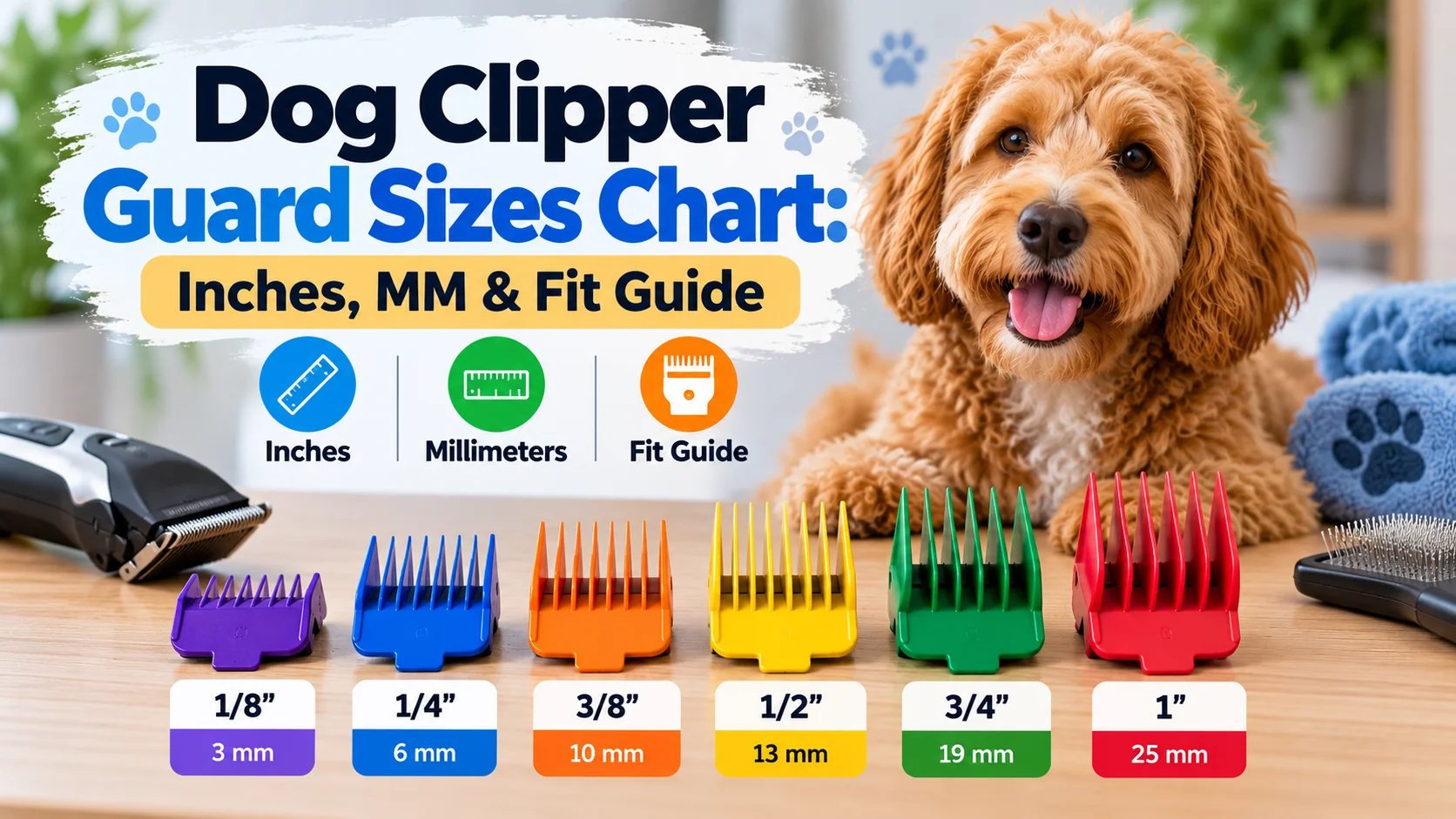
Dog clipper guard sizes commonly leave about 1/8 inch (3 mm) to 1 inch (25 mm) of coat. A larger measured length means a longer trim, but guard numbers are not universal: one dog-grooming set may mark 1/8 inch as #5, while another calls it #1. Choose by the printed inches or millimeters, confirm that the comb fits your blade, and start longer if you are unsure.
What Does a Dog Clipper Guard Size Mean?
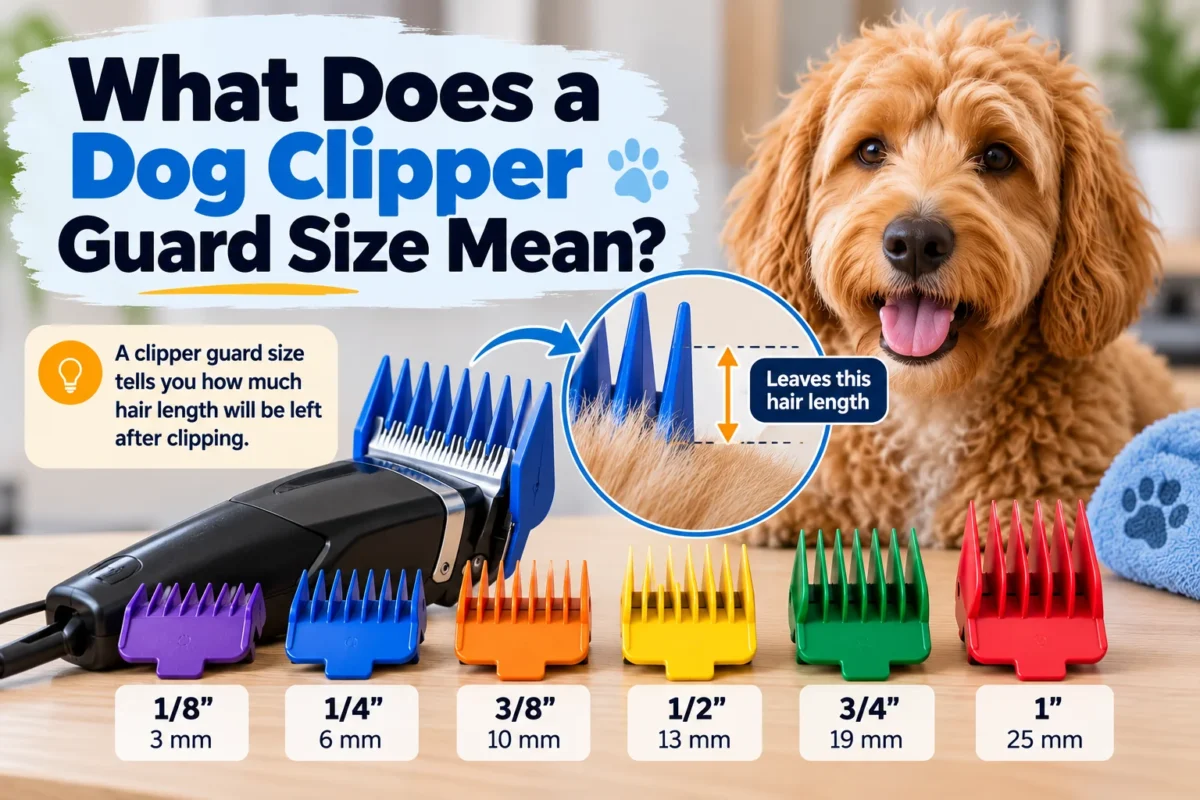
A dog clipper guard, also called an attachment comb or guide comb, fits over a compatible cutting blade. Its teeth guide the coat into the clipper while holding the blade away from the skin, helping you leave a chosen length of hair.
The listed measurement describes the approximate coat length left behind, not the amount removed. A 1/2-inch guard does not take off half an inch; it aims to leave roughly half an inch after clipping. The visible result can vary with coat texture, preparation, clipping direction, and how the comb travels through the hair.
Most confusing of all, a guard’s printed number may refer to a manufacturer’s numbering system rather than its length. Read the inch or millimeter marking before you make the first pass.
Dog Clipper Guard Sizes Chart: Inches, Millimeters, and Numbers
This chart compares two documented Wahl animal-grooming labeling systems. The length column is the most reliable starting point for comparison; the number and color on your own set may differ.
| Coat left | Approx. mm | Wahl detachable set 3390-100 | Wahl 5-in-1 set 3027903 |
|---|---|---|---|
| 1/8 inch | 3 mm | #5 | #1 |
| 1/4 inch | 6 mm | #4 | #2 |
| 3/8 inch | 10 mm | #2 | #3 |
| 1/2 inch | 13 mm | #1 | #4 |
| 5/8 inch | 16 mm | #0 | #5 |
| 3/4 inch | 19 mm | #A | #6 |
| 7/8 inch | 22 mm | #C | #7 |
| 1 inch | 25 mm | #E | #8 |
For example, the older detachable-blade #5 comb is a short 1/8-inch cut, not the 5/8-inch length suggested by some numbered sets. Wahl’s 5-in-1 guide comb product listing identifies #1 through #8 with their metric lengths. If your kit uses letters, check its model-specific chart rather than translating numbers from another kit.
How Are Guard Sizes Different From Clipper Blade Numbers?
Guard numbers and detachable blade numbers describe different parts. A guide comb sits over a blade to leave longer hair; a blade can also clip on its own. Blade labels such as #10, #15, and #30 do not correspond to guard lengths with those numbers.
In many professional detachable-blade systems, a higher blade number means a closer cut. Under an attachment comb, however, the manufacturer’s prescribed base blade works together with the comb to produce its stated longer finish. Do not try to work out the final length by adding the blade’s cut length to the guard’s listed length.
Wahl recommends #30 for best results with certain stainless steel combs and permits #10 and #15 with those systems. That does not mean every comb works over every #30 blade: the style, width, and mounting method still have to match.
Which Guard Length Should You Choose for Your Dog?
Choose the desired finished look first, then check whether the coat can be clipped safely to that length. These are practical starting points for an untangled, clipper-suitable coat, not breed-specific prescriptions.
- 1/8 to 1/4 inch: A noticeably short body trim. It can expose more skin and may not be appropriate for every coat, season, or dog.
- 3/8 to 1/2 inch: A shorter but less close finish when a dog needs an easily maintained coat and the hair feeds smoothly through the comb.
- 5/8 to 3/4 inch: A fuller result for owners who want visible coat length without keeping the original bulk.
- 7/8 to 1 inch: A longer, fluffier finish on well-prepared coats; expect brushing and possibly scissor finishing to tidy uneven areas.
Curly or wavy hair may spring back after clipping, making the finished look appear shorter than the comb measurement suggests. Fine, flat-lying hair may feed differently from dense curls. Test a small, inconspicuous area before committing to the whole body.
Do not choose a close cut simply because the weather is hot. Many double-coated dogs depend on their coat for protection and need a different grooming approach. The right choice may be brushing and removing loose undercoat rather than clipping the body short.
Key Insight
Pick the length in inches or millimeters, not the color or number alone. Two combs with the same number can produce very different trims.
How Do You Check Whether a Guard Fits Your Clipper?
A guard can have the correct length and still be wrong for your clipper. Compatibility depends on the clipper’s blade system, not merely the manufacturer’s name.
- Identify the exact clipper model. Find its model number and confirm whether it uses detachable A5-style blades, a 5-in-1 adjustable blade, or a model-specific cutting head.
- Identify the blade currently attached. A guard made for a detachable #30 blade may not mount to an adjustable 5-in-1 head.
- Check the comb’s model or part number. Match it against the manufacturer’s supported clipper and blade list.
- Attach it with the motor off. Make sure the comb seats completely and cannot wobble or slip free.
- Inspect tooth alignment. The blade must remain correctly covered by the guard; never run a visibly loose, bent, or damaged attachment.
For example, Wahl lists separate comb systems for detachable blades and 5-in-1 clippers in its official attachment-comb compatibility guidance. Andis also offers distinct sets for detachable blades and adjustable-blade models. The terms “universal” and “stainless steel” alone are not proof of fit.
How Do You Use a Dog Clipper Guard for an Even Trim?
Start only when your dog is comfortable with handling and the coat is suitable for clipping. A guard works best when the hair is clean, dry, and free of knots that would obstruct its teeth.
- Check the coat down to the skin. Gently brush and use a grooming comb to find hidden tangles, especially behind ears, under legs, and around collars.
- Prepare and dry the coat. If bathing is needed, follow a gentle routine and dry thoroughly; our guide to bathing a dog safely at home covers the washing and drying steps.
- Fit the correct comb and base blade. Follow the manufacturer’s instructions, then check the connection before turning on the clipper.
- Begin with a longer length. If uncertain between 1/2 and 3/4 inch, try 3/4 inch first. You can trim shorter afterward, but cannot replace hair already cut.
- Make a small test pass. On a broad, easy-to-reach body area, work gently with the lay of the coat and inspect the finish. Do not press the clipper into the skin.
- Use slow, overlapping passes. Keep the guard seated consistently as you move. Stop if the comb snags or the dog becomes uncomfortable.
- Check the result and equipment. Brush or comb the clipped section, inspect for missed tufts, and regularly check that the blade is not becoming uncomfortably hot.
Close work around skin folds, groin, eyes, ears, and paws requires additional handling skill. If you cannot see where the cutting surface is traveling, leave that area to a trained groomer.
Why Does a Guard Leave Uneven Hair or Get Stuck?
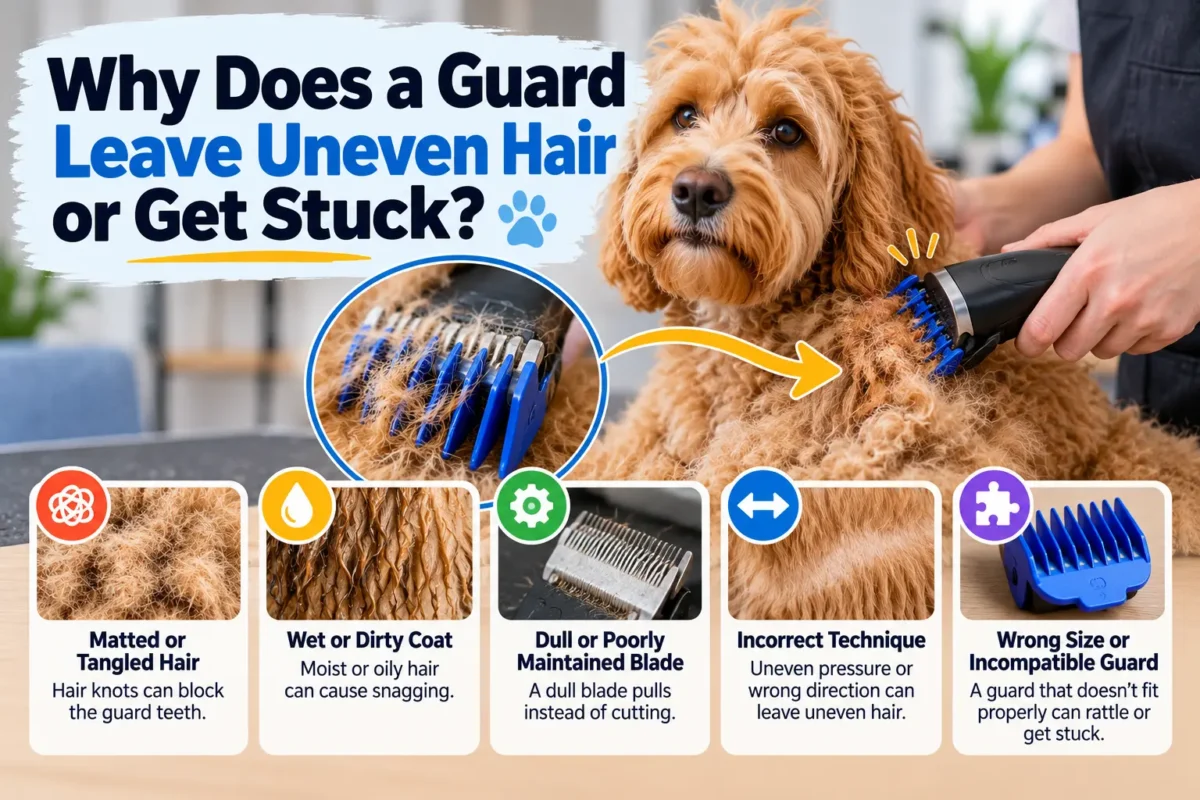
An uneven trim usually points to coat preparation, how the comb is moving, or a compatibility problem rather than a need for a shorter guard.
- Hair will not feed into the teeth: Stop and check for tangles, packed undercoat, and incomplete drying. Do not force the attachment through resistance.
- Long lines or ridges remain: Try gentler, overlapping passes with consistent clipper angle. Recomb the area before repeating.
- The cut seems shorter than expected: Verify the measurement on the guard, review its numbering system, and check whether you changed clipping direction or pressed harder.
- The attachment rattles or falls off: Turn the clipper off. Recheck the mounting instructions and condition of the clip; replace a damaged or incompatible comb.
- The clipper pulls instead of cutting: Check for tangled coat, hair buildup, a dull or poorly maintained blade, or a struggling motor. Do not continue pulling at the coat.
If the comb cannot pass through the fur with light, controlled movement, a different number will not necessarily solve the problem. Identify the obstruction before resuming.
When Should You Avoid Using Guard Combs at Home?
A longer guard does not make clipping tight mats safe. Severely matted hair can pull skin into folds and conceal sores. According to PetMD’s veterinarian-authored guidance on matting, dense, skin-tight mats should be assessed by a professional rather than cut out with household scissors.
Warning
Stop if the clipper pulls skin, the blade becomes hot, the dog shows pain, or mats sit tightly against the skin. Ask a trained groomer for mat removal; seek veterinary care for injured or inflamed skin.
Dogs with irritated skin, unfamiliar coat types, or a history of panic during grooming may need a professional plan before any clipping begins. The best guard size cannot compensate for unsafe handling.
Related Product
Dog Clipper Guide Comb Set
A set with clearly labeled cutting lengths can make it easier to choose a consistent trim. Confirm blade and clipper compatibility before ordering.
As an Amazon Associate, we earn from qualifying purchases.
Frequently Asked Questions
Are dog clipper guards the same as human hair clipper guards?
Not necessarily. Even when the measurements look similar, the mounting shape and numbering system may differ. Use attachments approved for your particular dog clipper and blade.
What does an A, C, or E dog grooming comb mean?
In Wahl’s detachable-blade comb set 3390-100, A means 3/4 inch, C means 7/8 inch, and E means 1 inch. Those letters are not a universal naming standard across all brands.
Can I use a 1-inch guard on a curly-coated dog?
Yes, if the comb is compatible and the coat is thoroughly detangled and dry. The result may look shorter as curls spring back; a test pass helps you judge the appearance.
Does using a guard make clipping skin folds safe?
No. A guard reduces direct blade exposure but cannot prevent every injury. Skin folds and delicate areas require appropriate technique and sometimes professional grooming.
How do I change from inches to millimeters?
Multiply inches by 25.4. For example, 1/2 inch is 12.7 mm, commonly rounded to 13 mm on comb packaging. Rounding explains small differences between charts.
Can I clip against the direction of hair growth with a guard?
Clipping against the coat’s growth can produce a closer-looking result and change how the hair feeds. Follow the clipper’s instructions and test carefully instead of assuming the same comb will look identical in both directions.
Conclusion
Dog clipper guard sizes are easiest to understand when you ignore the marketing colors and compare the actual cutting lengths. Common comb sets span about 1/8 to 1 inch, but numbering varies even between products from the same manufacturer.
Before grooming, identify your clipper’s blade system, confirm the attachment fits, prepare the coat, and make a short test pass with a longer guard. If a comb snags or the coat is tightly matted, stop rather than forcing a cut. The right result comes from a suitable length, a compatible setup, and comfortable handling—not just the number printed on the guard.


