
Quick Answer
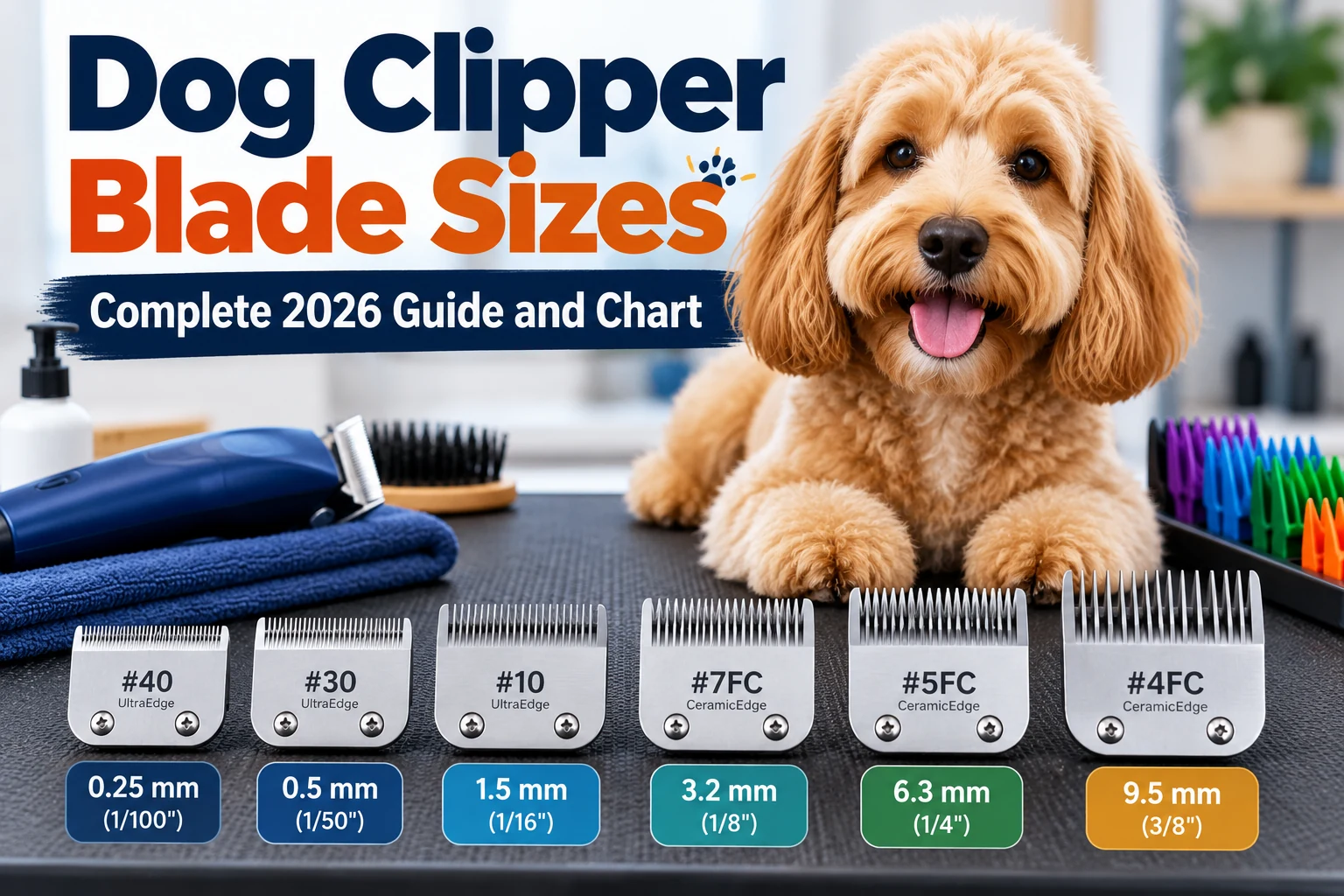
Dog clipper blade sizes determine how much hair remains after clipping. With standard A5 detachable blades, higher numbers generally produce shorter cuts. A #10 leaves approximately 1.5 mm, a #7FC leaves 3.2 mm, and a #4FC leaves 9.5 mm. Always check the manufacturer’s dog grooming blade specifications before choosing a blade.
Quick blade size guide
- #40 blade: Extremely close 0.25 mm cut, mainly for specialized work.
- #30 blade: Approximately 0.5 mm; commonly used beneath compatible attachment combs.
- #10 blade: Approximately 1.5 mm; useful for short trims and hygiene areas.
- #7FC blade: Approximately 3.2 mm; suitable for a short body finish.
- #5FC blade: Approximately 6.3 mm; provides a practical medium-short trim.
- #4FC blade: Approximately 9.5 mm; leaves a fuller body coat.
Before you start
- Check compatibility: A5 detachable blades and adjustable 5-in-1 blades are different systems.
- Protect your dog: Start with a longer length, use clean blades, and check blade temperature frequently.
Choosing dog clipper blade sizes can feel confusing when you’re grooming at home. The numbers look straightforward, but their cutting lengths often surprise beginners.
I prefer choosing the finished coat length before choosing the blade number. This guide explains how to do that, including when attachment combs offer a better option.
What Are Dog Clipper Blade Sizes?
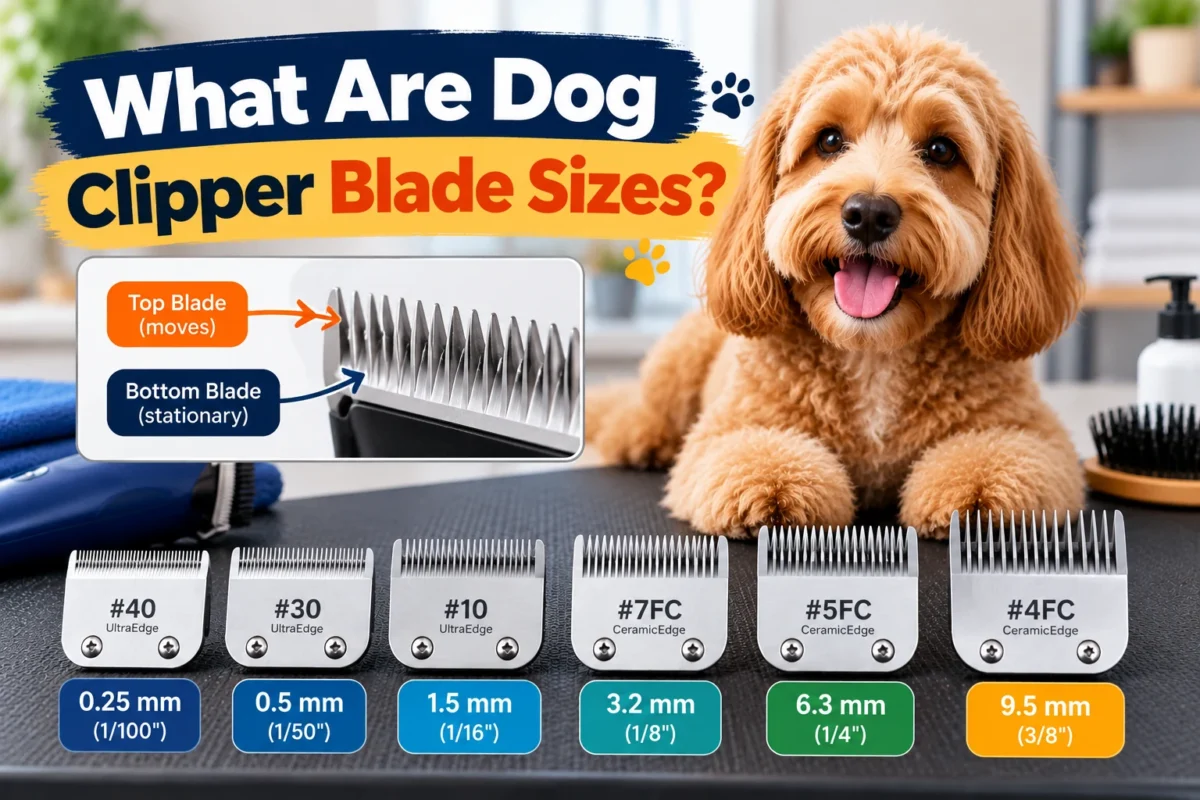
Dog clipper blade sizes are numbered cutting settings that indicate the approximate coat length left after clipping. On standard detachable grooming blades, larger numbers generally mean shorter remaining hair.
For example, a #10 blade cuts closer than a #5FC blade. That’s the opposite of what many people expect.
How Do Blade Numbers Work?
The blade’s cutting teeth move against a stationary comb to trim hair. Different blade designs position the cutting edges at different effective lengths.
- Low blade numbers: Generally leave longer hair.
- High blade numbers: Generally leave shorter hair.
- FC or F markings: Usually identify finish-cut or full-tooth designs.
- Skip-tooth designs: Have wider spaces between teeth and require careful handling.
- Attachment combs: Fit over compatible blades to produce longer cuts.
The finished length can change with coat texture, clipping direction, and blade manufacturer. Consider published measurements a guide rather than an exact promise.
Dog Clipper Blade Sizes Chart: How Much Hair Does Each Blade Leave?
The following chart covers commonly used A5-style detachable grooming blades. Measurements reflect approximate manufacturer-published cutting lengths.
Always confirm the actual blade specification. Adjustable 5-in-1 systems may use the same numbers with different measurements.
| Blade size | Hair left | Approx. mm | Typical use |
|---|---|---|---|
| #40 | 1/100 inch | 0.25 mm | Specialized, extremely close clipping |
| #30 | 1/50 inch | 0.5 mm | Base blade for compatible guide combs |
| #15 | 3/64 inch | 1.2 mm | Close detail clipping |
| #10 | 1/16 inch | 1.5 mm | Short trims and hygiene areas |
| #7FC | 1/8 inch | 3.2 mm | Short body grooming |
| #5FC | 1/4 inch | 6.3 mm | Medium-short body grooming |
| #4FC | 3/8 inch | 9.5 mm | Fuller, longer body grooming |
| #3-3/4FC | 1/2 inch | 13 mm | Longer detachable-blade finish |
Important: This chart represents common A5 detachable blade specifications, not every blade system. For example, Wahl’s adjustable 5-in-1 #10 setting leaves approximately 2.4 mm rather than 1.5 mm.
Also, some brands label their longer blades differently. Match the physical cutting length, not just the printed number.
Which Dog Clipper Blade Size Should You Use?
The right blade depends on your dog’s coat, skin sensitivity, and desired haircut. I recommend choosing a longer finish first when you’re unsure.
For Short, Easy-Care Haircuts
A #7FC leaves approximately 3.2 mm and creates a short, practical finish on suitable coats. It’s useful when an owner prefers less coat to brush between grooming sessions.
A #10 produces a much closer cut. I wouldn’t choose that length for an entire body simply because it’s the blade included with a clipper.
For Medium-Length Haircuts
A #5FC leaves approximately 6.3 mm and offers a middle ground. It reduces length while maintaining more coverage than a #7FC.
A #4FC leaves about 9.5 mm for a fuller look. These blades work best after proper coat preparation.
For Longer, Fluffy Haircuts
Use a suitable attachment comb when you want noticeably longer hair. Compatible guide combs can leave lengths approaching 25 mm or more, depending on the set.
- 6 mm comb: Short finish with more hair than a bare #10.
- 10 mm comb: Medium-short, rounded appearance.
- 13 mm comb: Fuller coat with additional coverage.
- 19 mm comb: Longer, fluffier body finish.
- 25 mm comb: Long grooming finish requiring thorough brushing.
These lengths describe compatible comb attachments, not detachable blade numbers. Comb systems differ, so verify the manufacturer’s labeling.
What Blade Sizes Work Best for Different Dog Breeds?
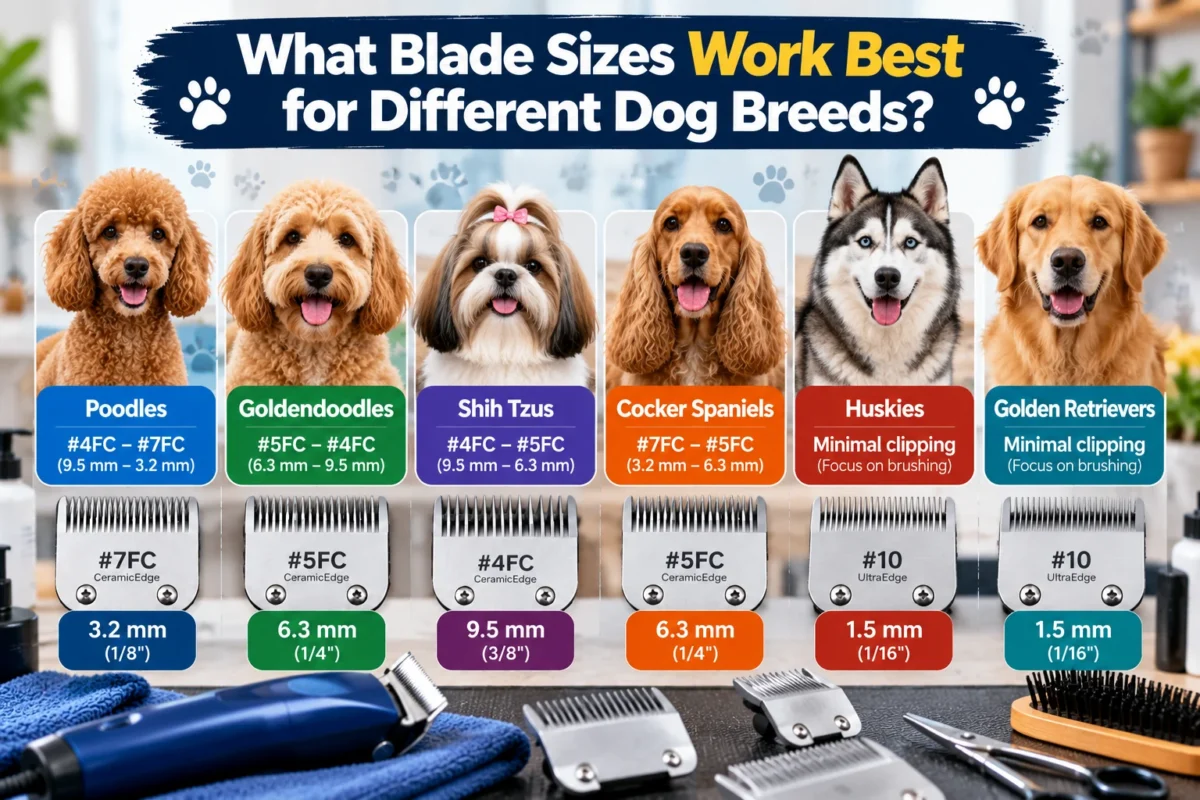
Breed can help narrow your options, but coat condition matters more. Two dogs of the same breed may need different cutting lengths.
Poodles
Poodle coats often support several clip lengths when properly washed, dried, and combed. A #4FC or #5FC can create a practical pet trim.
Specialized Poodle face and foot clips involve closer blades and delicate skin. Beginners should learn those techniques from a qualified groomer.
Goldendoodles and Labradoodles
Doodle coats vary widely in texture, density, and matting tendency. A longer guide comb can maintain a fluffy appearance when the coat is completely detangled.
A #5FC may suit a shorter maintenance trim, but don’t force it through mats. Tight matting often requires professional assessment.
Shih Tzus and Maltese
These breeds can wear several pet-style coat lengths. A #4FC or compatible longer comb may suit an easy-care body trim.
Keep extra caution around facial folds, ears, and loose skin. Facial grooming may need smaller tools and professional instruction.
Cocker Spaniels
Cocker Spaniels have coat patterns that often combine clipping and scissoring. A blade appropriate for one body section may be unsuitable for the legs or furnishings.
Choose the haircut before selecting blades. Breed-specific styling is best learned from a professional demonstration.
Huskies, Golden Retrievers, and Other Double-Coated Dogs
Routine body shaving generally isn’t recommended for double-coated breeds. Their outer coat and undercoat protect the skin and help regulate exposure.
The American Kennel Club’s double-coat guidance explains why brushing and appropriate coat maintenance are usually preferable.
What Is the Difference Between Finish-Cut and Skip-Tooth Blades?
Finish-cut and skip-tooth blades differ mainly in tooth arrangement. They may leave the same nominal coat length but handle hair differently.
- Finish-cut blades: Have relatively closely spaced teeth for a smoother finish on prepared coats.
- Skip-tooth blades: Have wider-spaced teeth that can remove bulk more aggressively.
- Full-tooth #7FC: Leaves approximately 3.2 mm with a finishing tooth pattern.
- Skip-tooth #7: Can leave a similar nominal length but presents greater snagging and injury concerns.
For home grooming, I favor finish-cut blades when a suitable option exists. The more open teeth of skip-tooth blades can catch skin folds, especially around delicate areas.
Never use skip-tooth blades to dig beneath tight mats. A qualified groomer can determine whether clipping is safe.
Are Dog Clipper Blades and Attachment Combs the Same?
No. A clipper blade performs the cutting, while an attachment comb guides hair into the blade at a longer distance from the skin.
Both affect the finished haircut. They aren’t interchangeable pieces of equipment.
When Should You Use a Bare Blade?
A bare blade is useful for short trimming and areas requiring a precise cutting length. Choose a size appropriate to the dog’s coat and body area.
When Should You Use an Attachment Comb?
Use a compatible comb when you want more coat left behind. Attachment combs generally perform best on clean, thoroughly brushed, dry hair.
Wahl’s professional animal grooming equipment range includes different blade and attachment-comb systems. Don’t assume a comb designed for one clipper fits another.
How Do You Choose the Correct Blade System?
Before purchasing a blade, identify the clipper’s mounting system. The word “universal” doesn’t mean every blade fits every dog clipper.
A5 Detachable Blades
Many professional-style Andis, Oster, and Wahl clippers use A5-style detachable blades. These blades detach as complete cutting units.
A5 compatibility is common across certain models, but always check your exact clipper. Differences in drive mechanisms and manufacturer instructions can matter.
Adjustable 5-in-1 Blades
Adjustable 5-in-1 blades offer several cutting settings through one blade assembly. Wahl’s Bravura and Arco families are examples of clippers using this system.
Their published cutting lengths can differ from detachable A5 blades bearing similar numbers. They also require compatible replacement blades and guide combs.
Proprietary Clipper Blades
Some cordless home grooming kits use manufacturer-specific replacement heads. An A5 blade won’t automatically fit these machines.
Check the model number, blade fitting, and replacement part number before ordering. Matching the brand alone isn’t enough.
How Do You Use Dog Clipper Blades Safely at Home?
Safe grooming starts before the clipper touches your dog’s coat. Blade length matters, but preparation and technique matter just as much.
- Inspect the skin: Check for redness, wounds, lumps, and sensitive areas.
- Brush thoroughly: Remove loose tangles without pulling painfully.
- Clean and dry the coat: Follow your clipper manufacturer’s preparation instructions.
- Select the right blade: Start with a longer length when possible.
- Check blade temperature: Stop whenever the blade feels uncomfortably warm.
- Use light pressure: Avoid pressing the teeth into skin folds.
- Work in controlled sections: Keep the dog relaxed and the skin supported.
- Stop when necessary: Don’t continue if the blade snags or the dog becomes distressed.
How Can You Prevent Clipper Burn?
Clipper burn describes skin irritation that may result from friction, heat, or excessively close clipping. It’s a risk even when the blade is sharp.
Keep your blade lubricated according to the manufacturer’s instructions. Stop to inspect heat frequently, especially during long grooming sessions.
Don’t continue clipping irritated skin. Contact a veterinarian if your dog develops significant redness, pain, swelling, or persistent discomfort.
Can You Clip a Severely Matted Dog at Home?
Severe matting can pull skin tightly into the coat, making clipping hazardous. Hidden folds can become caught between blade teeth.
A professional groomer or veterinarian should assess tight, skin-level matting. Never insert scissors beneath mats against the skin.
What Are the Most Common Dog Clipper Blade Size Mistakes?
The most common mistake is choosing a blade by its number without checking the actual cut length. Several other errors can affect your dog’s comfort and final appearance.
- Choosing a #40 for normal body clipping: This is an extremely close blade intended for specialized uses.
- Assuming #10 leaves a long coat: On standard A5 blades, it leaves approximately 1.5 mm.
- Mixing blade systems: A5, adjustable 5-in-1, and proprietary blades aren’t automatically interchangeable.
- Clipping over tangles: Hair can snag, causing pulling or an uneven finish.
- Ignoring blade heat: A hot blade can irritate or injure the skin.
- Using a skip-tooth blade carelessly: Wide tooth spacing raises the risk of catching loose skin.
- Skipping maintenance: Dirty, dry, or damaged blades may pull hair and perform poorly.
My simplest rule is to measure the intended remaining coat length first. Then select a compatible blade or guide comb that produces it.
How Should You Clean and Maintain Dog Clipper Blades?
Clean, lubricated blades usually cut more smoothly and are easier to inspect for damage. Maintenance requirements differ between manufacturers and blade materials.
- Switch off and unplug: Disconnect power before removing or cleaning the blade.
- Brush away hair: Clear loose fur from accessible cutting surfaces.
- Use approved cleaner: Follow the manufacturer’s blade-cleaning guidance.
- Dry properly: Prevent moisture from remaining inside the blade assembly.
- Apply blade oil: Lubricate the recommended contact points.
- Inspect the teeth: Replace or professionally service damaged blades.
- Store securely: Protect teeth from impacts, dirt, and moisture.
Don’t assume every blade assembly can be immersed in liquid. Consult the Oster professional grooming resources or your actual clipper manual for maintenance instructions.
Which Dog Clipper Blades Are Worth Buying in 2026?
If you’re building a home grooming kit, start with blade compatibility rather than collecting multiple sizes. The following established options serve different haircut goals.
The suitability assessments below are editorial judgments, not customer-review scores or claims of hands-on product testing. Confirm the exact blade variant before purchasing.
🏆 Best for short detail trimming
Andis UltraEdge #10 Blade
★★★★☆ 4/5 – Editorial suitability
This A5-style detachable blade leaves approximately 1.5 mm of coat. I consider it a useful starting component for short hygiene-area work when the user has appropriate grooming skills and a compatible clipper.
✂️ Best for medium-short body trims
Andis CeramicEdge #5FC Blade
★★★★☆ 4/5 – Editorial suitability
The #5FC leaves approximately 6.3 mm and uses a finish-cut tooth pattern. It’s my preferred type of option for a practical medium-short pet trim when the coat has been properly prepared.
🐩 Best for longer grooming styles
Wahl Stainless Steel Attachment Guide Comb Set
★★★★★ 5/5 – Editorial suitability for length variety
Compatible Wahl detachable-blade comb sets offer longer cutting lengths, commonly from 1/8 to 1 inch. I favor a comb set for owners who want flexibility without buying a separate blade for every longer haircut.
Affiliate disclosure: As an Amazon Associate, we may earn from qualifying purchases. Always confirm the specific model, size, and compatibility before ordering.
Frequently Asked Questions About Dog Clipper Blade Sizes
What is the best dog clipper blade size for beginners?
The best beginner blade depends on the intended haircut. A #4FC or #5FC offers a longer body finish than a #10 on compatible A5 clippers, while guide combs provide even more length.
Choose a finish-cut blade and start conservatively. Avoid extremely close blades and delicate areas until you’ve learned safe clipping technique.
Does a #7 blade cut shorter than a #10?
No. On standard A5 detachable blades, a #7FC leaves approximately 3.2 mm, while a #10 leaves approximately 1.5 mm. Therefore, the #10 produces the shorter cut.
Check whether the #7 blade is finish-cut or skip-tooth, since those tooth designs have different handling characteristics.
What blade leaves 1/4 inch of hair on a dog?
A standard A5 #5FC blade leaves approximately 1/4 inch, or 6.3 mm, of hair. It can create a medium-short body finish on appropriate coats.
Actual results depend on coat preparation, clipping direction, and blade design. Always confirm the manufacturer’s stated cutting length.
Can I use a #10 blade for my dog’s entire body?
A #10 can produce a very short body clip on suitable coats, but it isn’t the best choice for every dog. It leaves approximately 1.5 mm on standard A5 systems.
Consider your dog’s skin, coat type, and the desired length. For many pet haircuts, a longer blade or attachment comb is more appropriate.
Are dog clipper blades interchangeable between Andis, Wahl, and Oster?
Some professional Andis, Wahl, and Oster clippers accept compatible A5-style detachable blades. However, not every clipper from these brands uses that system.
Adjustable 5-in-1 machines and proprietary home grooming kits may require specific replacement parts. Check your clipper’s model number and manufacturer’s compatibility list before purchasing.
Final Thoughts: Which Dog Clipper Blade Size Should You Choose?
Understanding dog clipper blade sizes makes home grooming easier to plan. The key is remembering that higher detachable-blade numbers usually leave shorter hair.
For a practical short trim, consider a #7FC. A #5FC or #4FC leaves a fuller finish, while compatible attachment combs offer longer coat options.
Most importantly, choose the correct blade system, maintain your equipment, and put your dog’s comfort first. When grooming becomes difficult or matting is severe, get help from a qualified professional.
Ready to choose your blade? Check your clipper’s exact model, decide how much coat you want to keep, and compare compatible cutting lengths before buying.


