
Quick Answer
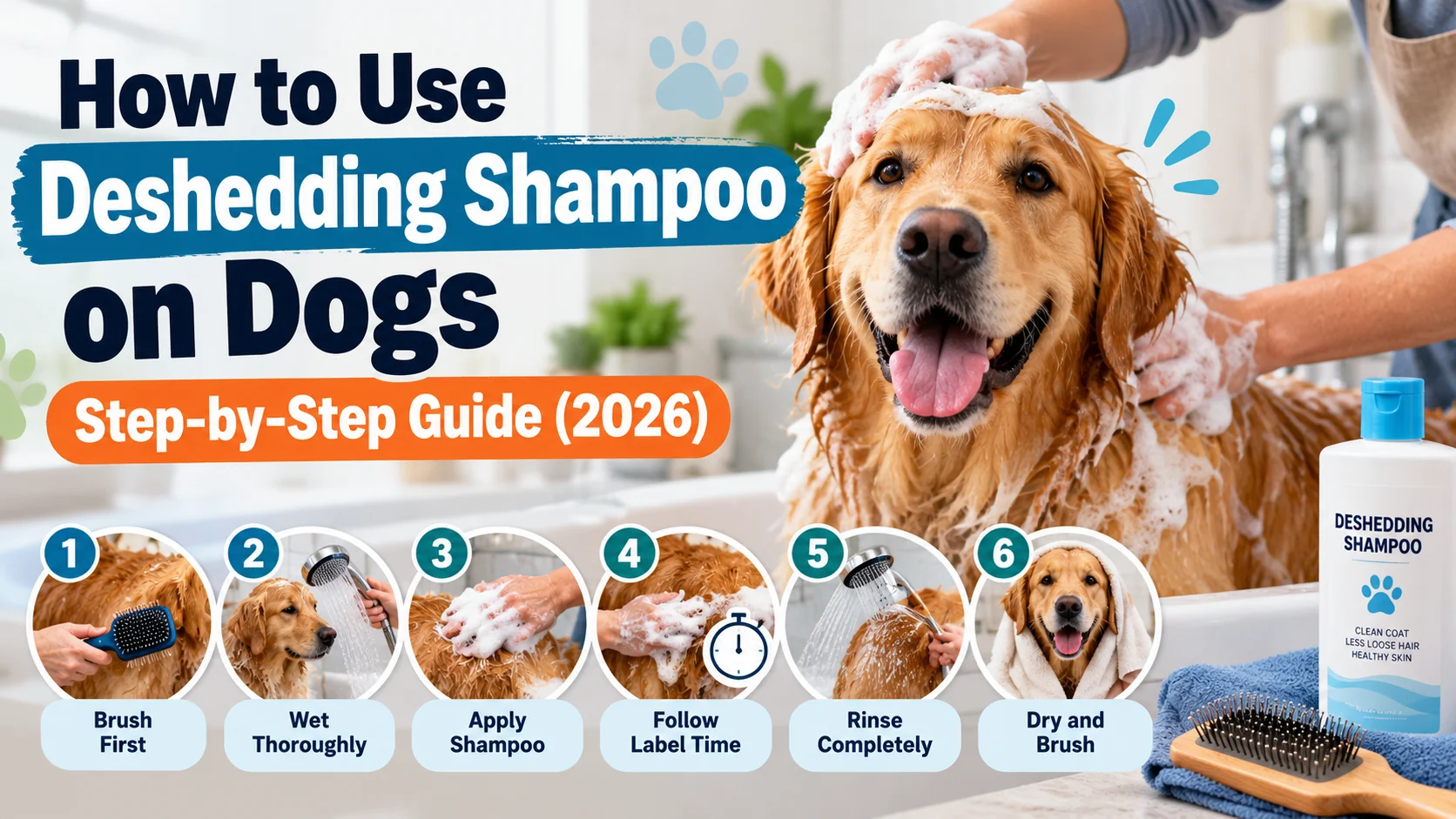
To use deshedding shampoo on dogs, brush away loose fur, wet the coat with lukewarm water, and massage a dog-safe deshedding shampoo into the fur. Follow the product’s specified contact time, rinse thoroughly, dry the coat, and brush gently again. For additional bathing advice, consult VCA’s dog grooming guidance.
Six quick steps
- Brush first: Remove loose fur and gently detangle the coat.
- Wet thoroughly: Use lukewarm water to reach the skin.
- Apply shampoo: Massage the product through the body, avoiding the face.
- Follow the label: Allow only the contact time specified by the manufacturer.
- Rinse completely: Remove all shampoo from the coat and skin.
- Dry and brush: Gently remove the loosened undercoat after drying.
Important safety tip
- Check the skin: Stop using the product if irritation develops, and contact your veterinarian.
Finding loose dog hair on your sofa, clothes, and floors can make grooming feel endless. A deshedding shampoo may help, but the way you use it matters.
In this guide, I’ll explain the bathing process, common mistakes, and products worth considering. I’ll also show you why brushing and drying remain essential.
What Is Deshedding Shampoo for Dogs?
Deshedding shampoo is a dog grooming product designed to clean the coat, help release loose hair, and support healthy skin. It works alongside regular brushing rather than replacing it.
Many formulas contain moisturizing ingredients, such as aloe vera, shea butter, or omega fatty acids. These ingredients help condition the coat while the bathing process removes dirt and loose hair.
Deshedding shampoo doesn’t switch off your dog’s natural hair growth cycle. Instead, it may help you collect more loose fur during bathing and grooming.
How Does Deshedding Shampoo Work?
Shedding happens when old hairs are naturally replaced. Double-coated breeds may release especially large amounts of undercoat during seasonal changes.
Deshedding shampoo helps by cleaning, conditioning, and making loose hairs easier to remove.
- Cleaning: Removes dirt, oils, and debris that collect in the coat.
- Coat conditioning: Helps hair feel smoother and easier to manage.
- Loose-fur removal: Washing and rinsing help carry away already-detached hairs.
- Brushing support: A clean, dry coat can make follow-up grooming easier.
The most useful distinction is between managing shedding and preventing it. A shampoo can help with the first, but it cannot reliably prevent normal shedding.
What Do You Need Before Using Deshedding Shampoo?
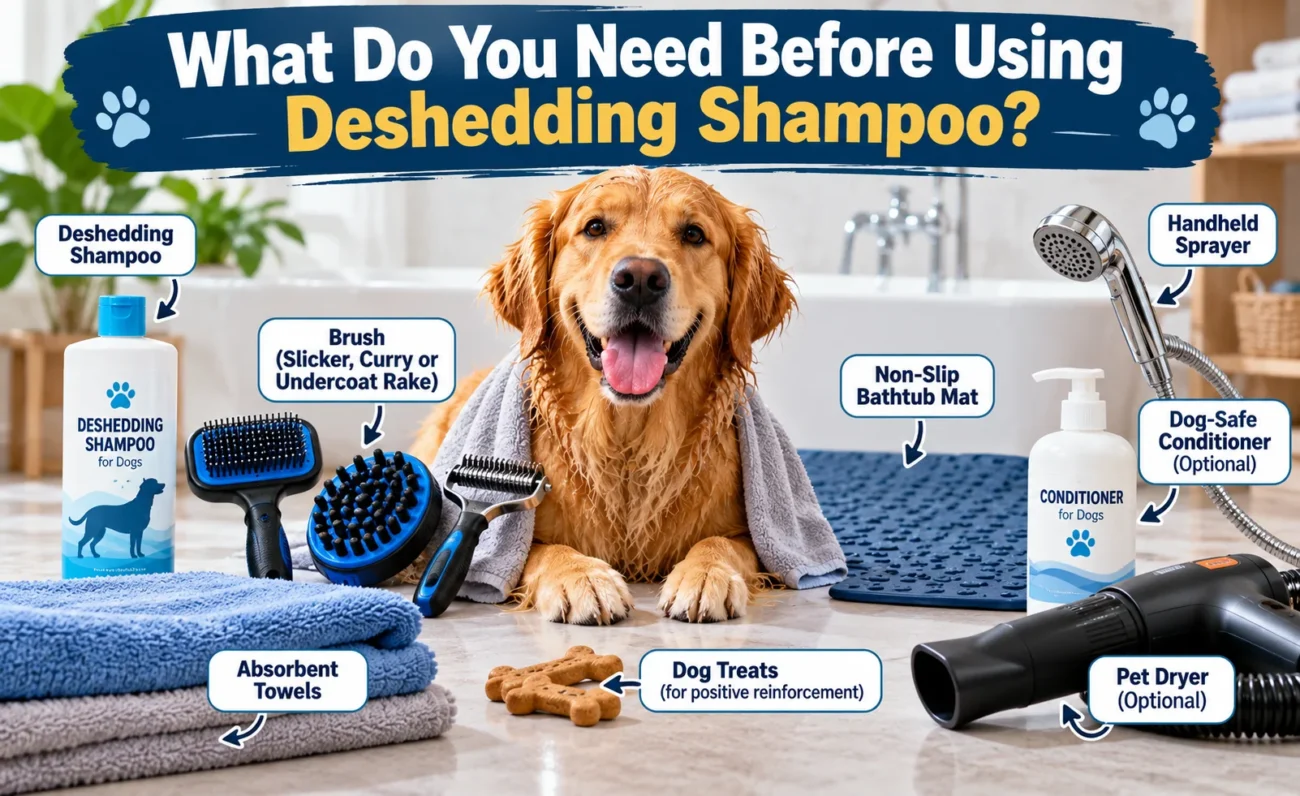
Gather everything before bringing your dog into the bathtub. This keeps the process organized and prevents leaving a wet dog unattended.
- Dog-specific deshedding shampoo suitable for your pet’s age and skin
- Slicker brush, rubber curry brush, or suitable undercoat rake
- Non-slip bathtub mat
- Handheld sprayer or large rinsing cup
- Several absorbent towels
- Optional dog-safe conditioner
- Optional pet dryer with adjustable airflow and temperature
- Small treats for positive reinforcement
My practical tip: Keep one towel beside the tub and another near the exit. It makes handling the wet coat much easier.
How to Use Deshedding Shampoo on Dogs Step by Step
The best process combines brushing, complete wetting, careful shampoo application, thorough rinsing, and gentle drying. Here’s how to do each step safely.
Step 1: Brush Your Dog Before Bathing
Start with a gentle brushing session on your dog’s dry coat. This removes loose hair and helps you spot tangles before water makes them harder to manage.
- Choose a brush suitable for your dog’s coat type.
- Brush gently in the direction of hair growth.
- Pay attention to the chest, sides, and hindquarters.
- Check behind the ears and under the legs for tangles.
- Stop if you discover painful or tightly matted areas.
For a Golden Retriever, for example, I’d focus on the chest feathering and hindquarters first. These areas often need extra detangling.
Do not pull through tight mats. A professional groomer can help remove severe matting without injuring the skin.
Step 2: Wet Your Dog’s Coat With Lukewarm Water
Use comfortably lukewarm water, never hot water. Wet the coat gradually from the neck toward the tail.
Thick double coats can repel water at first. Separate the fur gently with your fingers to help water reach the underlying coat.
- Start slowly: Introduce water around the shoulders and back.
- Check the undercoat: Make sure thick areas become evenly wet.
- Protect sensitive areas: Avoid spraying directly into the eyes, nose, or ears.
- Watch your dog: Reduce water pressure if your pet becomes uncomfortable.
Step 3: Apply the Deshedding Shampoo Evenly
Read the product label before opening the bottle. Some deshedding shampoos require dilution, while others can be applied directly.
Start around the shoulders and work toward the tail. Massage the product through the coat using your fingertips.
- Use the amount recommended by the manufacturer.
- Spread the shampoo across the back and sides.
- Work gently through the chest, legs, and belly.
- Massage without scratching the skin with your nails.
- Keep the shampoo away from the eyes and mouth.
You don’t need to create enormous amounts of foam. Even coverage matters more than the size of the lather.
Step 4: Let the Shampoo Work for the Recommended Time
There is no universal contact time for deshedding shampoo. Different formulas have different instructions, so always follow the bottle you’re using.
For example, earthbath specifies at least 90 seconds, while TropiClean directs users to massage for 3–5 minutes. FURminator’s concentrated deshedding shampoo instructs users to lather and rinse thoroughly without specifying a waiting period.
| Shampoo | Manufacturer’s Directions | Key Detail |
|---|---|---|
| earthbath Shed Control | Leave on for at least 90 seconds. | May be diluted 10 parts water to 1 part shampoo. |
| TropiClean Lime & Coconut | Massage for 3–5 minutes. | Rinse completely after massaging. |
| FURminator deShedding Concentrated | Lather, then rinse thoroughly. | May be diluted up to 10 times with water. |
Use a timer when a product specifies a contact time. Never extend the waiting period simply because your dog sheds heavily.
Step 5: Rinse the Coat Thoroughly
Thorough rinsing is one of the most important parts of the bath. Leftover shampoo can irritate your dog’s skin.
Start along the back and work downward toward the paws. Continue until you can’t feel shampoo residue in the coat.
- Rinse between thick sections of undercoat.
- Check the chest, belly, and armpits.
- Separate long fur to reach hidden shampoo.
- Keep rinse water away from the eyes and ears.
- Repeat rinsing if the coat still feels slippery or soapy.
For a thick-coated Husky, rinsing may take longer than applying the shampoo. Don’t rush this step.
Step 6: Apply Conditioner if Needed
A dog-safe conditioner can help soften the coat and improve manageability. It may be especially useful for long-haired or dense-coated dogs.
Choose a conditioner that suits your dog’s skin and follow its directions. Rinse completely if the product is designed to be washed out.
Conditioner isn’t essential for every bath. Dogs with skin problems may need a specific product recommended by their veterinarian.
Step 7: Dry Your Dog and Brush Again
First, remove excess water with absorbent towels. Press the towels into the coat instead of rubbing aggressively and creating tangles.
When appropriate, use a pet dryer with gentle airflow and a safe temperature setting. Keep the nozzle moving and avoid overheating the skin.
- Towel-dry the body and legs.
- Dry thick undercoat sections carefully.
- Check that the skin underneath feels dry.
- Use a suitable brush once the coat is ready.
- Stop brushing if the skin becomes red or uncomfortable.
You may notice considerable loose hair after the bath. That’s often hair released during washing rather than evidence that the shampoo caused new shedding.
How Often Should You Use Deshedding Shampoo on Dogs?
Most healthy dogs need occasional baths, not frequent shampooing. The ideal schedule depends on coat type, lifestyle, skin condition, and the specific product.
For many healthy dogs, bathing around once every four to eight weeks can be a starting point for discussion with a groomer or veterinarian. Some dogs need more or fewer baths.
| Dog or Coat Type | Bathing Consideration | Brushing Priority |
|---|---|---|
| Golden Retriever | Bathe when dirty or as needed for coat care. | Regular detangling and undercoat care |
| Siberian Husky | Avoid unnecessary bathing; focus on seasonal undercoat removal. | Frequent gentle brushing during coat blows |
| Labrador Retriever | Occasional baths based on dirt, odor, and skin needs | Routine loose-hair removal |
| Short-coated Beagle | Generally fewer baths unless dirty | Gentle rubber curry brushing |
| Sensitive-skin dog | Follow a veterinarian-approved bathing plan. | Soft tools and minimal friction |
These are grooming considerations, not fixed bathing prescriptions. A manufacturer’s statement that shampoo is safe for frequent use doesn’t mean every dog needs frequent baths.
Does Deshedding Shampoo Really Reduce Dog Shedding?
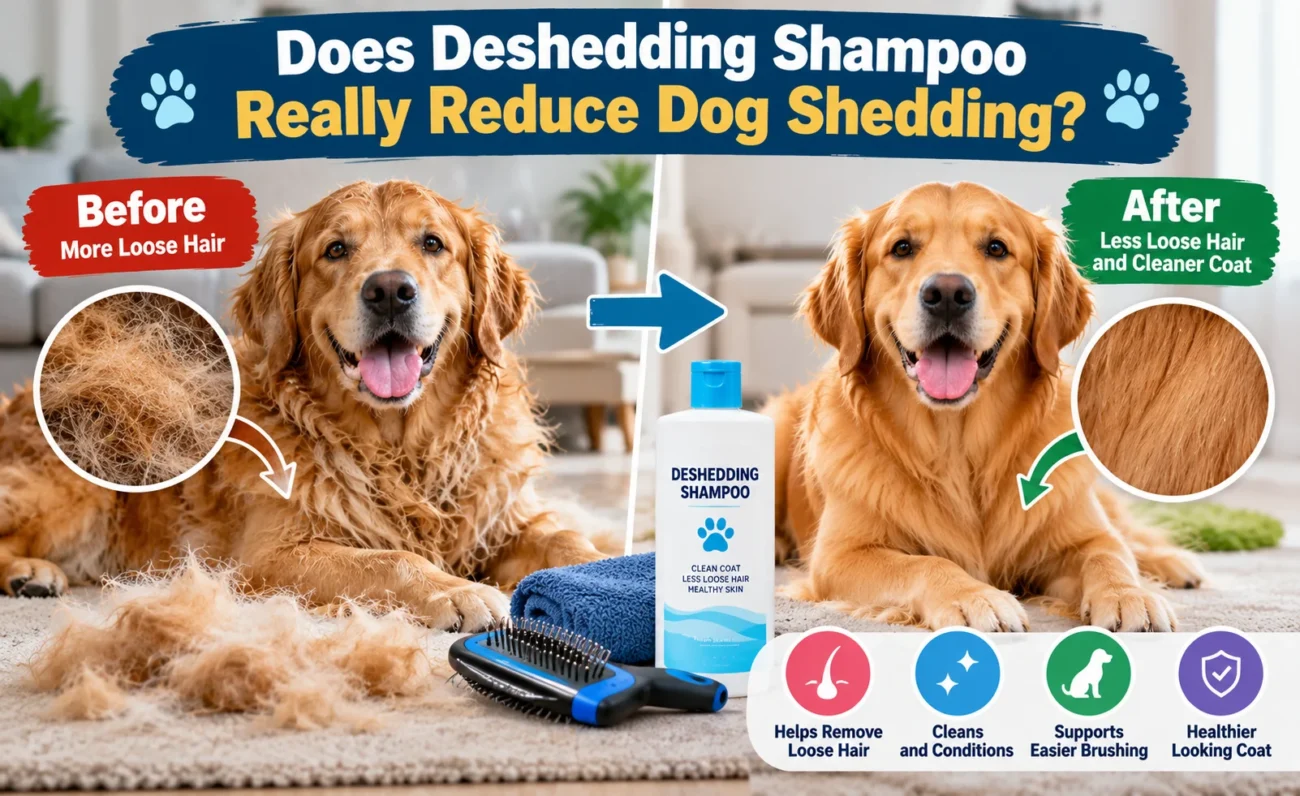
Deshedding shampoo can help manage loose hair, but it won’t eliminate normal shedding. Results depend on your dog’s coat and your overall grooming routine.
Think of shampoo as one part of coat maintenance. Brushing is still the main way to collect loose hairs before they spread throughout your home.
When Does It Work Best?
- Seasonal shedding: Helps remove loose coat during natural shedding periods.
- Dense undercoats: Supports washing and brushing of thick fur.
- Dirty coats: Cleans away debris that can interfere with grooming.
- Routine maintenance: Complements a consistent brushing schedule.
A single bath won’t permanently reduce the amount of hair your dog grows or sheds. Judge the result by coat cleanliness, comfort, and manageable loose fur.
What Are the Biggest Mistakes When Using Deshedding Shampoo?
Most bathing problems come from skipping preparation, misreading the label, or failing to rinse completely. Avoid these common mistakes.
- Skipping brushing: Loose fur and tangles remain trapped in the coat.
- Using hot water: Makes the bath uncomfortable and may irritate skin.
- Applying human shampoo: Uses a formula not designed for canine skin.
- Guessing contact time: Ignores important product-specific instructions.
- Incomplete rinsing: Leaves residue that can cause irritation.
- Aggressive brushing: Risks damaging healthy hair and sensitive skin.
- Bathing too frequently: May worsen dryness or disturb natural skin oils.
- Ignoring skin symptoms: Delays veterinary assessment of abnormal hair loss.
One mistake deserves extra attention: brushing harder doesn’t make deshedding shampoo more effective. Gentle, consistent grooming is the safer approach.
Can You Use Deshedding Shampoo on Puppies or Sensitive-Skin Dogs?
Some deshedding shampoos are suitable for puppies, but minimum ages vary by product. Check the actual bottle rather than assuming every formula is puppy-safe.
Dogs with allergies, skin infections, open sores, or recurring itchiness require extra care. A veterinarian may recommend a different shampoo or bathing schedule.
Signs You Should Stop Using the Shampoo
- New redness or irritation after bathing
- Persistent scratching or rubbing
- Hives or swelling
- Worsening dryness or flaking
- Sudden patchy hair loss
- Unusual discomfort during application
Rinse the product off if a reaction occurs. Contact your veterinarian promptly, especially if symptoms persist or become severe.
Facial swelling or breathing difficulty requires emergency veterinary attention.
Which Deshedding Shampoos Are Worth Considering in 2026?
If you’re choosing a shampoo for at-home grooming, I’d compare label directions, ingredients, and coat needs before looking at marketing claims. These three products offer different practical advantages.
Disclosure: As an Amazon Associate, this site may earn from qualifying purchases.
🏆 Best for Concentrated Use
FURminator deShedding Ultra Premium Concentrated Shampoo
★★★★☆
Contains omega fatty acids and botanical extracts. Its concentrate can be diluted up to tenfold according to the manufacturer, making it my practical pick for owners who prefer a dilution option.
🌿 Best for Moisturizing Ingredients
earthbath Shed Control Shampoo
★★★★☆
Includes shea butter, omega-6 fatty acids, and aloe vera. I favor this ingredient profile when coat conditioning matters, although individual skin sensitivities still need consideration.
🛁 Best for Clearly Timed Massage
TropiClean Lime & Coconut Shed Control Shampoo
★★★★☆
Features colloidal oatmeal, aloe, and omega fatty acids in a lime-and-coconut-scented formula. Its 3–5-minute massage instructions provide a straightforward bathing routine.
Editorial suitability scores are illustrative, not verified customer review averages or hands-on testing results. Always confirm the exact product and label before buying.
Frequently Asked Questions About Deshedding Shampoo
How long should you leave deshedding shampoo on a dog?
Follow the manufacturer’s directions because contact times vary. earthbath Shed Control Shampoo specifies at least 90 seconds, while TropiClean Lime & Coconut recommends massaging for 3–5 minutes. Other formulas may simply instruct you to lather and rinse. Never assume a longer application is better.
Should you brush a dog before or after using deshedding shampoo?
Brush before bathing to remove loose hair and manageable tangles. Brush again after drying to collect additional loose fur. Always choose a brush appropriate for your dog’s coat and avoid pulling, scraping, or repeatedly brushing irritated skin.
Can I use deshedding shampoo every week?
Weekly use may be suitable for some dogs and particular shampoos, but it isn’t automatically necessary. Your dog’s coat, skin health, and the manufacturer’s directions determine the appropriate schedule. If frequent bathing causes itching or dryness, contact your veterinarian for individualized advice.
Does deshedding shampoo stop shedding completely?
No. Deshedding shampoo may help loosen and remove hair that is already shedding, but it doesn’t stop the natural coat cycle. Regular brushing, suitable bathing, and good overall health remain important. Sudden shedding changes or patchy hair loss deserve veterinary attention.
Is deshedding shampoo safe for double-coated dogs?
A dog-safe deshedding shampoo can be appropriate for many healthy double-coated breeds, including Huskies, Labradors, and Golden Retrievers. Follow the product label, rinse the dense undercoat thoroughly, and dry carefully. Avoid harsh brushing or attempting to remove healthy undercoat by force.
Final Thoughts: How to Get Better Results From Deshedding Shampoo
Learning how to use deshedding shampoo on dogs is mostly about getting the basics right. Brush first, apply the shampoo correctly, respect the label’s timing, rinse thoroughly, and finish with gentle coat care.
For 2026, my recommendation is to choose a formula based on your dog’s coat and skin needs rather than promises to stop shedding completely. A consistent grooming routine will usually matter more than any single shampoo.
Ready for a cleaner, more manageable coat? Start with a suitable deshedding shampoo and a gentle brush, then adjust your routine to your dog’s comfort and shedding pattern.


