

Why Do Dog Clippers Jam? 7 Causes and Quick Fixes

⚡ Quick Answer
Dog clippers jam when hair and debris clog the blades, when blades go dull, when the motor overheats, or when you clip a dirty or matted coat. The fix is fast: remove trapped hair, apply clipper oil, and let the motor cool for 10 minutes. Most jams clear in under 2 minutes.
Top reasons dog clippers jam:
- Hair buildup: Trapped hair between blades is the #1 cause of jamming.
- Dull blades: Worn blades drag instead of cut and cause the motor to strain.
- No lubrication: Dry blades overheat fast and grind to a halt.
- Dirty coat: Grease, dander, and mats choke the blades immediately.
Stop a jam right now:
-
✓
Switch off and brush trapped hair from blade teeth -
✓
Apply 2 drops of clipper oil and run blades for 5 seconds -
✓
If still stuck, let motor cool 10 minutes before resuming
Why Do Dog Clippers Jam? 7 Real Causes and How to Fix Each One
Your clippers are running, the blade is spinning — and then nothing. The motor strains, the cut stops, and your dog is half-groomed and confused. I’ve been there. As Ashraful, I’ve tested and written about pet grooming tools for years, and clipper jams are one of the most common frustrations dog owners face at home.
The good news is that most jams come from a handful of fixable causes. This guide covers all of them — with clear fixes you can do right now.
📌 Key Takeaways
-
→
Hair clogging the blade is the #1 cause — brush it out every 10 minutes during grooming. -
→
Dry blades overheat in as little as 15 minutes — oil them every 10–20 minutes of use. -
→
Always bathe and dry your dog before clipping — greasy, dirty fur clogs blades immediately. -
→
Dull blades need sharpening every 3–6 months — or replacing if they drag on any coat type.
Why Do Dog Clippers Jam? The 7 Main Causes
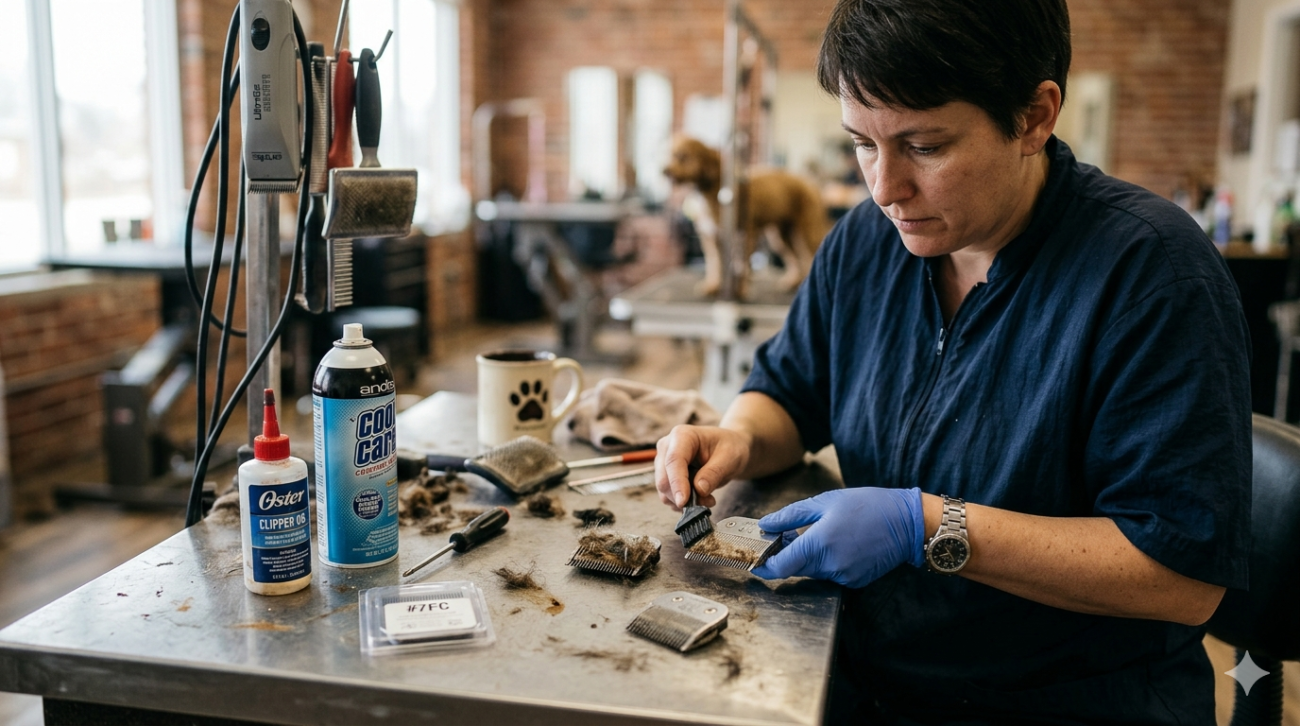
Dog clippers jam because of one or more problems happening at the blade level. Understanding the exact cause tells you exactly how to fix it. Here are the 7 most common reasons — each one with a clear solution.
1. Hair and Debris Build Up Between the Blades
This is the single most common cause. As you clip, cut hair collects between the top and bottom blade plates. Once enough piles up, the blades can’t move freely and the clipper stalls.
You might be thinking your clippers are broken. They’re not — they’re clogged. A quick brush-out and oil fix this 90% of the time.
✅ Tip
Use the small brush that came with your clippers (or a toothbrush) to sweep under the blade every 10 minutes. Do it while the motor is off. It takes 20 seconds and prevents most jams entirely.
According to professional groomers, you should also wipe any hair sitting beneath the blade between every few passes. This one habit stops most jams before they start. See how often to oil dog clippers for a full lubrication routine that keeps blades running clean.
Next, let’s look at what happens when the blades themselves are the problem — not just what’s between them.
2. Dull Blades That Can’t Cut Through Hair
Dull clipper blades drag across hair instead of cutting it cleanly. The motor works harder, the blades heat up faster, and eventually the whole thing jams or stops cutting entirely.
You’ll notice dull blades before a jam. They start leaving an uneven finish, making more noise, and pulling at the hair instead of gliding. That tugging sensation your dog hates? It’s usually a dull blade.
⚠️ Warning
Don’t force dull clippers through a thick coat hoping they’ll “push through.” This strains the motor and accelerates wear on the blade drive — an expensive internal part to replace.
Professional groomers recommend sharpening blades every 3–6 months, depending on use. If blades still drag after a good clean and oil, it’s time to sharpen or swap them. Learn more about timing and signs in this guide to how often dog clipper blades need sharpening.
So what if the blades are sharp but the clippers still jam? Heat is usually the next culprit.
3. Overheating Motor and Blades
Clippers generate heat as they run. Without breaks and cooling, the blades get hot enough to slow the motor, cause discomfort to your dog, or trigger an automatic safety shutoff. Many modern clippers will simply stop running when they hit a temperature limit.
Here’s something most people don’t know: a hot blade can actually burn your dog’s skin — called clipper burn — even without visible contact. The heat alone through fast-moving metal is enough to cause a red, irritated rash.
The fix is simple. Take a 10-minute break every 15–20 minutes of grooming. Use a cooling spray like Andis Cool Care Plus on the blades between passes. You can also keep a second blade ready and swap it in when the first gets hot.
Overheating and dull blades often go together. But there’s a third cause that happens before the session even starts — and it’s one most groomers skip.
4. Dirty, Greasy, or Wet Coat
Clipping a dirty dog is one of the fastest ways to jam your clippers. Grease, dander, dried mud, and leftover product build up on the blade teeth almost instantly. Wet hair is just as bad — it clumps between the blades and stops them cold.
Professional groomers never skip the bath step. A clean, fully dry coat lets blades glide. A dirty coat turns every stroke into a battle. Brush out any tangles before you even turn the clippers on — this alone cuts your grooming time in half and protects the blades.
🔢 Step-by-Step: Prep Your Dog Before Clipping
-
1
Bathe your dog with a dog-safe shampoo
Clean fur removes grease and dander that clogs blades within minutes.
-
2
Dry the coat fully — no damp spots
Wet hair clumps between blade teeth and jams clippers in seconds.
-
3
Brush out all tangles and mats
Mats are thick knots that stop blades instantly. Never clip over them.
-
✓
Now clip — in the direction of hair growth
Prepped coat = blades glide, motor stays cool, grooming finishes fast.
With the coat prepped, your clippers should run much better. But if they still jam on thick areas, the issue might be the clippers themselves — not the coat.
5. Using the Wrong Clipper for Your Dog’s Coat Type
A clipper built for short, thin fur will jam every time on a thick, double-coated breed like a Golden Retriever or Malamute. Consumer-grade clippers — especially cheap ones repackaged from human hair trimmers — simply don’t have the motor torque to push through dense coats.
If your clippers jam only on thick areas or during heavy-duty sessions, this is likely your problem. The solution is using a clipper designed for your dog’s coat. Heavy-duty professional models run at 3,400–4,400 strokes per minute and handle thick coats without strain.
Recommended Product
Andis UltraEdge Super 2-Speed Detachable Blade Clipper, Professional Animal/Dog Grooming, AGC2
★★★★★ Highly rated on Amazon
A professional-grade dual-speed rotary motor runs at up to 4,400 SPM and handles thick, heavy coats that jam cheaper clippers instantly — the most reliable way to stop jam-related frustration at the source.
As an Amazon Associate, we earn from qualifying purchases.
Matching the right clipper to your dog’s coat type is the single biggest prevention step. But even a great clipper needs the right maintenance to stay jam-free.
6. No Lubrication — Dry Blades Running Hot
Clipper oil does two jobs: it reduces friction between the blade plates so they move smoothly, and it keeps the blades cooler during long sessions. Skip the oil and the blades heat up, slow down, and eventually jam or stop cutting cleanly.
Most groomers oil their blades every 10–20 minutes during a session — not just before they start. Apply 2 drops on each side where the top and bottom blades meet, with the motor running. Point the clipper downward so excess oil drips off instead of running into the motor.
⚠️ Warning
Never oil with the clipper pointing upward. Excess oil will run into the internal motor and can cause jamming, slow performance, or total failure. Always angle the clipper downward when oiling.
If blades are already hot when you’re oiling, use a coolant spray first — then oil. The spray drops the blade temperature fast and disinfects at the same time. This is standard practice in every professional grooming salon.
7. Blade Misalignment or Worn Blade Drive
If you’ve cleaned, oiled, and cooled your clippers but they still jam or won’t cut, the problem is likely internal. Two specific hardware issues cause this: blade misalignment and a worn blade drive.
Blade misalignment happens when the top and bottom blades shift out of position — from a drop, improper reassembly, or worn screws. The teeth no longer line up and hair catches in the gap instead of being cut. This is fixable: check that both blades sit flush and flat, tighten any loose screws, and re-snap the blade into position.
The blade drive is a small plastic component inside the clipper body that moves the blade back and forth. It’s the most commonly worn-out part in any clipper. When it wears down, the blade oscillates weakly or not at all — and the clipper either jams or runs without cutting. Blade drives are cheap to replace ($5–$15) and brand-specific, so check your clipper model before ordering.
📋 Quick Summary
If cleaning, oiling, and cooling don’t fix the jam — check blade alignment and inspect the blade drive. These two parts wear faster than any other component and are almost always the cause of persistent, unexplained jamming.
How Do I Stop My Dog Clippers from Jamming? A Prevention Routine That Works
Fixing a jam is reactive. Prevention is what keeps grooming smooth from start to finish. The best groomers follow the same basic routine every session — and it works every time.
Here’s how the most common causes of clipper jams compare — and what each one costs you in time if you ignore it.
Most jam causes take under a minute to prevent. The prep work — bath and dry — is the biggest time investment, and it pays off every single session.
You can read the full professional maintenance checklist at the Groomers Online clipper maintenance guide for salon-level routines you can adapt at home.
Why Are My Clippers Not Cutting Even After Cleaning?
You’ve cleaned the blades, oiled them, and cooled them down — but the clippers still won’t cut. This is a different problem from a jam. If blades move but don’t cut, you’re dealing with one of 3 specific issues.
📋 Clippers moving but not cutting — check these 3 things:
-
Blade alignment: Check that the top blade doesn’t extend beyond the teeth of the bottom blade. Misalignment by even 1mm kills cutting ability. Re-snap the blade firmly into position. -
Blade tension: If tension is wrong, the top blade presses too hard or too loosely against the bottom. Refer to your clipper’s manual for the correct tension adjustment. -
Worn blade drive: If the small drive piece inside is worn, the blade won’t oscillate fast enough to cut. Replace it — most are model-specific and cost under $15.
The AKC recommends consulting a professional groomer or veterinary technician when home grooming tools fail repeatedly — a fresh set of eyes (and hands) catches problems that are hard to self-diagnose. Check their complete dog grooming guide for more on tool selection and maintenance.
What Most People Get Wrong About Dog Clipper Jams
Most jam troubleshooting advice misses 3 things. Here’s what groomers know that home users often don’t.
Myth 1: “My clippers are broken.” A jam almost never means the motor is dead. It means something mechanical is wrong at the blade level — hair, heat, dullness, or alignment. Try cleaning and oiling before assuming the worst. Most jams clear in 2 minutes.
Myth 2: “I only need to oil before I start.” Oiling once before a grooming session is not enough. Professional groomers apply clipper oil every 10–20 minutes during use. Dry blades heat up and jam even if you started with oil.
Myth 3: “Any clipper works on any dog.” This is false and expensive to learn the hard way. Consumer clippers sold at big-box stores are often repackaged human hair trimmers. They lack the motor power for thick double coats and will jam constantly on breeds like Huskies, Chow Chows, or Shih Tzus. Always match clipper torque and blade type to your dog’s coat.
Should I Sharpen or Replace Dull Dog Clipper Blades?
This is one of the most common questions from home groomers. The short answer: sharpen first, replace only when needed. Sharpening a professional blade costs $5–$15 and restores it to near-new condition. Replacing costs $20–$60 depending on brand and blade type.
But there’s a point where replacement is the smarter call. If a blade has visible nicks, chips, or bent teeth — sharpen it once and see. If it still drags, replace it. Bent teeth can’t be fully restored by sharpening alone.
✅ Sharpen when…
-
+
Blades drag but teeth look intact -
+
Blades have been used for 3–6 months -
+
Cut is uneven but no missing teeth
⚠️ Replace when…
-
−
Teeth are chipped, bent, or missing -
−
Still drags after professional sharpening -
−
Blade won’t snap onto clipper correctly
If you groom at home once a month, your blades should last 6–12 months before needing their first sharpening. Professional groomers using them daily sharpen every 4–8 weeks.
Can Low Battery Cause Clippers to Jam?
Yes — and this catches a lot of cordless clipper users off guard. As a battery drains, the motor loses speed and torque. Blades that ran smoothly at full charge start to drag and stall at 30–40% battery. The clippers aren’t broken. They just don’t have enough power to push through the hair.
The fix: always start a grooming session with a full charge. If you’re mid-session and clippers start pulling instead of cutting, stop and check the battery indicator. Forcing a low-battery clipper through thick fur wears the motor and dulls blades faster.
💡 Key Insight
Keep a corded clipper as a backup to your cordless model. When battery drops below 50% mid-groom, switching to corded keeps the session smooth and protects both your dog and your equipment.
Now that you know every cause of clipper jams, let’s make sure you have the right tools and habits in place to stop them happening again.
Conclusion
Dog clippers jam for 7 reasons — and every single one is preventable. Clean the blades during every session, oil them every 20 minutes, prep your dog’s coat before you start, and match the clipper to the coat type.
The one thing to do right now: pick up your clippers, brush out any trapped hair from the blade teeth, apply 2 drops of clipper oil, and run the motor for 5 seconds. That alone fixes most jams — and takes under a minute.
Frequently Asked Questions
Why do my dog clippers keep jamming mid-groom?
The most common mid-session jam is hair buildup between the blades. Brush blade teeth every 10 minutes with the motor off. Also oil the blades every 20 minutes — dry blades heat up and slow down even if they started clean. These two habits stop 80% of mid-session jams.
How do I unjam dog clippers?
Turn the clipper off. Use a brush to sweep trapped hair from between the blade teeth. Apply 2 drops of clipper oil on each side where the blades meet, then run the motor for 5 seconds. If still jammed, remove the blade entirely, clean it, reattach it, and check that it snaps in level and flush.
Can dirty fur cause dog clippers to jam?
Yes — dirty, greasy, or damp fur is one of the fastest ways to jam clippers. Grease and dander coat blade teeth within minutes. Wet hair clumps instantly between the blades. Always bathe your dog, dry the coat fully, and brush out mats before you clip. This step prevents more jams than any other.
How often should I oil my dog clippers?
Oil your clipper blades every 10–20 minutes during a grooming session, and again after cleaning at the end. Apply 2 drops where the top and bottom blades meet, with the motor running and the clipper pointing downward. Never apply oil with the clipper facing upward — it runs into the motor.
Why do my clipper blades move but not cut?
Blades that move without cutting usually have a misalignment or tension problem. Check that the top blade sits flush with the bottom and doesn’t extend past the teeth. If alignment looks fine, the blade drive — a small internal component — may be worn out and needs replacing. Both issues are inexpensive to fix.
What blade should I use to prevent jamming on thick coats?
A #10 blade works well for prep work and sensitive areas. For full-body clipping on thick coats, use a #7FC or #5 blade — they leave more hair on and move through dense fur more smoothly than finishing blades. A shorter, tougher blade has less risk of jamming on heavy coats than a long finishing blade.
Can low battery cause cordless dog clippers to jam?
Yes. When battery drops below 30–40%, the motor loses torque and blades can’t push through hair. The clippers feel like they’re pulling or stalling — this is a power issue, not a blade issue. Always start with a full charge and keep a corded backup for long grooming sessions on thick-coated dogs.
